Green logistics needs stronger green finance policies to thrive

In today’s rapidly greening global economy, green logistics is no longer optional but a necessity. Digital customs, flexible banking, and local government cooperation can together build an ecosystem that enables Vietnamese businesses to go green effectively.

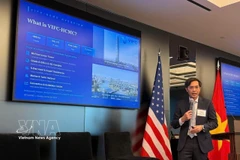
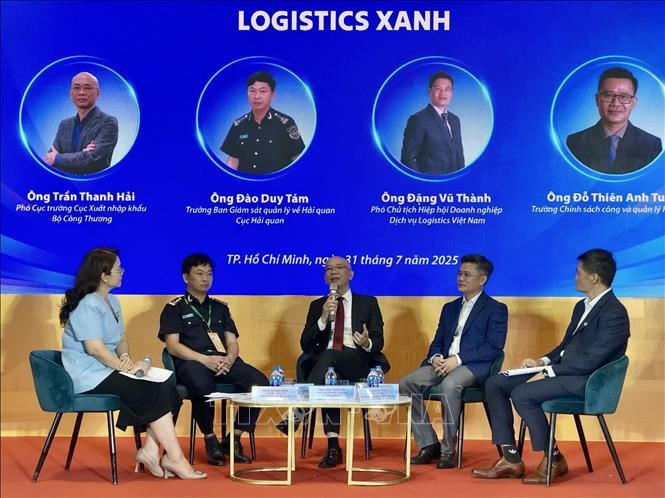
Speakers at the seminar. (Photo: VNA)

HCM City (VNA) – Green logistics is emerging as a key component of Vietnam’s sustainable development strategy and its roadmap to achieving net-zero carbon emissions by 2050, said experts at a seminar held on July 31 in Ho Chi Minh City.

The event on financial policies for green logistics was organised by the Economic-Financial Review and VINEXAD Company, with support from the Agency of Foreign Trade (AFT) under the Ministry of Industry and Trade.

Speakers at the seminar stressed that green logistics cannot grow without timely and effective financial support. Investment in green technologies, clean transport, and energy-efficient warehouses require significant investment in technology, equipment, and skilled personnel.

Although green transition and sustainable supply chains are becoming global trends, many Vietnamese enterprises are facing major barriers such as limited access to capital, outdated technology, and insufficient expertise. Particularly, small and medium-sized enterprises are struggling to access to green finance.

Vietnam’s logistics sector plays an important role in the economy, with a market size of around 40-42 billion USD and an annual growth rate of 14-16% — among the highest in Southeast Asia.

However, logistics costs remain high, accounting for 16-18% of GDP. The sector is also one of the major carbon emitters, especially in road transport.

AFT Deputy Director Tran Thanh Hai said green logistics is not only an environmental requirement but also a business necessity. To meet international regulations such as the EU’s Carbon Border Adjustment Mechanism (CBAM), logistics companies must adopt greener practices. Investments in fuel-efficient transport, smart containers, and digital management systems will not only reduce emissions but also lower long-term operational costs, particularly in the face of volatile fuel prices.

Hai also noted that green credentials will soon become a competitive advantage. Vietnam is well-positioned to promote green logistics, thanks to improved transport infrastructure and a booming e-commerce sector. In 2024, the country’s retail e-commerce market reached 25 billion USD, up 20% from the previous year, placing Vietnam among the top 10 fastest-growing e-commerce markets globally.
logistics-xanh-2497.jpg
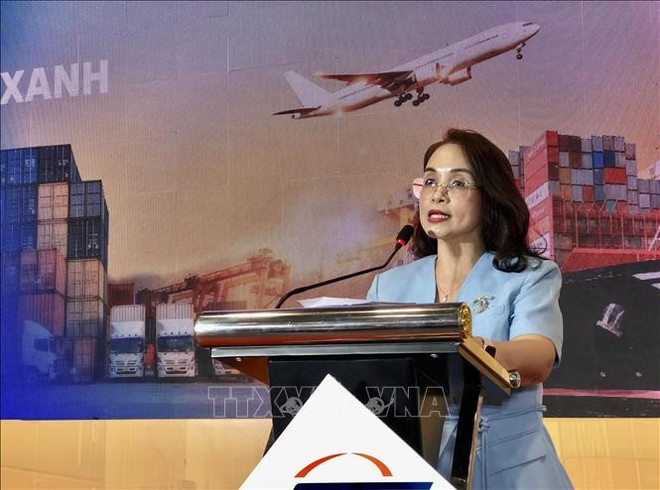
An expert shares updates about green logistics. (Photo: VNA)

In efforts to reduce logistics costs, Dao Duy Tam, head of Customs Supervision at Vietnam Customs, said that since 2020, Vietnam has implemented electronic customs procedures, significantly reducing clearance times. Customs authorities are also working to apply digital technologies such as AI, IoT, blockchain, surveillance cameras, and big data at key border gates, enhancing transparency and efficiency.

These efforts help logistics businesses and port operators optimise cargo handling, reduce transportation distances, cut fuel consumption, and lower costs, all of which support green logistics development, Tam said.

Despite progress, green transition remains costly and challenging without long-term financial policies. Many businesses pointed out that supportive financial mechanisms including green credit, tax incentives, interest subsidies, and innovation funds are crucial to turn green logistics from ambition into reality.

Experts called for a comprehensive financial framework that includes investment incentives, loan guarantees, tax breaks, and close coordination between ministries. In today’s rapidly greening global economy, green logistics is no longer optional but a necessity. Digital customs, flexible banking, and local government cooperation can together build an ecosystem that enables Vietnamese businesses to go green effectively./.
VNA

See more

Officials visit a booth at the festival. (Photo: VNA)

Vietnam OCOP Festival 2025 opens in Hanoi

The festival functions as a space to bring together regional OCOP excellence, a forum connecting OCOP stakeholders with distributors, investors, experts and consumers, and a platform to spread pride in indigenous culture, local knowledge, and the aspiration for legitimate prosperity.

Prime Minister Pham Minh Chinh (third from right) and officials launch the Ministry of Construction’s new information technology systems at the conference on December 21. (Photo: VNA)

Modern, comprehensive infrastructure – a need for fast, sustainable development: PM

The Party and State continue to define infrastructure development as one of the three strategic breakthroughs, with priority given to building comprehensive and modern infrastructure, particularly transport facilities, technological infrastructure, and green – digital transition infrastructure, to help realise the national target of double-digit growth, the PM said.

Prime Minister Pham Minh Chinh addresses he third meeting of the National Steering Committee implementing the Politburo’s Resolution 68 in Hanoi on December 20. (Photo: VNA)

PM pushes trust, breakthroughs to accelerate private sector growth

Prime Minister Pham Minh Chinh noted that since the rollout of Resolution 68, alongside supporting resolutions from the National Assembly (NA) and Government, there has been a marked change in understanding the private sector’s critical position and role in Vietnam’s socialist-oriented market economy.

PM Pham Minh Chinh chairs the meeting (Photo: VNA)

Private sector thrives eight months after Resolution 68’s launch: PM

The private sector has shown marked progress eight months after the launch of Resolution 68, registering about 18,000 new enterprises monthly and pushing the nationwide total to nearly 1.1 million, Prime Minister Pham Minh Chinh told the third meeting of the National Steering Committee in Hanoi on December 20.

Phin Ho Tra – a national five-star OCOP product. (Illustrative photo: VNA)

Hanoi to host Vietnam OCOP Festival 2025

The festival is seen a practical activity celebrating the achievements made by the capital and the country in 2025, affirming OCOP’s role in rural economic development, contributing to realising Vietnam’s aspiration for strong economic growth in the context of deep integration.

The expanded Hoa Binh Hydropower Plant (Photo baochinhphu.vn)

EVN launches major power projects

Among the flagship projects inaugurated was the expanded Hoa Binh Hydropower Plant with a total installed capacity of 480MW per year and average annual output of about 488 million kWh.

An ultra-intensive shrimp farming model linked with environmental protection in Ca Mau province. (Photo: VNA)

Fisheries take the lead in the Mekong Delta’s green transition

Across the Mekong Delta, leading aquaculture producers, processors and exporters, along with suppliers of inputs, are transitioning to circular, high-tech and clean production models that cut greenhouse gas emissions and comply with international certification standards.

A perspective view of the Red River Landscape Boulevard project in Hanoi (Photo: VNA)

Works starts on Hanoi’s Red River Landscape Boulevard Axis project

The project is among the 234 key works and projects being launched, inaugurated or technically opened simultaneously across 34 cities and provinces nationwide to mark the 14th National Party Congress. Its launch contributes to implementing the country’s strategic development orientations while concretising Hanoi’s development goals in the new period.