Ho Chi Minh City bets on next-generation industry to power growth

Post-merger now, Ho Chi Minh City has become Vietnam’s largest industrial hub, boasting 61 industrial parks, export processing zones, and clusters across the former regions

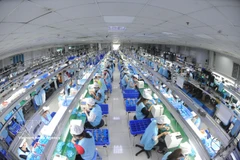
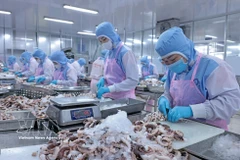
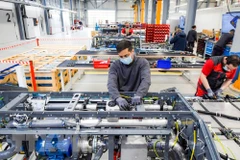
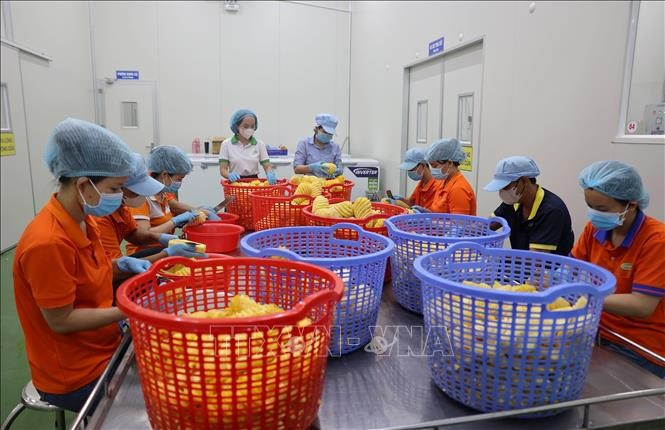
Processing fast consumption items for exports in Ho Chi Minh City. (Photo: VNA)

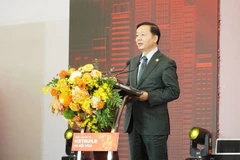
HCM City (VNA) - Modern industry, innovation, and next-generation manufacturing must anchor Ho Chi Minh City’s ascent into a new era of growth, said Vice Chairman of the municipal People’s Committee Nguyen Loc Ha.

Huge potential, structural bottlenecks

Economists from the University of Economics Ho Chi Minh City noted that prior to its merger with Binh Duong and Ba Ria – Vung Tau provinces, Ho Chi Minh City was all about light industry, high tech, and logistics services; Binh Duong led nationwide in manufacturing and supporting industries; while Ba Ria – Vung Tau specialised in heavy industry, petrochemicals, and seaports. Each had its strengths, but they were like solo acts with no band to back them up.

Post-merger now, Ho Chi Minh City has become Vietnam’s largest industrial hub, boasting 61 industrial parks, export processing zones, and clusters across the former regions. This creates a diverse industrial ecosystem with varied scales and strategic roles.

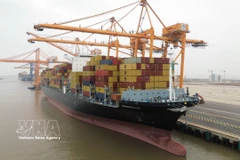
The city now drives over 30% of Vietnam’s manufacturing output, with seaports handling a massive 250 million tonnes a year, growing 8% yearly from 2020 to 2024. Foreign direct investment tops 90 billion USD, nearly half the nation’s total.

Bui Ta Hoang Vu, Director of the municipal Department of Industry and Trade, flagged key constraints. Logistics costs, at 16–20% of product prices, way above regional averages. Scarce industrial land hampers large-scale, high-tech investment. Automation is stuck in the slow lane, with labour productivity at just 60% of advanced industrial cities. Outdated manufacturers are dragging their feet on digital transformation, green standards, and sustainability. US tariffs on Vietnamese exports are turning up the heat to innovate fast, boost quality, and stay competitive.

Next-generation industry as growth engine
jep.jpg
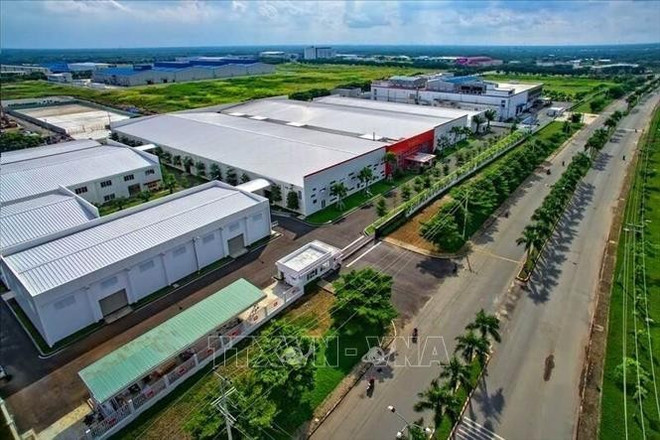
A corner of Binh Duong Industrial Park in Ho Chi Minh City (Photo: VNA)

For new Ho Chi Minh City to become a true southern industrial powerhouse, Do Thien Anh Tuan from the Fulbright School of Public Policy and Management proposed a regional division of labour: former Ho Chi Minh City as an R&D, innovation, and tech commercialisation hub hosting research institutes, startups, industrial labs, and large data centres; former Binh Duong as a smart manufacturing base with next-generation industrial parks, supporting industries, semiconductors, precision mechanics, and automation; and former Ba Ria – Vung Tau as a logistics, heavy industry, and clean energy hub leveraging deep-water ports, gas-fired power plants, chemicals, and global logistics services.

Industrial development in Ho Chi Minh City must build first on existing strengths, particularly core sectors with the potential for tech-intensive, high value-added production, said Dr. Nguyen Thanh Trong from the Eastern International University.

To tackle bottlenecks and plan through 2030 with a 2050 vision, Trong advocated for next-generation industrial zones that are green, smart, and eco-friendly, integrated with urban development.

Transport infrastructure is critical to unlock growth. Ongoing projects like Ring Roads 3 and 4, the Ho Chi Minh City - Thu Dau Mot - Chon Thanh expressway, the Bien Hoa - Vung Tau expressway, and the Ho Chi Minh City - Moc Bai expressway will bolster supply chains, linking factories with ports and borders to lure more investors, he said.

Vice Chairman Ha stressed that overcoming current limitations demands tighter collaboration among the Government, academia, and businesses to drive breakthroughs.

Ho Chi Minh City is pushing for a next-gen industrial model rooted in high tech, smart manufacturing, green industry and a circular economy, all while leveling up value chains and creating an innovation-driven regional ecosystem, he added./.
VNA

See more

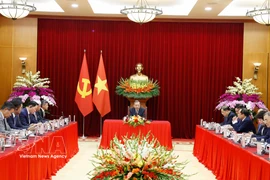
Prime Minister Pham Minh Chinh addresses he third meeting of the National Steering Committee implementing the Politburo’s Resolution 68 in Hanoi on December 20. (Photo: VNA)

PM pushes trust, breakthroughs to accelerate private sector growth

Prime Minister Pham Minh Chinh noted that since the rollout of Resolution 68, alongside supporting resolutions from the National Assembly (NA) and Government, there has been a marked change in understanding the private sector’s critical position and role in Vietnam’s socialist-oriented market economy.

PM Pham Minh Chinh chairs the meeting (Photo: VNA)

Private sector thrives eight months after Resolution 68’s launch: PM

The private sector has shown marked progress eight months after the launch of Resolution 68, registering about 18,000 new enterprises monthly and pushing the nationwide total to nearly 1.1 million, Prime Minister Pham Minh Chinh told the third meeting of the National Steering Committee in Hanoi on December 20.

Phin Ho Tra – a national five-star OCOP product. (Illustrative photo: VNA)

Hanoi to host Vietnam OCOP Festival 2025

The festival is seen a practical activity celebrating the achievements made by the capital and the country in 2025, affirming OCOP’s role in rural economic development, contributing to realising Vietnam’s aspiration for strong economic growth in the context of deep integration.

The expanded Hoa Binh Hydropower Plant (Photo baochinhphu.vn)

EVN launches major power projects

Among the flagship projects inaugurated was the expanded Hoa Binh Hydropower Plant with a total installed capacity of 480MW per year and average annual output of about 488 million kWh.

An ultra-intensive shrimp farming model linked with environmental protection in Ca Mau province. (Photo: VNA)

Fisheries take the lead in the Mekong Delta’s green transition

Across the Mekong Delta, leading aquaculture producers, processors and exporters, along with suppliers of inputs, are transitioning to circular, high-tech and clean production models that cut greenhouse gas emissions and comply with international certification standards.

A perspective view of the Red River Landscape Boulevard project in Hanoi (Photo: VNA)

Works starts on Hanoi’s Red River Landscape Boulevard Axis project

The project is among the 234 key works and projects being launched, inaugurated or technically opened simultaneously across 34 cities and provinces nationwide to mark the 14th National Party Congress. Its launch contributes to implementing the country’s strategic development orientations while concretising Hanoi’s development goals in the new period.

The ground-breaking ceremony of the Yen Bai 1 biomass power plant in Lao Cai province on December 19. (Photo: VNA)

Work starts on 114-million-USD biomass power plant in Lao Cai

The project, developed by Erex Yen Bai Biomass Power Co. Ltd. is located in Dong Cuong commune, Lao Cai province. It is backed by Japan’s Erex Group and falls under the Joint Crediting Mechanism, a bilateral initiative between Vietnam and Japan to reduce greenhouse gas emissions.

At the inauguration ceremony (Photo: VNA)

Vietnam Railways Corporation unveils upgraded coaches, digital tools

These moves reflect the VNR's commitment to fulfilling six priority tasks set by the Prime Minister, including leading in innovation and digital transformation, applying sci-tech in line with the Politburo’s Resolution No. 57-NQ/TW, and spearheading advances in digital, green and circular economy.