Tay Ninh (VNA) – Despite robust trade growth, Vietnam’s logistics sector continues to face bottlenecks that drive up costs and weaken competitiveness, especially for small- and medium-sized enterprises (SMEs). Strengthening trade, production, and logistics connectivity in the Vietnam-Cambodia border region is a strategic step to expand markets and provide fresh momentum for businesses.
Vietnam is currently Cambodia’s third largest trading partner (after China and the US) and the largest within ASEAN. In return, Cambodia is Vietnam’s fourth largest trading partner in the bloc, with 215 Vietnamese-invested projects across agriculture, telecommunications, banking, food processing, mining, aviation, and tourism.The two sides have signed several important agreements, including the 2025–2026 Bilateral Trade Promotion Agreement, a memorandum of understanding on developing border trade infrastructure and road–waterway connectivity, and a “one journey, three destinations” tourism linkage programme with Laos. These frameworks not only facilitate smoother trade flows but also broaden opportunities for cross-border logistics cooperation.
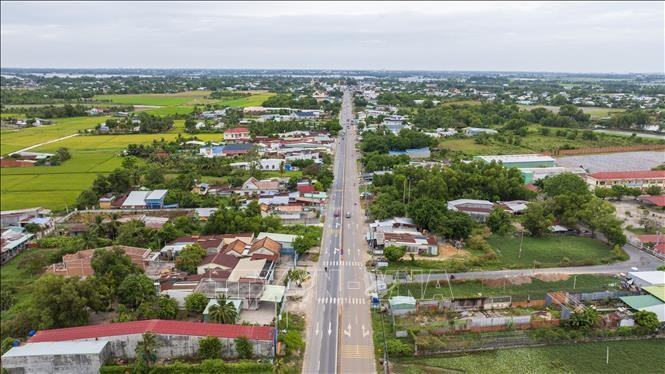
In Tay Ninh, four international border gates - Moc Bai, Xa Mat, Binh Hiep, and Tan Nam, all of which are being upgraded - play key roles, alongside the Long An International Port.
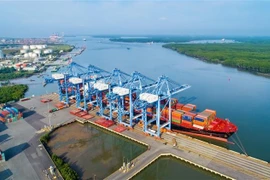
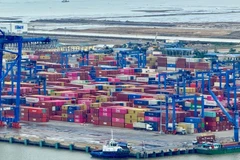
Developed by Dong Tam Group as part of a seaport–industry–logistics–urban complex, the port is situated at a strategic location, connecting Ho Chi Minh City, the Mekong Delta, the Southeastern region, and Cambodia via road and the Mekong River. It has emerged as a vital hub for industrial goods, agricultural produce, and seafood from major production areas.
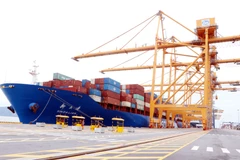
Ngo Thi Thanh Vy, Deputy General Director of Long An International Port JSC, said the port has been modernised to receive vessels of up to 70,000 DWT, supported by advanced warehousing and logistics facilities. It is ready to handle the transhipment of goods from Cambodia to international markets. However, Vy noted that the port is not yet included in the list of transit waterways under the Vietnam–Cambodia Transport Agreement, creating obstacles to fully tapping its potential.
Because it is not designated as a transit port, goods imported via Long An must first enter bonded warehouses before being shipped to Cambodia. This creates additional costs and procedures, limiting logistics development between the two countries, she emphasised.
Businesses also voiced concerns about high logistics costs. Nguyen Kim Hau, CEO of Seaspimex Vietnam, called for policies to ease fuel costs, machinery imports, and transport operations to lower logistics fees.
Meanwhile, Trinh Thi Xuan Dieu, CEO of Logsun Global Logistics, underlined that Cambodia is not just an export market but also a gateway for Vietnam to deepen ASEAN integration. She pointed to bottlenecks such as weak transport infrastructure, lack of cold storage, congestion at peak times, cumbersome administrative procedures, and hidden costs like inspection delays and road fees that further erode competitiveness.
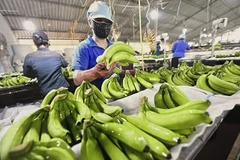
Vietnam and Cambodia are working toward lifting bilateral trade to 20 billion USD. Agriculture, particularly fruit and vegetable exports, is emerging as a key driver.
According to Deputy Secretary-General of the Vietnam Fruit Association (Vinafruit) Nguyen Van Muoi, Vietnam’s fruit acreage has expanded steadily, diversifying markets and significantly boosting farmer incomes. In 2024 alone, Vietnam exported nearly 17 million USD worth of fruit and vegetables to Cambodia.
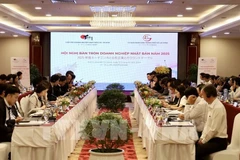
Oknha Leng Rithy, Chairman of the Vietnam–Cambodia Business Association, highlighted the two countries’ close friendship, shared border, and cultural similarities as a strong foundation for economic ties. He urged the creation of a shared digital portal for businesses, promotion of cross-sector cooperation in agriculture, agro-processing, tourism, IT, and construction, and development of integrated supply chains. The association, he affirmed, will continue to serve as a bridge for enterprises in legal, financial, and trade promotion support.
Vietnam’s trade with Cambodia has grown consistently. In 2024, land border trade reached 7.26 billion USD, up 18.2% year-on-year. In the first seven months of 2025, it stood at 5.17 billion USD, rising 16.9%.
According to Director of the Agency of Foreign Trade under the Ministry of Industry and Trade Nguyen Anh Son, this is the right moment to reorient border trade towards economic corridor clusters. He proposed linking the Central Highlands–South Central region (fruit, timber, rubber), the Southeast (industrial processing, Moc Bai–Xa Mat gateways to HCM City and seaports), and the Mekong Delta (high-quality agricultural distribution through the Mekong River).
He also stressed the need to diversify export structures, increase value-added processing for agro-fisheries, textiles, and electronics, and accelerate e-commerce and border digitalisation. This includes streamlining procedures, expanding digital infrastructure, enhancing border management, and the prevention of smuggling and counterfeit goods to ensure transparency and sustainability./.