Indonesia allocates billions of USD for disaster response

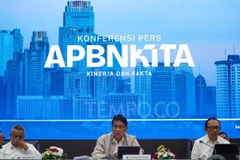
The Indonesian government has prepared a budget of between 53–60 trillion IDR (3.4–3.85 billion USD) for disaster emergency response under the 2026 State Budget (APBN).

Jakarta (VNA) – The Indonesian government has prepared a budget of between 53–60 trillion IDR (3.4–3.85 billion USD) for disaster emergency response under the 2026 State Budget (APBN).

The amount represents a significant increase compared with the allocation for the same field in 2025, as it includes post-disaster recovery funds rather than only partial emergency budgets assigned to individual ministries, as was the case last year.

State Secretary Prasetyo Hadi said this ready-to-use is allocated to the National Disaster Management Agency (BNPB) and can be utilised at any time should an emergency or disaster occur.

In addition, the Indonesian government has earmarked separate budget lines for post-disaster recovery and reconstruction, including the restoration of damaged infrastructure and public facilities.

Meanwhile, the Indonesian Ministry of Home Affairs has requested local administrations nationwide to establish and strengthen the capacity of Regional Disaster Management Agencies (BPBD). The move aims to enhance response effectiveness to increasingly complex types of natural disasters, while improving command and coordination capabilities during emergency situations.

A post-disaster coordination task force will also be set up to strengthen inter-agency cooperation in recovery and reconstruction efforts.

These measures are expected to bolster the capacity of local BPBDs to respond to varying levels of risk across different regions, thereby improving community protection and enhancing regional resilience to natural disasters.

The allocation of substantial resources for disaster management and response, alongside efforts to strengthen local disaster management agencies, reflects the Indonesian government’s heightened priority on risk reduction, as the country frequently faces earthquakes, volcanic eruptions, floods and mudflows triggered by prolonged heavy rainfall./.

VNA

See more

Deputy Prime Minister and Agriculture Minister of Thailand Thammanat Prompao (Photo: The Nation)

Agricultural envoys ordered to boost Thai crop exports

Deputy Prime Minister and Agriculture Minister of Thailand Thammanat Prompao said that the ministry is prioritising a “market-led, innovation-supported, higher income” strategy, built on three key pillars: strengthening confidence in core, established markets to protect Thailand’s market share; targeting high-potential products to open new opportunities, including dried seahorses, dried geckos, live crocodiles for consumption, and breeding crocodile parent stock for farming; and expanding networks by deepening cooperation with key trading partners, including China, and widening sales channels, such as digital platforms, so Thai products can reach consumers more directly.

Illustrative image (Photo: Internet)

Thailand maps out national semiconductor strategy

Under the strategy, Thailand will prioritise power, sensor, photonics, discrete and analog semiconductors, which are closely linked to the country’s established electronics manufacturing base and supply chains serving the automotive, energy, data centre and industrial sectors.

MDEC headquarters (Photo: nabalunews.com)

Malaysia’s digital exports surge

Malaysia's digital exports recorded 6.8 billion RM (1.67 billion USD) between 2024 and the first half of 2025, marking a milestone in the country’s development journey of digital economy.

Malaysian Minister of Economy Akmal Nasrullah Nasir speaks at the Economy Minister Mandate 2026 on January 8. (Photo: Bernama)

Malaysia seeks to translate economic policies into practice

Malaysia enters the preparatory phase for the 13MP on the back of encouraging economic indicators in 2025. Gross domestic product (GDP) expanded by 5.2% in the third quarter of 2025, bringing average growth for the first nine months of the year to 4.7%.

The Lao National Convention Centre in Vientiane, the venue of the 12th National Congress of the Lao People’s Revolutionary Party. (Photo: VNA)

Laos steps up drive to move beyond least developed country status

The Lao Government will also work to foster strong development momentum by mobilising public participation, encouraging self-reliance among citizens and businesses, and improving the quality of human resources, while building an independent and self-reliant economy capable of deeper regional and global integration.

CEO of Bioeconomy Corporation Mohd Khairul Fidzal Abdul Razak (Photo: The Star)

Malaysia boosts bio-economy, targets high revenue in 2026

MOSTI Minister Chang Lih Kang said the Bioeconomy Corporation, the ministry’s lead development agency for Malaysia’s biotechnology industry, will drive this growth and steer the country’s bioeconomy toward greater global competitiveness.

Secretary of the Central Committee of the Lao People’s Revolutionary Youth Union (LPRYU) Thongly Sisoulith (Photo credit: Lao Youth Mass Media)

Lao youth ready to contribute to national socio-economic development goals

Secretary of the Central Committee of the Lao People’s Revolutionary Youth Union (LPRYU) Thongly Sisoulith said that the Youth and Adolescents Development Strategy, which is integrated into the 10th five-year socio-economic development plan, is a key component reflecting the Party and State’s clear orientation toward human resources development in service of the country’s sustainable development in the future.

Given continued volatility in the global rice market, the Thai cabinet approved extending interest compensation for stockpiling paddy rice for another six months. (Photo: Bangkok Post)

Thailand extends support measures for rice industry

Government spokesman Siripong Angkasakulkiat said after a Cabinet meeting on January 6 that the Ministry of Commerce had proposed three measures for consideration. The first was the extension of the interest compensation scheme for rice traders storing paddy from the 2023–24 production year.

Thailand plans USD-based gold trading platform

Thailand plans USD-based gold trading platform

The BoT and 14 major gold traders made positive progress on a plan to develop a gold-trading platform using the USD as the main currency, expected to take no more than six months and possibly finish sooner – within the first half of the year.

More than 20 speedboats destroyed in Phuket fire

More than 20 speedboats destroyed in Phuket fire

Initial information from witnesses and officials indicated that an explosion and fire occurred on one speedboat in Phuket before sea winds carried burning debris to other vessels moored nearby, causing the blaze to spread rapidly.

General Secretary of the Lao People's Revolutionary Party Thongloun Sisoulith delivers the opening speech at the opening session of the 12th National Congress of the Lao People’s Revolutionary Party (LPRP) on January 6. (Photo: VNA broadcasts)

Laos targets 6% annual growth in 2026-2030

Laos’ gross domestic product (GDP) is expected to grow by an average of at least 6% annually. GDP per capita is targeted to reach 3,104 USD by 2030, while gross national income (GNI) per capita is projected to rise to 2,914 USD.