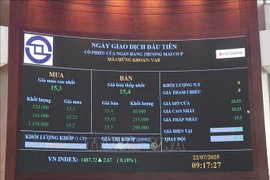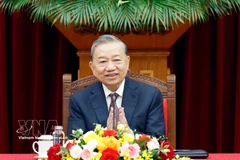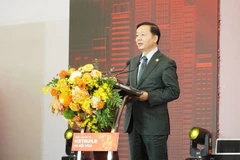
Hanoi (VNA) - Immediately after FTSE Russell officially upgraded Vietnam from a frontier to a secondary emerging market on October 8, major international outlets namely Reuters, AFP, Financial Times, Bloomberg, Business Times, Channel News Asia, and Nikkei Asia, simultaneously reported it as “the strongest signal” of Vietnam’s rising position in the global financial map.
Imminent surge in foreign capital inflows
According to Reuters, the upgrade from frontier market status - a designation that prevents many passive funds from buying shares of locally listed companies - is expected to unlock billions of US dollars in foreign investment as well as boost its IPO market. Analysts predict that a large inflow of international capital will soon be triggered.
Reuters cited FTSE Russell’s estimate that inflows could reach 6 billion USD, while HSBC Global Investment Research forecast that Vietnam may attract 3.4 billion USD from active funds and 10.4 billion USD from passive funds.
The World Bank has projected short-term inflows of about 5 billion USD before and after the upgrade from both passive and active investors. In the long term, investment inflows may rise to as much as 25 billion USD by 2030, provided that Vietnam maintains strong reform momentum and macroeconomic stability.
Business Times cited Tyler Nguyen, chief market strategist at HSC Securities, noting that such a magnitude of capital inflows would be more than sufficient to reverse the persistent foreign net selling seen in recent years, marking a decisive turning point for the market.
In an article published on October 8, Channel News Asia stressed that the official recognition and upgrade of Vietnam’s securities market is clear evidence of the country’s sound development path and its growing capacity to integrate deeply into the global financial system.
Channel News Asia quoted Wanming Du, Director of Index Policy for the Asia-Pacific region at FTSE Russell, as saying that the reclassification is expected to be a structural positive for Vietnam’s capital markets, reinforcing the country’s progress towards greater openness, improved liquidity and deeper institutional participation.
Gary Harron, Head of Securities Services at HSBC Vietnam, affirmed that this advancement will lower capital-raising costs while expanding Vietnamese companies’ access to global finance. He noted that for Vietnam, shedding the frontier label can profoundly reshape investors’ behaviour and confidence, altering the trajectory of its continued long-term economic development and reducing dependence on any single trading partner.
From a regional perspective, Suvir Loomba, Head of Securities Services - Asia at HSBC, noted that Vietnam, an emerging export powerhouse, has demonstrated strong resilience against short-term trade fluctuations.
Market booms, but caution needed
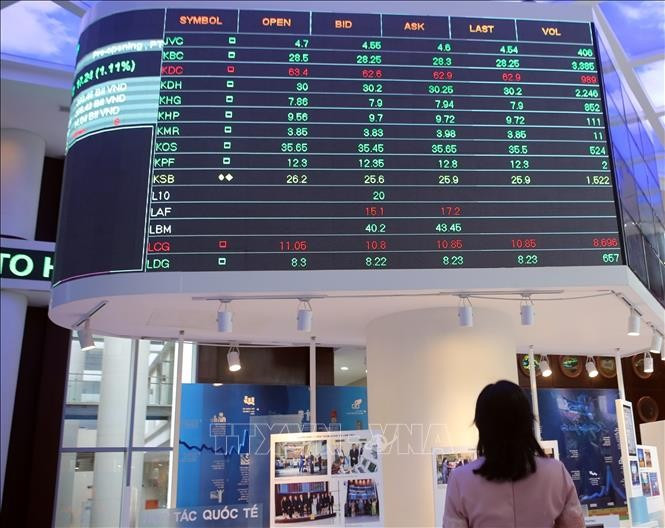
According to Reuters, Vietnam's benchmark stock index (VNI), has surged 33% this year, making it the best-performing stock market in Southeast Asia. The index has hit record highs multiple times this year. However, the rapid gains have also triggered a wave of profit-taking by foreign investors.
Hebe Chen, an expert at Vantage Markets (Melbourne), commented on Nikkei Asia’s article that the upgrade brings excitement, but caution is needed. The market is currently trading at a forward price-to-earnings ratio of 12.2, significantly above the three-year average of 10.2.
As Vietnam enters the emerging market group, it will face stronger competition in attracting foreign capital and will need to share market share with more developed economies. Currently, Vietnam accounts for about 32% of FTSE’s frontier market index, a share expected to decline following the upgrade.
The Financial Times wrote that the market upgrade is just the first milestone in Vietnam’s strategy to expand the scale and depth of its capital market. The next goal is to join MSCI’s emerging market group, which attracts a significantly larger pool of global capital.
MSCI currently classifies Vietnam as a “frontier market” due to technical barriers such as foreign ownership limits (FOL) and insufficiently transparent trading mechanisms. Vietnam has approved a roadmap to meet FTSE standards by 2025 and MSCI standards by 2030, alongside various legal reforms to comply with international criteria.
The new KRX trading system has been officially operational since May 2025, paving the way for a central counterparty (CCP) clearing mechanism - a key foundation for MSCI to consider an upgrade.
According to Maybank, the goal of raising Vietnam’s sovereign credit rating to “investment grade” between 2028 and 2030 will help lower capital costs, stabilise exchange rates, and enhance the country’s appeal to long-term investors.
Strong signal of confidence
In various articles published by international media, experts agreed that FTSE Russell’s decision is not merely symbolic but also strengthens the confidence of the global investor community in Vietnam’s steadfast commitment to reforming and modernising its financial market
Being upgraded by FTSE Russell is therefore not only a milestone for the stock market but also a landmark in Vietnam’s journey of financial integration, reflecting the persistent efforts of the Vietnamese Government, management agencies, and the business community over more than a decade.
This milestone affirms international confidence in Vietnam’s resilience and adaptability, and more importantly, it lays the foundation for Vietnam to advance more decisively toward becoming a true emerging economy, said Tyler Nguyen./.