Japanese enterprises key to Hai Phong economic growth

Japanese businesses have become an important part of Hai Phong’s economy, stated Secretary of the municipal Party Committee Le Van Thanh.
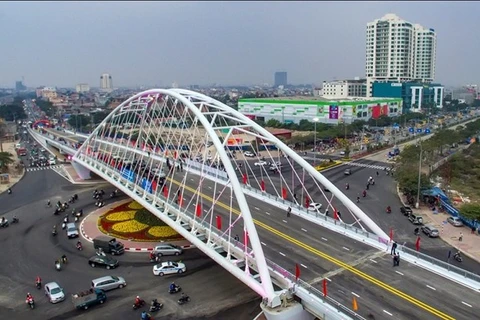
Japanese enterprises key to Hai Phong economic growth ảnh 1 Hai Phong's Tan Vu - Lach Huyen Bridge, the longest cross-sea bridge in Vietnam (Photo: Vietnam Ministry of Transport)

Hai Phong (VNA) – Japanesebusinesses have become an important part of Hai Phong’s economy, statedSecretary of the municipal Party Committee Le Van Thanh at a conference to promoteJapan’s investment and tourism in the northern port city on March 24.

The conference saw Vietnamese and Japanesefirms discussing cooperation opportunities and their potential in the sectorsof tourism, auto support industry, logistics, and human resources training. TheHai Phong Investment, Trade and Tourism Promotion Centre signed seven memorandaof understanding on cooperation with Japanese companies.

Speaking at the event, Japanese Ambassadorto Vietnam Umeda Kunio highlighted the growth of ties between Japan and HaiPhong as reflected through several Vietnam – Japan trade pacts on majorprojects in the city.

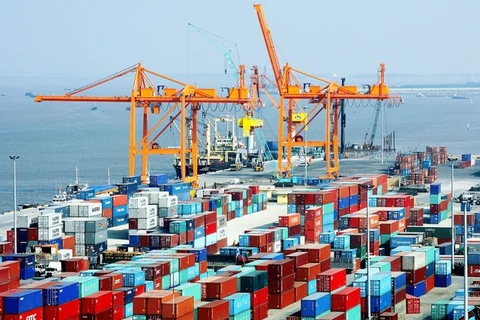
Japanese technologies have been used inbuilding the local Tan Vu bridge and port, he added.

Vu Tien Loc, Chairman of the VietnamChamber of Commerce and Industry (VCCI), said Hai Phong has convenientinfrastructure and is active in institutional reform, saying they are pluspoints in attracting investors.

He said he expects 60 participatinginvestors will promote the locality’s favourable business climate to theirJapanese peers. 

He stated attracting investment from Japanis a goal set by the Vietnamese government and Hai Phong authorities inparticular.

As of February 2018, Japan had 134 FDIprojects capitalised at 4.31 billion USD in Hai Phong, ranking first in volume andsecond in value.

Hai Phong’s tourism-culture cooperationwith Japanese localities has also recorded upbeat outcomes, with frequentdelegation exchanges, cultural exchanges, trade promotion events, and jointeducational programmes.-VNA
VNA
See more

Chili peppers are on the list of essential goods in Indonesia (Photo: VNA)

Indonesia reduces imports of strategic food commodities

In 2026, Indonesia is expected to have approximately 12 million tonnes of rice carried over from the previous year, supported by annual production of around 34.7 million tonnes. With projected consumption of 31.1 million tonnes, national rice reserves could reach approximately 16 million tonnes by the end of the year.

Hanoi’s roadmap to implement low-emission zones from July is providing a strong boost to the electric two-wheeler market (Photo: VNA)

Low-emission zone roadmap drives electric two-wheeler boom in Hanoi

From July 1, Hanoi will introduce time-based or area-based restrictions on petrol-powered motorcycles within Ring Road 1, with plans to expand coverage across the entire zone by 2028 and extend to areas within Ring Road 3 by 2030. The policy is expected to reshape travel habits for millions of urban residents.

Delegates at the opening ceremony of the Made in Da Nang Expo 2026 (Photo: VNA)

Nearly 300 firms join Made in Da Nang Expo 2026

Speaking at the opening ceremony, Vice Chairman of the Da Nang People’s Committee Tran Chi Cuong said the exhibition is a large-scale trade promotion event aimed at showcasing products, connecting markets, and helping businesses enhance competitiveness while expanding domestic and export markets.

 Green production, standardised value chains key to fruit, vegetable sector growth

Green production, standardised value chains key to fruit, vegetable sector growth

Facing mounting pressure from increasingly stringent domestic and international standards, Vietnam’s fruit and vegetable sector is accelerating its shift toward green, safe, and sustainable production models. Beyond changing farming practices, localities and businesses are stepping up efforts to standardise value chains and build brands to achieve growth targets for 2026.

Hiep Phuoc Industrial Park in Ho Chi Minh City. (Photo: VNA)

Southern industrial real estate enters strategic growth phase

Key industrial hubs in the south, including Ho Chi Minh City, Dong Nai and Tay Ninh, are transitioning from a period driven largely by supply expansion and rising land prices to a more refined growth model. This new phase is shaped by infrastructure upgrades, supply chain restructuring, product improvement and greater emphasis on operational performance.