Khanh Hoa’s 1000-year-old Cham towers become tourist hotspots

​Dubbed the “land of ancient towers”, Khanh Hoa boasts a rich Cham legacy through architectural masterpieces like the Po Nagar, Hoa Lai, Po Klong Garai, and Po Rome towers.

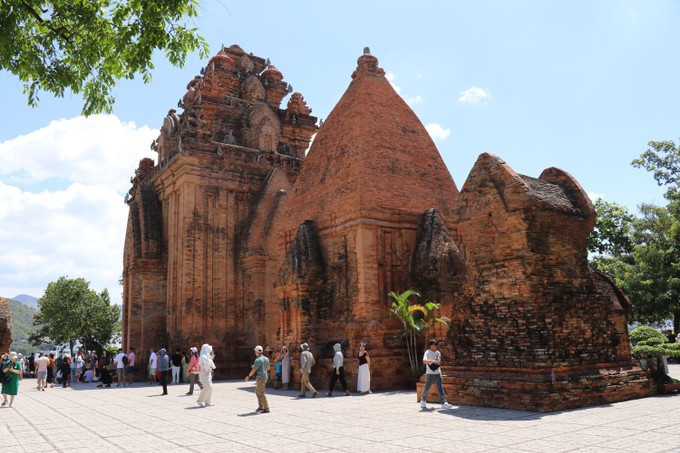
Po Nagar Tower in Bac Nha Trang ward, Khanh Hoa province (Photo: VNA)

Khanh Hoa (VNA) - Nestled along Vietnam’s south central coast, Khanh Hoa province is home to a cluster of ancient Cham towers standing tall for over a millennium. Packed with history, these sacred sites are now blowing up as must-see tourist spots.

Dubbed the “land of ancient towers”, Khanh Hoa boasts a rich Cham legacy through architectural masterpieces like the Po Nagar, Hoa Lai, Po Klong Garai, and Po Rome towers. Among them, the Po Klong Garai and Po Nagar complexes stand out for their historical significance, aesthetic appeal, and cultural value.

Perched on Trau Hill in Do Vinh ward, the Po Klong Garai complex, built between the late 13th and early 14th centuries, pays tribute to King Po Klong Garai (1151–1205), revered for his contributions to local irrigation and agriculture. The site includes the Main Tower, Fire Tower, and Gate Tower, with the 20.5m Main Tower boasting intricate designs and distinctive red baked bricks. Its construction technique, which allows bricks to seamlessly interlock without visible mortar, remains an unsolved mystery, adding to its enigmatic allure.

The complex is the heart and soul of the Cham Balamon community in southern Khanh Hoa, especially during the annual Kate Festival between late September and early October. This site, together with the Hoa Lai tower, was designated a Special National Monument in 2016. In 2024, the statue of King Po Klong Garai was officially recognised as a National Treasure.
ep.jpg
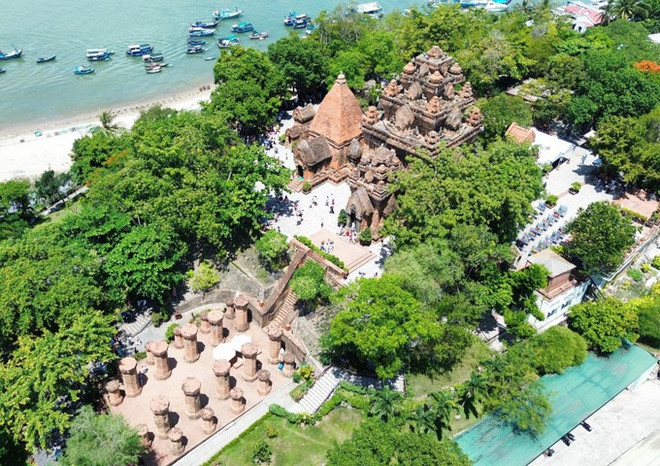
An aerial view of the Po Nagar Tower complex (Photo: VNA)

Not far away, the Po Nagar Tower complex, set on Cu Lao Hill overlooking the Cai River in northern Nha Trang, is dedicated to the goddess Po Nagar (Thien Y A Na), the protector of land and people. Built between the 8th and 13th centuries, this site has been through historical upheavals but still radiates spiritual magic. Its Mandapa hall, with distinctive octagonal brick columns, and a cluster of towers, pull in thousands of visitors annually.

On July 10, the Po Nagar Tower complex was officially recognised as a Special National Monument. Its intangible cultural value shines during the annual Po Nagar Festival held from the 20th to 23rd of the third lunar month.

The Cham’s sophisticated bricklaying technique, with nearly invisible joints, continues to puzzle researchers. Intricate carvings of deities, dancers, and sacred animals, though worn by time, vividly reflect Hinduism’s profound influence on Cham artistry and spirituality.

To keep this legacy alive, Director of the provincial Department of Culture, Sports, and Tourism Nguyen Van Hoa said local artisans from Bau Truc pottery village and My Nghiep weaving village put on traditional craft shows at Po Klong Garai. Tourists get a treat with Cham folk music and dance performances on weekends and holidays, plus two epic shows, “Lung Linh Xu Tram” and “Trang Soi Dang Thap” staged on the first and 15th of each lunar month.

The towers have also become popular check-in spots, with visitors donning traditional Cham attire for photos./.

VNA

See more

Foreign tourists visit Hanoi's Old Quarter. (Photo: vietnamnet.vn)

Hanoi welcomes more than 33.7 million visitors in 2025

In 2026, the capital aims to welcome more than 35.8 million visitors, an increase of 6.2%. Of the total, international arrivals are expected to exceed 8.6 million, while domestic visitors are projected at around 27.2 million.

International tourists visit Ha Long Bay (Photo: thanhnien.vn)

Vietnam ushers in digital era of tourism

Visit Vietnam is not merely a data platform but a fundamental shift in development thinking, reflecting how Vietnam is preparing for a tourism future driven by data, digital technology, and artificial intelligence (AI).

Vietnam’s first high-end park golf model launched in Lam Dong province. (Photo: VNA)

Vietnam’s first high-end park golf model launched

The park golf project in Lam Dong province represents a new, distinctive tourism product that aligns with current sports tourism development trends. It is expected to help diversify tourism and sports offerings at NovaWorld Phan Thiet and enhance the destination’s attractiveness to domestic and international visitors.

The closing ceremony of the Visit Vietnam Year – Hue 2025 on December 20 (Photo: VNA)

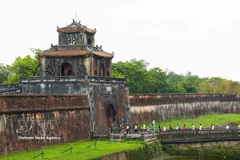
Visit Vietnam Year – Hue 2025 wraps up

A local official attributed the success of the Visit Vietnam Year – Hue 2025 to not only efforts by local authorities, but also the strong support from businesses, artists, craftsmen, international partners, and especially the hospitality and cultural elegance of Hue’s people – a key factor in building Hue’s tourism brand.

Nho Que River - a masterpiece of nature in the Dong Van Karst Plateau in Tuyen Quang province (Photo: VNA)

Vietnam solidifies standing in global tourism landscape

Vietnam has once again been honoured as the World’s Leading Heritage Destination in 2025 by the World Travel Awards (WTA), marking its sixth recognition after the wins in 2019, 2020, 2022, 2023, and 2024 and reaffirming its foothold in the global tourism industry.

A double-decker sightseeing bus in Ho Chi Minh City. (Photo: VNA)

HCM City elevates destination appeal, enhances tourism workforce quality

As Ho Chi Minh City’s tourism sector continues to sustain growth momentum, it is shifting strongly from post-merger recovery to development acceleration, with a focus on restructuring destination spaces to offer diverse tourism models and attract more domestic and international visitors.

Visitors tour Ngo Mon (Noon Gate) at the Hue Imperial Citadel. (Photo: VNA)

Visit Vietnam Year – Hue 2025: renewing heritage, shaping distinct brand

Visit Vietnam Year – Hue 2025 has left a series of strong imprints, reflecting a marked transformation in Hue’s tourism in terms of scale, quality and brand positioning. More than a programme of events, it has become a powerful driver, helping position Hue as a competitive cultural and heritage tourism centre in the region.