Lawmakers scrutinise dual-city international financial centre plan

Legislators expressed strong support for establishing an IFC, viewing it as a critical step toward elevating Vietnam’s financial standing and boosting economic development.

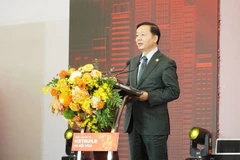
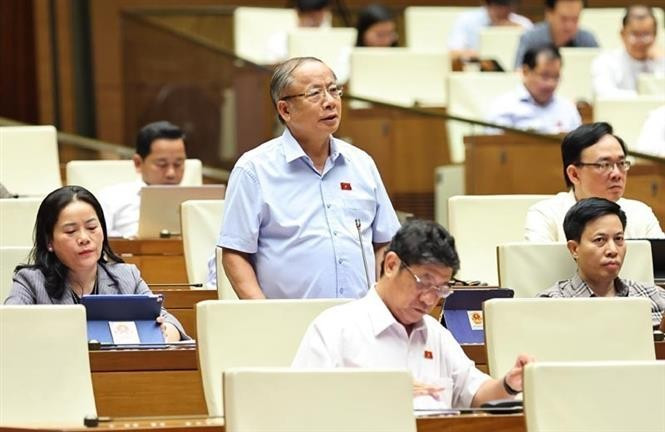
Deputy Nguyen Van Than (Thai Binh province) (Photo: VNA)

Hanoi (VNA) – During the 9th sitting of the 15th National Assembly, lawmakers discussed a draft resolution on establishing an international financial centre (IFC) in Vietnam, with some proposing careful consideration of a dual-city model based on regional development strategies and investment efficiency.

Legislators expressed strong support for establishing an IFC, viewing it as a critical step toward elevating Vietnam’s financial standing and boosting economic development.

Addressing the plenary session, deputy Nguyen Quang Huan (Binh Duong province) noted that Hanoi and Ho Chi Minh City have existing infrastructure advantages, enabling quicker implementation. However, to ensure balanced regional development, Da Nang could be a strategic choice to develop a new centre from scratch in line with international standards.

He cautioned that establishing IFCs in two cities would require simultaneous infrastructure investments in both locations, which may strain Vietnam’s limited land and resources.
vna-potal-quoc-hoi-thao-luan-ve-trung-tam-tai-chinh-quoc-te-tai-viet-nam-8088221.jpg
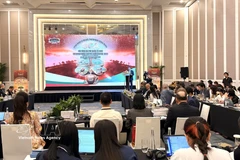
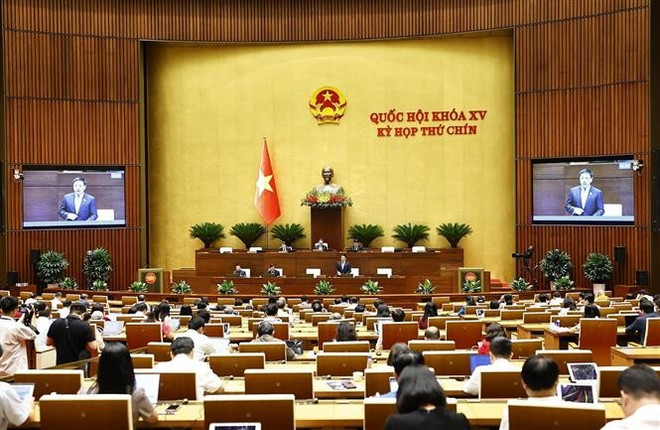
During the 9th sitting of the 15th National Assembly, lawmakers discuss a draft resolution on establishing an international financial centre (IFC) in Vietnam. (Photo: VNA)

Sharing similar concerns, deputy Nguyen Van Than (Thai Binh province) warned against spreading investments too thin, especially in light of infrastructure, human resources, and technical constraints. He cited past global examples of failed financial centres, urging Vietnam to begin with one well-executed location and consider expansion later based on results and investor interest.

Deputy Trinh Thi Tu Anh (Lam Dong province) proposed that Vietnam should define its IFC around key strengths, such as becoming a hub for digital transformation and green finance in Southeast Asia, SME financial services, and global supply chain finance. She also highlighted the importance of robust digital infrastructure and cybersecurity, describing them as foundational for any modern IFC.

She further called for the creation of a legal “sandbox” framework to allow fintech companies to pilot innovative products and services without being restricted by rigid regulations, following the successful examples of Singapore and the UK./.

VNA

See more

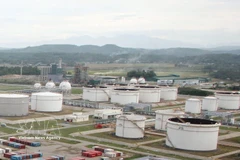
Oil rigs at the Bach Ho oil field. (Photo: VNA)

Resolution 79: State economy to lead growth

Resolution 79 is described as a “clear action declaration” by the Politburo, saying the state economy is not only responsible for maintaining macroeconomic stability, but must also become the force leading a new growth model that is green and sustainable.

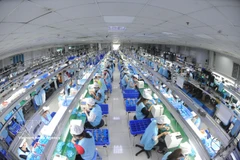
Workers at Garment 10 Corporation produce apparel for export. (Photo: Nhan Dan)

Leveraging export advantages within RCEP region

In 2025, seafood exports to China alone exceeded 2.2 billion USD, up about 33% compared to 2024. Shipments to Japan fetched nearly 1.7 billion USD, a year-on-year increase of 14.6%, while those to the Republic of Korea and Australia grew by 9.6% and 3.2%, respectively.

Certificates of membership in the Vietnam International Financial Centre in Da Nang are awarded at the conference on January 9. (Photo: VNA)

Da Nang continues targeted investment promotion approaches

According to Chairman of the Da Nang People’s Committee Pham Duc An, the city prioritises building sustainable economic ecosystems and focuses on key breakthrough sectors with strong spillover effects, including high technology and digital transformation, logistics, urban infrastructure, finance, processing and manufacturing industries, high-tech agriculture, and the pharmaceutical and medicinal herb industry.

In 2025, Hyundai sales reached 53,229 vehicles across the Vietnamese market. (Illustrative photo: Yonhap/VNA)

Hyundai sales in Vietnam rise almost 23% in December

In 2025, sales reached 53,229 vehicles across the market, a result considered a testament to the efforts by TC Group, Hyundai Thanh Cong, and the entire Hyundai dealership network nationwide amidst a volatile market.

Hydroponic vegetable cultivation model at the High-Tech Agricultural Park (Photo daibieunhandan.vn)

HCM City accelerates shift toward ecological urban agriculture

​The city’s agricultural sector is undergoing a strong transformation, restructuring toward higher value-added and sustainable development. In recent years, the sector has maintained steady growth, with agricultural, forestry and fisheries output rising by an estimated 2.5% annually.

Illustrative photo (Photo: VNA)

Dong Nai to launch major projects ahead of 14th National Party Congress

The launch of work on these projects represents an important political event for the province as they demonstrate the strong commitment of the entire political system to developing a comprehensive and modern infrastructure network, enhancing inter-regional connectivity, and addressing social welfare needs.

Illustrative image (Photo: VNA)

Lam Dong ready for nationwide economic census 2026

The entire process needs to reassure respondents that statistical activities operate independently, information is protected under the Statistics Law, and all data collection is completely separate from tax management.

Officials cut the ribbon to inaugurate the IFC Da Nang. (Photo: VNA)

Vietnam launches International Financial Centre in Da Nang

The Government has clearly defined the development orientation of the International Financial Centre in Da Nang as a modern international financial hub closely linked with the innovation ecosystem, digital technology, and sustainable finance.

Officers of the Thanh Hai Border Guard Station (Phu Thuy ward, Lam Dong province) patrol and monitor fishing vessels entering and leaving the port. (Photo: VNA)

Lam Dong steps up oversight to curb IUU fishing

As of early January 2026, the province had 8,210 registered fishing vessels, with more than 90% holding valid fishing licences, according to the department. A total of 8,115 vessels, or 98.76%, have been updated in the National Population Database, while 1,773 out of 1,941 vessels measuring 15 metres or longer have been granted food safety certificates, accounting for 91.34%.