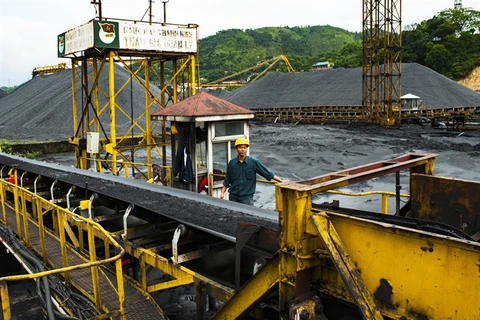
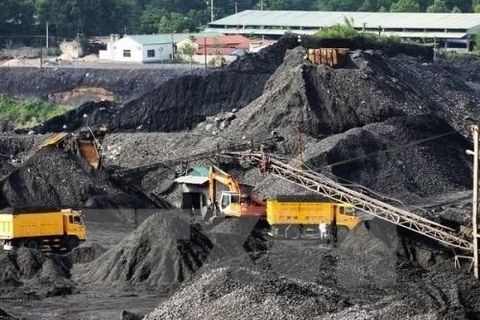
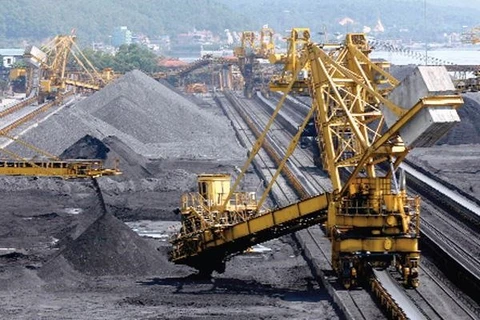
Vinacomin’s Cua Ong coal extraction rig in the northern province of Quang Ninh (Photo: VNA)
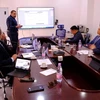
 Hanoi (VNA) - Representatives of the PetroVietnam Securities Incorporated (PSI) and the Vinacomin Power Holding Corporation told an investors’ conference on July 26 that they were encouraged by investors’ interest shown in purchasing Vinacomin shares.
Ngo Tri Thinh, general director of Vinacomin Power Holding Corporation - a subsidiary of the Vietnam National Coal-Mineral Industries Holding Corporation Ltd (Vinacomin), told more than 100 potential investors that his company is well aware of the pressure and competitive nature of the energy sector, and it strives to meet investor expectations with more effective management and operation systems.
The Vinacomin Power Holding Corporation became equitised in January 2016 with 6.8 trillion VND (302.4 million USD) in charter capital, under the stock code DTK on the Hanoi Stock Exchange’s (HNX) Unlisted Public Company Market (UPCoM).
The company now has 680 million common stocks trading on the UPCoM at 14,000 VND (0.6 USD) per share, same as its preferential price in 2016. According to its 2016 financial report, the company finished with 354 billion VND (15.74 million USD) in post-tax income, down by 29.36 percent from its 2015 result.
The Vinacomin Power Holding Corporation is operating seven thermo-electric plants across the country, generating more than nine billion kilowatts per year. The group is considered the third largest power supplier in the growing Vietnamese power market, following Electricity of Vietnam and the PetroVietnam.
The need for thermo-electricity in the country will reach 245 billion kilowatts in 2020 and a staggering 559 billion kilowatt in 2030.
Since the company’s plants are situated in close proximity to coal mines, it has managed to cut down on transportation costs and facilitate the coal sector’s value chain.
PSI representative explained at the conference that the aforementioned loss could be attributed to the large capital flow into Vinacomin’s power projects. At present, the company’s plants have yet to generate enough revenue to break even, so it will take a few more years before the amount of outstanding debts decline and income goes up.
However, PSI also warned that Vinacomin’s DTK stock has a low liquidity rate, and could pose risks for investors. As of now, up to 99.68 percent of the company’s shares is owned by the State-owned enterprise Vinacomin, with low value of free float shares.
Vinacomin’s Deputy General Director Nguyen Van Bien said at the conference that in accordance with the Prime Minister’s orientation for the 2016-20 period, Vinacomin plans to restructure all its subsidiaries. In particular, the group will divest from its Vinacomin Power Holding Corporation in two phases. The first phase will see the State ownership reducing from 99.68 percent to 65 percent and the second phase shifting from 65 percent to 51 percent by the end of 2018.
The group will also divest down to 36 percent from the Vinacomin Housing and Infrastructure Company Limited, 51 percent at the Vinacomin-Việt Bắc Geology Joint Stock Company, and 65 percent at the Vinacomin Minerals Holding Corporation.
The group hopes to mobilise as many investments at home and abroad as possible, and will give priority to potential investors with strong financial ability, experience in the power sector or those willing to commit to a long-term deal with the company, Bien said.
The group plans to announce further plans in the third quarter of 2017 to help hesitant investors make their decisions by the end of the year.-VNA
Ngo Tri Thinh, general director of Vinacomin Power Holding Corporation - a subsidiary of the Vietnam National Coal-Mineral Industries Holding Corporation Ltd (Vinacomin), told more than 100 potential investors that his company is well aware of the pressure and competitive nature of the energy sector, and it strives to meet investor expectations with more effective management and operation systems.
The Vinacomin Power Holding Corporation became equitised in January 2016 with 6.8 trillion VND (302.4 million USD) in charter capital, under the stock code DTK on the Hanoi Stock Exchange’s (HNX) Unlisted Public Company Market (UPCoM).
The company now has 680 million common stocks trading on the UPCoM at 14,000 VND (0.6 USD) per share, same as its preferential price in 2016. According to its 2016 financial report, the company finished with 354 billion VND (15.74 million USD) in post-tax income, down by 29.36 percent from its 2015 result.
The Vinacomin Power Holding Corporation is operating seven thermo-electric plants across the country, generating more than nine billion kilowatts per year. The group is considered the third largest power supplier in the growing Vietnamese power market, following Electricity of Vietnam and the PetroVietnam.
The need for thermo-electricity in the country will reach 245 billion kilowatts in 2020 and a staggering 559 billion kilowatt in 2030.
Since the company’s plants are situated in close proximity to coal mines, it has managed to cut down on transportation costs and facilitate the coal sector’s value chain.
PSI representative explained at the conference that the aforementioned loss could be attributed to the large capital flow into Vinacomin’s power projects. At present, the company’s plants have yet to generate enough revenue to break even, so it will take a few more years before the amount of outstanding debts decline and income goes up.
However, PSI also warned that Vinacomin’s DTK stock has a low liquidity rate, and could pose risks for investors. As of now, up to 99.68 percent of the company’s shares is owned by the State-owned enterprise Vinacomin, with low value of free float shares.
Vinacomin’s Deputy General Director Nguyen Van Bien said at the conference that in accordance with the Prime Minister’s orientation for the 2016-20 period, Vinacomin plans to restructure all its subsidiaries. In particular, the group will divest from its Vinacomin Power Holding Corporation in two phases. The first phase will see the State ownership reducing from 99.68 percent to 65 percent and the second phase shifting from 65 percent to 51 percent by the end of 2018.
The group will also divest down to 36 percent from the Vinacomin Housing and Infrastructure Company Limited, 51 percent at the Vinacomin-Việt Bắc Geology Joint Stock Company, and 65 percent at the Vinacomin Minerals Holding Corporation.
The group hopes to mobilise as many investments at home and abroad as possible, and will give priority to potential investors with strong financial ability, experience in the power sector or those willing to commit to a long-term deal with the company, Bien said.
The group plans to announce further plans in the third quarter of 2017 to help hesitant investors make their decisions by the end of the year.-VNA
VNA