Kuala Lumpur (VNA) - Malaysia is on track to meet its renewal energy target of 31% renewable energy (RE) mix by December, with about 4,000MW of large-scale solar projects already energised under the government’s procurement programme.
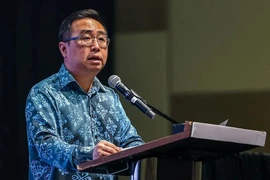
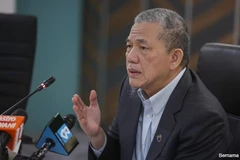
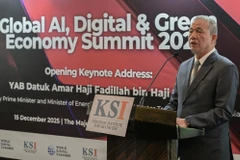
Speaking at the launch of Sime Darby Property’s Community Renewable Energy Aggregation Mechanism (Cream) project recently, Deputy Prime Minister and Minister of Energy Transition and Water Transformation Datuk Seri Fadillah Yusof said the government is optimistic about reaching the 31% target by year-end, and this will be realised through close collaboration between the public and private sectors, as well as international investors.
Under the National Energy Transition Roadmap (NETR), introduced in 2023, Malaysia has set renewable energy capacity targets of 31% by 2025, 40% by 2035 and 70% by 2050.
Since the launch of the NETR, the government has approved additional deployment of 5.5GW of new RE capacity, which translates to an investment value of 25 billion MYR (5.92 billion USD), contributing to achieving the target set in the roadmap. In addition, Malaysia is also on track to attract 1.2-1.3 trillion MYR by 2050.
To support commercial viability, Fadillah said the government recently reduced the community electricity tariff under the Cream scheme by 40%, from 15 US cents per kWh to 9 cents per kWh. This will encourage greater participation from homeowners, investors and businesses in the renewable energy sector.
In addition, the government is also reviewing the fee for solar projects to encourage more stakeholders to participate in these initiatives, thereby helping to ensure that these programmes will benefit the people.
The official also noted that the Energy Efficiency and Conservation Bill 2023 has been passed by Parliament and the Carbon Capture, Utilisation and Storage Bill has been submitted.
Meanwhile, the Corporate Renewable Energy Supply Scheme (Cress), which was carried out in 2024, has received positive feedback.
The Cream scheme allows homeowners to rent out their rooftops to combine multiple rooftops into one system to generate solar power. Participating households will earn rental income while also contributing directly to Malaysia’s green energy transition. The initiative aims to make clean energy more accessible to the public, while supporting the national grid by increasing flexibility and resilience, thereby contributing to a more sustainable energy future./.