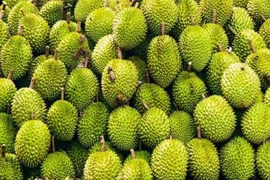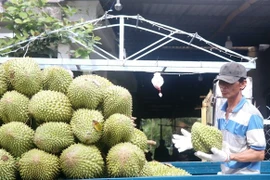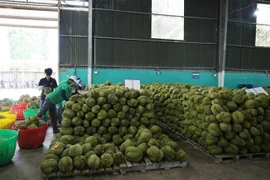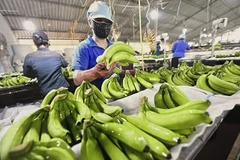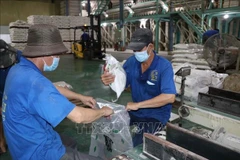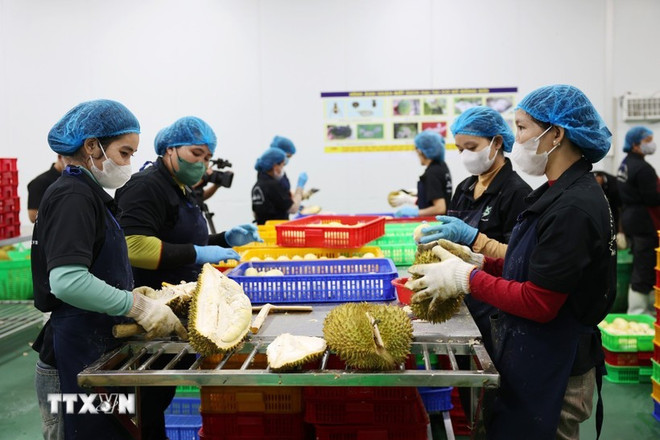
Workers separating durian segments for freezing. (Photo: VNA)
Hanoi (VNA) - Mapping cadmium-contaminated durian-growing regions is expected to create a strong “shield” for Vietnam’s durian industry against strict technical barriers. This not only helps the sector to maintain its foothold in China but also expand into other high-end markets.
According to the Ministry of Agriculture and Environment, over the past three months, Vietnam’s durian exports have rebounded strongly thanks to a series of quality management measures, expansion of plantation codes, and the removal of technical barriers with China.
Durian exports bounce back
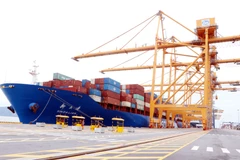
In the first seven months of 2025, most high-value fruit exports to China, including durian, declined. However, in May–July, Vietnam shipped 7,745 batches of fresh durian, equivalent to 207,000 tonnes, over 10 times higher than in the first four months of the year.
Exports of frozen durian also rose sharply, reaching 560 batches, nearly 16,000 tonnes, up more than 64%. Food safety violations have dropped significantly.
Dang Phuc Nguyen, General Secretary of the Vietnam Fruit and Vegetable Association (VinaFruit), said that by the end of July, durian exports had reached about 1.2 billion USD. Despite lower reduction than the same period last year, the sector is showing positive signs, with two consecutive months of growth, particularly positive evaluations from Chinese inspection teams.
Implementing the Prime Minister’s directive on promoting sustainable durian production and export, the Ministry of Agriculture and Environment has developed a food safety control process and finalised a draft circular on the management of plantation codes and packing facilities.
Local authorities have strengthened supervision at packing facilities, requiring safety indicators to be checked before export.
The Ministry has also conducted direct technical negotiations with China.
As a result, the General Administration of Customs of China (GACC) approved an additional 829 plantation codes and 131 packing facilities for Vietnam, bringing the total to 1,396 plantations and 188 facilities.
In July 2025, GACC experts directly inspected Vietnam’s durian export chain.
Mapping cadmium warnings
Recently, several shipments of Vietnamese durian were found by Chinese authorities to contain excessive residues of the heavy metal cadmium, leading to warnings, trade disruptions, and losses for farmers and businesses.
According to Huynh Tan Dat, Director of the Department of Crop Production and Plant Protection (Ministry of Agriculture and Environment), Vietnam plans to develop a cadmium map for durian-growing regions.
The map will be developed by collecting large-scale samples of soil, irrigation water, and fertilisers in durian-growing areas, analysing them in accredited laboratories, and then compiling the data to identify pollution “hotspots.”
All results will be digitised and integrated into the plantation management system, enabling authorities, businesses, and farmers to easily access the information and proactively mitigate risks.
According to the plan, the Department of Crop Production and Plant Protection will first conduct surveys in major durian-growing regions.
Initial findings indicate few warnings in the Southeast and Central Highlands, so data collection will focus on other regions, such as the Mekong Delta.
Once completed, the mapping system will be expanded and regularly updated.
Alongside the development of the cadmium map, soil improvement models will be applied to reduce heavy metal content, such as using organic fertilisers and applying biological agents to limit cadmium absorption by trees.
This solution will be closely linked with the restructuring of growing areas to ensure uniform product quality and safety from production to export.
This is a prerequisite for Vietnamese durian not only to maintain its position in China but also to conquer high-end markets such as the US, the EU, Japan, and the Republic of Korea, Dat said./.