New heart lungs and hope after Vietnam's landmark transplant

Viet Duc University Hospital announced its first successful simultaneous lung and heart transplant in Vietnam for a patient with multiple organ failure on August 13.

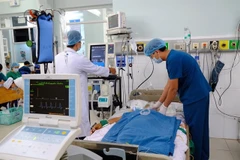
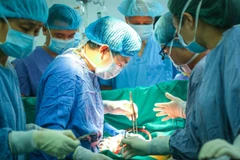
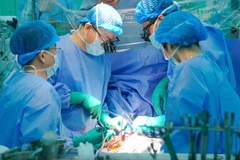
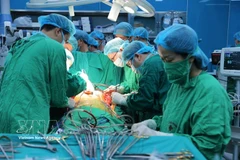
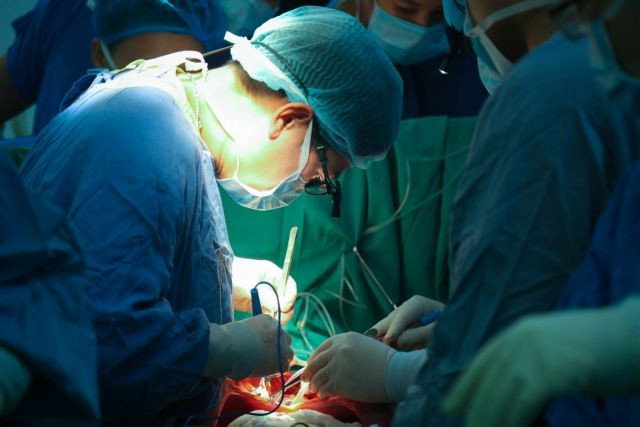
Medical team of the VietDuc Hospital perform the simultaneous heart-lung transplant on a patient with multiple organ failure. (Photo courtesy of the hospital)

Hanoi (VNS/VNA) - Viet Duc Hospital announced the country’s first successful simultaneous lung and heart transplant, performed on a patient with multiple organ failure on August 13.

The patient, Tran Nhu Q, was in critical condition due to severe multiple organ failure, with her risk of death increasing daily. She was reliant on medication to sustain her life.

The 38-year-old woman was diagnosed with Eisenmenger syndrome, irreversible right ventricular failure and severe tricuspid regurgitation, resulting from an atrial septal defect that had been treated in 2011.

"The patient was indicated for a simultaneous heart and lung transplant, although there was not enough time to treat malnutrition and the donor's lungs were infected with Acinetor baummani bacteria and were larger than the recipient's chest," said Director of Viet Duc University Hospital Dr Duong Duc Hung.

Three weeks before receiving the organs from the 34-year-old brain-dead donor, doctors decided to perform a simultaneous heart and lung transplant on the woman.

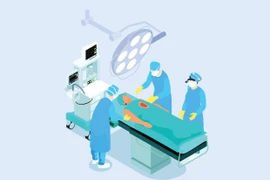
The surgery lasted seven hours with the support of an extracorporeal circulation machine. The surgical team reduced the size of both lungs to match and connected the two main bronchi instead of the traditional trachea to ensure better blood flow to the anastomosis.

The biggest challenge after surgery was balancing immunosuppressants. The patient needed high doses to avoid rejection, but this increased the risk of infection from multidrug-resistant bacteria in the donor lung. Doctors used nearly 40 drugs, combined with ultrafiltration, to treat kidney failure and titrated antibiotics to protect kidney function.

The patient was given intravenous and enteral nutrition, lung hygiene by tracheostomy, endoscopic sputum suction and rehabilitation exercises. Currently, the patient's heart and lung function have recovered well and continue to be closely monitored.

443289-5243227463296303-bn.jpg
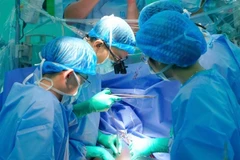
Currently, the patient's heart and lung function have recovered well and continue to be closely monitored. (Photo courtesy of the hospital)

Deputy Head of the Department of Cardiovascular and Thoracic Surgery, Viet Duc University Hospital, Associate Professor, Dr Pham Huu Lu said that heart-lung transplantation is an advanced medical technique in which the patient's heart and lungs are simultaneously replaced with a healthy heart and lungs from a suitable donor. This is the last resort treatment for patients with both end-stage heart and lung disease, when all other treatments have failed.

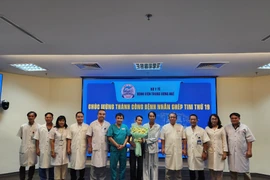
Dr Hung said that the success of the simultaneous heart-lung transplant has opened an important milestone, affirming the great progress of Viet Duc University Hospital in the field of multiple organ transplantation, at the same time setting a milestone for Vietnamese medicine on the world map as well as opening up many opportunities to save lives and new treatment directions for patients with end-stage heart and lung disease.

Director of the Medical Services Administration (MSA), Ministry of Health, Dr Ha Anh Duc congratulated the success of the medical team of Viet Duc University Hospital, the patient and their families.

“This multi-organ transplant from a brain-dead donor marks a remarkable development, affirming that Vietnam has completely mastered the most difficult organ transplant techniques. This is outstanding progress made by the Vietnamese medical industry in the field of organ transplantation,” said Dr Duc.

The MSA director also said that the health ministry will work with experts to evaluate the heart-lung transplant process and provide specific instructions nationwide. At the same time, in May 2026, the Ministry of Health will submit to the National Assembly proposals aimed at further developing the field of organ transplantation in the coming period.

This year is a breakthrough year for the VietDuc University Hospital in multi-organ transplantation. Since launching the programme in 2010 with an average of eight to 10 brain-dead donations each year, the hospital has recorded 25 brain-dead donations this year.

As of August 12, the total number of organ transplants from living and brain-dead donors at Viet Duc University Hospital reached 2,478 cases, including heart, lung, liver and kidney transplants./.
VNA

See more

Military doctors conduct ultrasound examinations for residents in Dong Dang town, Cao Loc district, Lang Son province. (Photo: VNA)

Resolution 72 opens path to a modern, sustainable healthcare system

To build a resilient healthcare system capable of meeting the challenges of ageing, emerging diseases and rising expectations for quality care, Vietnam must continue to strengthen primary and preventive care, invest in human resources, accelerate digitalisation and big data development, and refine healthcare financing mechanisms.

Vietnam steps up Nipah virus prevention at border gates (Photo: suckhoedoisong.vn)

Vietnam tightens Nipah virus prevention at border gates

Local authorities have been instructed to strengthen disease prevention and control measures at border gates, medical facilities and in the community, stay updated with global disease information, and closely monitor inbound travellers.

Nipah virus infection is designated a Group A infectious disease, with reported fatality rates of between 40 and 75%. (Photo: moh.gov.vn)

Health sector steps up preparedness against Nipah virus disease

Nipah virus infection is designated a Group A infectious disease, with reported fatality rates of between 40 and 75%. At present, no vaccine or specific antiviral treatment is available. The virus is mainly transmitted from animals to humans or through contact with contaminated food and objects, and can also spread between people via direct contact with bodily fluids and secretions of infected patients.

Member of the Party Central Committee and Minister of Health Dao Hong Lan (Photo: VNA)

Health minister highlights comprehensive, people-centred healthcare orientation

Member of the Party Central Committee and Minister of Health Dao Hong Lan said the Politburo's Resolution No. 72 provides a breakthrough orientation for the protection, care and improvement of the people’s health. It places the people’s health at the centre of all healthcare policies and services, while aiming to address long-standing bottlenecks in the health sector that have yet to be fundamentally resolved.

Elderly people do morning exercises in the Hoan Kiem Lake area in Hanoi. (Photo: VNA)

Strategic roadmap for healthier future

As Vietnam’s population ages rapidly, Dr Angela Pratt, WHO Representative in Vietnam, identified two strategic priorities: strengthening primary healthcare and developing a formal long-term care system. These measures are essential not only for healthy ageing, but also as long-term investments with wide-ranging socio-economic returns.

Professor Dr Tran Van Thuan, Deputy Minister of Health. (File photo: VNA)

More than 300 medical staff assigned to serve 14th National Party Congress

Deputy Minister of Health Tran Van Thuan called on experts and healthcare workers to uphold a strong sense of responsibility, professionalism and expertise to ensure that medical services for the 14th National Party Congress are delivered safely, effectively and with the highest level of care.

Health check-up offered to citizens in Gia Lai province. (Photo: VNA)

Health ministry maps out three phases for hospital fee exemption

Health insurance participants from near-poor households and those aged 75 and above who are receiving social pension allowances will be entitled to 100% coverage of medical examination and treatment costs within the scope of health insurance benefits.

A patient pays hospital fees using cashless transactions (Photo: qdnd.vn)

Hanoi aims for modern healthcare system

Hanoi's health sector will continue to expand the comprehensive use of digital technology in professional practices to improve management efficiency and service quality, aiming to develop a modern, transparent, and people-centred healthcare system.