New US tariff policy may impact up to 7.5% of Vietnam’s GDP: experts

A 46% tariff would severely undermine Vietnam’s competitiveness in the US.

New US tariff policy may impact up to 7.5% of Vietnam’s GDP: experts

Hanoi VNA – Vietnam could see a significant impact on its economy if the US proceeds with the 46% reciprocal tariff on its exports, a move that experts estimate could impact as much as 7–7.5% of the Southeast Asian nation’s GDP.
chinh-ach-1.jpg
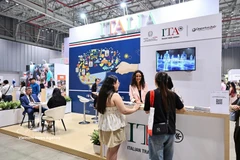
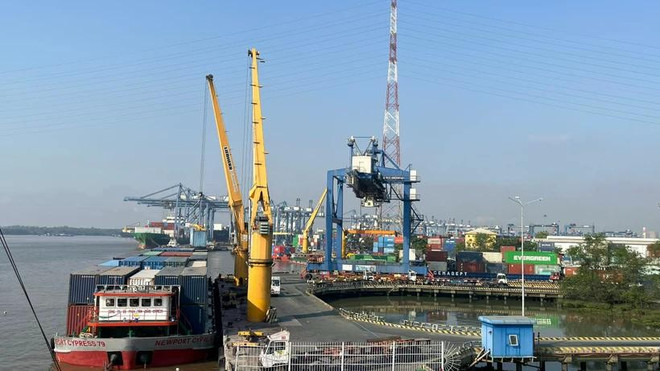
Experts warn of severe consequences as the US weighs imposing a 46% tariff on Vietnamese exports (Photo: VietnamPlus)

Behind the trade surplus figures, experts believe the US government is likely factoring in Vietnam’s role in global supply chains and its relationship with China.

A real and present threat

Economist Nguyen Tri Hieu called the 46% tariff an unprecedented measure, both globally and for Vietnam in particular, which, he said would have a strong impact on Vietnam’s foreign trade and GDP growth.

Beyond the trade surplus, Hieu pointed out that the US government may be considering Vietnam’s growing role in global trade.
chinh-sach-2.jpg
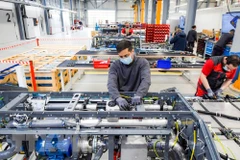
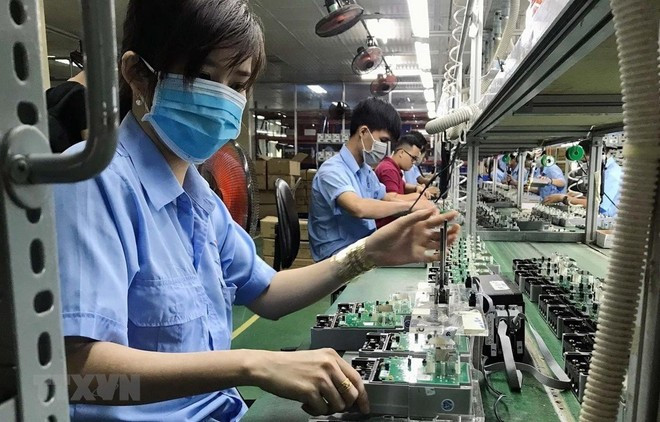
The rate for Vietnam is higher than for its regional competitors in ASEAN—and even China itself. (Photo: VietnamPlus)

Imposing the tariff at such an unimaginable level could be the US’s way of preventing Chinese goods from being disguised as Vietnamese products. Therefore, Vietnam needs to recognise that the US government's stance forms part of its pursuit of shared interests, Hieu said.

Pham Luu Hung, Chief Economist at SSI Securities warned the economic impact could be significant.

Hung explained that Vietnam’s exports to the US amount to 120 billion USD, and if the value added is about 30%, then in the worst-case scenario, the initial impacts could range from 7% to 7.5% of Vietnam’s GDP. The figure is far higher than the earlier estimates of 1–1.5% in case of a 10–15% tariff.

Hung called the 46% rate a “ceiling” to initiate the negotiation process.

Vietnam’s diplomatic efforts

Hieu suggested continuing dialogue and exploring ways to increase imports of American products—such as agricultural goods, aircraft, and high-tech equipment—to help balance trade. However, he cautioned that the chance of the US completely excluding Vietnam from its tariff list remains slim. He also suggested Vietnam considers diversifying export markets as a critical strategy.

A 46% tariff would severely undermine Vietnam’s competitiveness in the US, Hieu warned. Consumers would turn to alternatives from countries like Thailand, Malaysia, Indonesia, or India.

Experts acknowledged Vietnam’s ongoing efforts to address trade tensions.

Hung noted recent positive moves, including Vietnam lowering tariffs on 14 categories of goods and adopting new policies in key sectors. He also cited the recent visit to the US by the Minister of Industry and Trade, as well as draft legislation on strategic trade controls and intellectual property rights protection.

Adjusting with flexibility

At a briefing on April 3, Truong Ba Tuan, Deputy Director of the Department of Tax Policy, Charges and Fees Management and Supervision under the Ministry of Finance, said the tariff would negatively affect Vietnamese manufacturing—particularly in key export sectors such as electronics, agriculture, textile, and footwear.

Tuan said the Ministry of Finance has begun adapting by lowering some import tariffs and reviewing related taxes like VAT and environmental levies.
chinh-sach-3.jpg
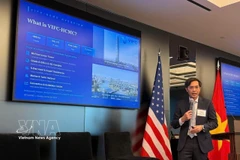
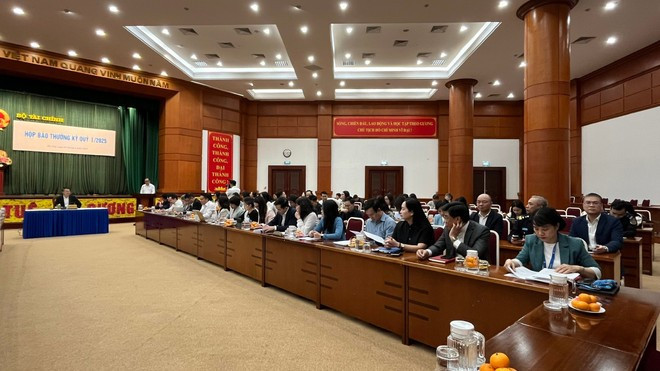
The Ministry of Finance has conducted a comprehensive review of import tariffs and advised the government to issue Decree No. 73, dated March 31, to reduce import duties on certain goods. (Photo: VietnamPlus)

Tuan noted Vietnam’s average tariff is 9.4%, compared to around 15% for most US goods. He stressed the need to clarify why such steep US tariffs are being proposed, given Vietnam’s already lower rates.

Deputy Finance Minister Nguyen Duc Chi added that Vietnam has proactively reviewed import taxes—especially on US goods—to work towards a more balanced trade relationship.

Chi said the focus should be on sustainable, mutually beneficial trade, not raising tariffs, and called for practical, growth-driven solutions./.

VNA

See more

Freezing tra fish fillet products for export at a factory of the Sao Mai Group. (Photo: VNA)

Tra fish exports forecast to near 2.2 billion USD

Tra fish output in 2025 is estimated at around 1.67 million tonnes. To date, the sector has contributed approximately 2.1 billion USD to Vietnam’s total agro-forestry-fisheries export earnings.

Deputy Governor of the State Bank of Vietnam Pham Thanh Ha speaks at a press conference on banking sector performance in 2025 and tasks for 2026, held in Hanoi on December 29. (Photo: VNA)

Credit growth nears 18% in 2025: central bank

At a press conference on banking sector performance in 2025 and tasks for 2026, held in Hanoi on December 29, SBV Deputy Governor Pham Thanh Ha said that as of December 24, 2025, total outstanding credit to the economy exceeded 18.4 quadrillion VND (about 670 billion USD), up 17.87% compared to the end of 2024.

Workers in the Du Long Industrial Park, Khanh Hoa province. (Photo: VNA)

Key economic policies taking effect in January 2026

A wide range of new economic policies and legal provisions will come into force in January 2026, covering taxation, advertising, land use, minimum wages, public finance, railways, technology transfer and statistics, among others.

From 4 billion USD in 2015, the size of the e-commerce market increases eightfold to reach 32 billion USD last year. (Photo: VNA)

Hanoi leads 2025 Vietnam eBusiness Index

​The average score of the rankings is 9.3 points. The gap in e-commerce development between the two major economic centres–Hanoi and HCM City–and the remaining provinces and cities is very large.

An aircraft of Vietnam Airlines - Illustrative image (Photo: VNA)

Vietnam Airlines adds 270 flights to during 2026 New Year holiday

Vietnam Airlines said the swift deployment of additional flights during the New Year holiday demonstrates the carrier’s proactive approach and readiness in mobilising resources to serve passengers during peak travel periods at the end of 2025 and the beginning of 2026.

Prime Minister Pham Minh Chinh (second from right) conducts an aerial inspection of the Ca Mau–Dat Mui expressway, the road leading to Hon Khoai, and the dual-use Hon Khoai port from a helicopter. (Photo: VNA)

PM urges faster progress on key infrastructure projects in Dat Mui, Ca Mau

During an aerial survey of Dat Mui commune, home to the five islands of Hon Khoai, Hon Sao, Hon Go, Hon Doi Moi and Hon Da Le, the Prime Minister underscored the area’s strategic importance for national defence, economic development and connectivity across the province, the Mekong Delta and the wider southern region.

Dao Ngoc Tien, Vice Rector of Foreign Trade University, speaks at the event. (Photo: doanhnghiepvn.vn)

High standards key for businesses to unlock VEFTA benefits

The EFTA bloc, comprising Switzerland, Norway, Iceland, and Liechtenstein, has a relatively small population but a combined GDP of about 1.3 trillion EUR (1.5 trillion USD), high living standards, and strong demand for high-quality products.

Workers make products for the Lunar New Year (Tet) in Hanoi's Bat Trang commune. (Photo: hanoimoi.vn)

Hanoi craft villages bustle as Lunar New Year approaches

Hanoi is home to the largest number of craft villages nationwide, with about 1,350 villages and craft-based communities, accounting for roughly 56% of rural villages in the capital. Of these, 318 are officially recognised as traditional craft villages.

Four seaports and four inland waterway ports are currently in operation within the Cai Mep Ha free trade zone. (Photo: VNA)

​ HCM City seeks new growth drivers as megacity takes shape

As traditional growth engines show signs of reaching their limits, HCM City is recalibrating its long-term development strategy in search of new drivers capable of sustaining momentum and reinforcing its role as the economic nucleus of the southern region.