OCOP programme hits milestone with 126 five-star products nationwide

Vietnam now boasts over 16,000 OCOP-certified products, more than three times the number recorded in 2020.

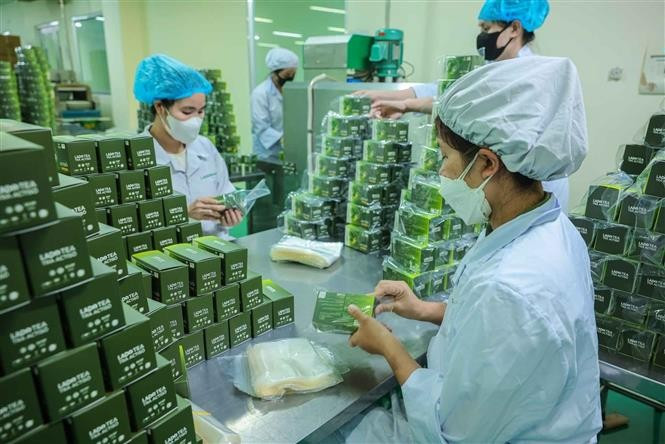
Lam Dong Pharmaceutical Joint Stock Company (Ladophar) develops numerous products that meet OCOP standards. (Photo: VNA)

Hanoi (VNS/VNA) - The National Council for the Evaluation of OCOP Products on Tuesday announced the recognition of 47 new five-star-rated products under the One Commune One Product (OCOP) programme, bringing the national total to 126 five-star products.

According to the Ministry of Agriculture and Environment (MAE), Vietnam now boasts over 16,000 OCOP-certified products, more than three times the number recorded in 2020.

Despite this impressive growth, fewer than 0.5% of OCOP products have attained the prestigious five-star rating, a distinction awarded only to the highest-quality, most authentic offerings.

MAE Deputy Minister Tran Thanh Nam said the OCOP programme is more than just a tool to boost agricultural consumption. It serves as a critical platform for small-scale households, cooperatives, and traditional artisans to build brands and expand their reach to both domestic and international markets.

He underscored that the programme is being implemented with a commitment to quality over quantity.

“We are not chasing numbers or following trends. Our goal is to cultivate distinctive, high-value products that reflect the identity and spirit of their homeland,” he said.

The Deputy Minister emphasised the importance of packaging, describing it as a product’s first impression. Thoughtful design, he noted, can evoke a strong sense of place, especially for those far from home.

He likened the OCOP movement to a quiet yet steady current of local specialties, certified, traceable, and rich in cultural value.

According to the Deputy Minister, this current originates in rural villages, rooted in traditional craftsmanship, and is gradually flowing into broader domestic and international markets.

To ensure transparency and fairness, he called for strict, objective evaluation standards, particularly in light of the recent reorganisation of the National OCOP Council.

“Each star awarded must be well-deserved, it serves not only as official recognition but also as a passport to the market,” he said.

In an era of growing consumer demand for authenticity and traceability, OCOP products distinguish themselves through their verified origin, standardised packaging, and strong regional character.

“This is a subtle yet powerful competitive edge that not every product can claim,” he added.

The programme not only boosts rural incomes but also serves as a catalyst for transforming cultural values into economic assets, laying a solid foundation for the next phase of the national target programme on new rural development.

Nam reaffirmed the ministry’s commitment to elevating OCOP products, expressing his hope that more of them will secure a strong presence in international markets.

He also underscored the key objectives set forth by the Prime Minister, which include developing stable raw material zones, fostering the involvement of businesses and cooperatives, applying science and technology, building strong brands, and ensuring accessible credit for producers.

Between November 2024 and April 2025, the council received 82 product submissions, primarily comprising food items, along with handicrafts, medicinal products, and one community-based tourism service, all showcasing strong local identity.

A total of 20 provinces and cities participated in the evaluation process, including first-time contributors such as Bac Lieu, Quang Binh, Yen Bai, Tuyen Quang, and Binh Dinh. Many of the submissions reflected regional strengths and the presence of centralised raw material zones, underscoring the OCOP programme’s role in fostering rural culture and creativity./.
VNA

See more

Commercial banks are providing approximately 88% of total green credit outstanding in Vietnam. (Photo: nhandan.vn)

Capital sources expanded for sustainable growth

According to the State Bank of Vietnam (SBV), by the end of November 2025, outstanding green credit was estimated at around 750 trillion VND (28.55 billion USD), with an average growth rate exceeding that of overall credit in the economy.

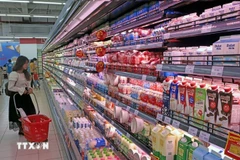
Customers select goods at a supermarket. (Photo: VNA)

Retail market expands sharply, sustainability challenges persist

According to a report on recently released by the Ministry of Industry and Trade’s Agency for Domestic Market Surveillance and Development, the size of the market reached more than 7 quadrillion VND (about 266 billion USD) in 2025, up around 10% compared with 2024.

Oil rigs at the Bach Ho oil field. (Photo: VNA)

Resolution 79: State economy to lead growth

Resolution 79 is described as a “clear action declaration” by the Politburo, saying the state economy is not only responsible for maintaining macroeconomic stability, but must also become the force leading a new growth model that is green and sustainable.

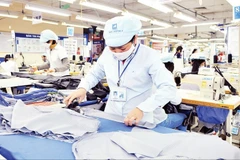
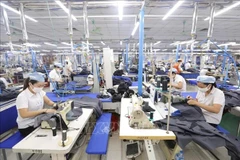
Workers at Garment 10 Corporation produce apparel for export. (Photo: Nhan Dan)

Leveraging export advantages within RCEP region

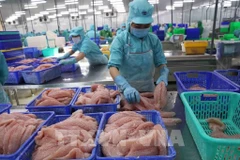
In 2025, seafood exports to China alone exceeded 2.2 billion USD, up about 33% compared to 2024. Shipments to Japan fetched nearly 1.7 billion USD, a year-on-year increase of 14.6%, while those to the Republic of Korea and Australia grew by 9.6% and 3.2%, respectively.

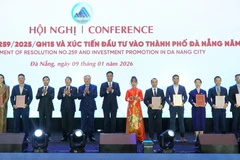
Certificates of membership in the Vietnam International Financial Centre in Da Nang are awarded at the conference on January 9. (Photo: VNA)

Da Nang continues targeted investment promotion approaches

According to Chairman of the Da Nang People’s Committee Pham Duc An, the city prioritises building sustainable economic ecosystems and focuses on key breakthrough sectors with strong spillover effects, including high technology and digital transformation, logistics, urban infrastructure, finance, processing and manufacturing industries, high-tech agriculture, and the pharmaceutical and medicinal herb industry.

In 2025, Hyundai sales reached 53,229 vehicles across the Vietnamese market. (Illustrative photo: Yonhap/VNA)

Hyundai sales in Vietnam rise almost 23% in December

In 2025, sales reached 53,229 vehicles across the market, a result considered a testament to the efforts by TC Group, Hyundai Thanh Cong, and the entire Hyundai dealership network nationwide amidst a volatile market.

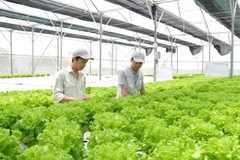
Hydroponic vegetable cultivation model at the High-Tech Agricultural Park (Photo daibieunhandan.vn)

HCM City accelerates shift toward ecological urban agriculture

​The city’s agricultural sector is undergoing a strong transformation, restructuring toward higher value-added and sustainable development. In recent years, the sector has maintained steady growth, with agricultural, forestry and fisheries output rising by an estimated 2.5% annually.

Illustrative photo (Photo: VNA)

Dong Nai to launch major projects ahead of 14th National Party Congress

The launch of work on these projects represents an important political event for the province as they demonstrate the strong commitment of the entire political system to developing a comprehensive and modern infrastructure network, enhancing inter-regional connectivity, and addressing social welfare needs.

Illustrative image (Photo: VNA)

Lam Dong ready for nationwide economic census 2026

The entire process needs to reassure respondents that statistical activities operate independently, information is protected under the Statistics Law, and all data collection is completely separate from tax management.