OV maintain constructive approach in contributing ideas to homeland's development

Dung stressed that freedom of expression is an important value, but it must go hand in hand with responsibility, objectivity and a constructive spirit. Contributed ideas aimed at improving the country deserve appreciation, while extreme, ill-intentioned or hostile views do not reflect the shared aspiration to build and develop the nation.

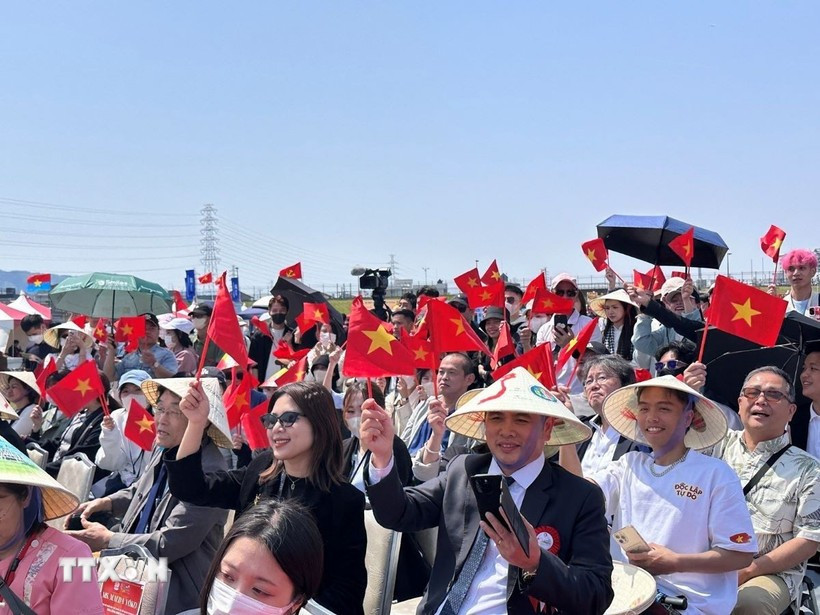
The Vietnamese community in Japan celebrates the 50th anniversary of national reunification. (Photo: VNA)

Hanoi (VNA) – A balanced and constructive approach among overseas Vietnamese (OV) helps foster healthy dialogues, avoid extremism, and strengthen consensus and cohesion within the global Vietnamese community in contributing ideas to the development of the homeland, according to Tran Thu Dung, a Vietnamese intellectual in France.

Dung stressed that freedom of expression is an important value, but it must go hand in hand with responsibility, objectivity and a constructive spirit. Contributed ideas aimed at improving the country deserve appreciation, while extreme, ill-intentioned or hostile views do not reflect the shared aspiration to build and develop the nation, she said.

Dung underlined that effective dialogue requires a balanced and honest assessment of both achievements and remaining shortcomings, grounded in respect for history and the sacrifices of earlier generations.

She noted that recent policies of the Party and State demonstrate growing openness, with expanded channels for engagement, direct dialogue and the reception of feedback through the press and media. These efforts reflect a spirit of renewal and confidence in the intellectual resources of overseas Vietnamese, encouraging them to participate more actively in national development in the new period.

A notable recent shift is the more tangible expression of trust, not only towards earlier generations of overseas Vietnamese but also towards young people of Vietnamese origin born and raised abroad. Feeling respected and heard is a prerequisite for overseas Vietnamese to engage more deeply and contribute in diverse ways.

Dung placed particular emphasis on young OVs, describing them as a vast reservoir of intellectual capital. When given opportunities to engage and experience an open, respectful environment in Vietnam, they naturally develop trust and a stronger sense of attachment to their roots. Even without returning for permanent residence, many are ready to contribute through study, research and professional activities linked to Vietnam.

From a cultural perspective, she stressed that alongside economic development and science and technology, culture should be a key pillar in connecting OV communities. Although cultural activities may not bring immediate material gains, they exert lasting influence through books, exhibitions, historical preservation and initiatives promoting Vietnam’s image internationally. She therefore called for continued support for cultural practitioners abroad, enabling Vietnamese culture to take deeper root in host societies through the bilingual and multicultural strengths of overseas Vietnamese./.

VNA
See more

Hanoi has over 1,100 libraries and numerous cultural and educational spaces in the community. (Photo: VNA)

Spreading value of books, building foundations of learning society

Each weekend in Hanoi, the “Reading with Children” Club brings together students to practise reading, explore language, and express ideas creatively. According to founder of the club Nguyen Thuy Anh, the club encourages children to reflect, retell stories, and connect books with personal experiences, making reading more vivid and meaningful.

Automated ticketing system is used on the urban railway Cat Linh-Ha Dong line in Hanoi. (Photo: VNA)

Digital transformation powers Hanoi metro expansion

Beyond convenience, stable fares and the elimination of fuel, parking and maintenance costs have made urban rail increasingly attractive. The growing preference for metro travel is also contributing to a greener, more modern urban lifestyle.

Delegates cut the ribbon to inaugurate the operation of electric bus route No. 43. (Photo: VNA)

Hanoi accelerates shift to green buses, targets 100% by 2030

In the 2027–2030 period, the city will accelerate the transition towards the complete phase-out of fossil fuel-powered buses. The share of electric and green energy-fueled buses is projected to reach 79–89% by 2029 and 100% by 2030.

At the second session of the Ho Chi Minh City People’s Council (Photo: VNA)

Ho Chi Minh City greenlights central square, administrative centre in Thu Thiem

The new central city square and administrative centre will create a modern, centralised political-administrative complex for Ho Chi Minh City, designed to house around 8,000 officials, civil servants, and employees. It will also handle daily traffic of 1,500- 2,000 citizens and business representatives through a unified one-stop-shop administrative service system.

A working session at the job fair (Photo: VNA)

Vietnamese students flock to Seoul Job Fair 2026

The second annual Job Fair 2026 was held for Vietnamese students in the Republic of Korea. Organisers pitched it as a straight-up bridge between eager students and bosses hungry for young talent who can actually handle multicultural workplaces.

Defendants at the court (Photo: VNA)

Ho Chi Minh City court opens trial over Agribank lending scandal

The investigation revealed that multiple credit files were incomplete or riddled with inaccurate information, while some pledged assets lacked proper legal standing yet were accepted and grossly overvalued. As a result, the loans became high-risk and largely unrecoverable, leading to losses surpassing 1 trillion VND.