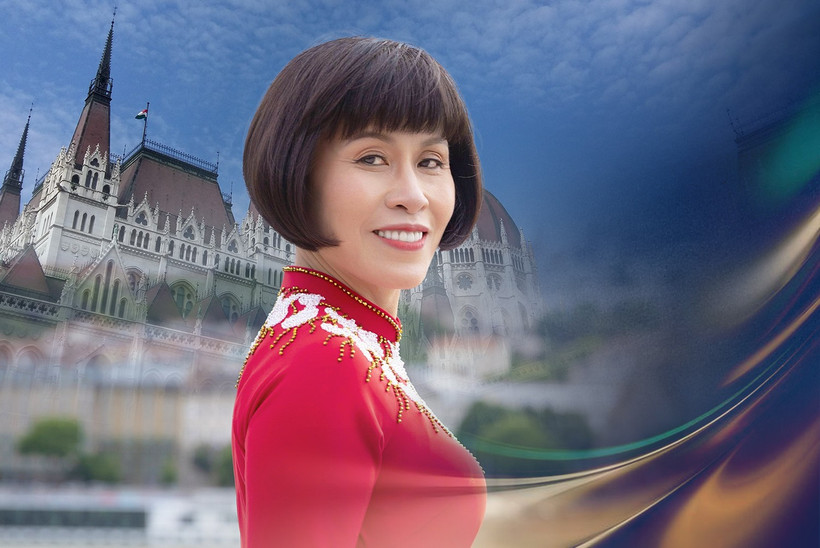
Hanoi (VNA) - Dr. Phan Bich Thien, Chairwoman of the Vietnamese Women’s Forum in Europe, has given her opinions on draft documents for the 14th National Party Congress, hailing the documents’ focus on building a nation with rapid, sustainable development, prosperity and happiness.
Thien, a member of the Central Committee of the Vietnam Fatherland Front, suggested that the documents should more clearly articulate a comprehensive vision for human development, identifying people not only as a resource but also as the ultimate goal of all policies.
She proposed highlighting three foundational values – independence, self-reliance, and humanity – as the basis for sustainable growth; defining green transition, digital transformation, and human resources transformation as three strategic pillars for the new era; and adding a perspective on development grounded in Vietnam’s creativity, culture, and knowledge in the context of deep international integration.
On economic and environmental development, she recommended that the documents reaffirm the direction of building an independent, self-reliant economy associated with deep and effective international integration. The green and circular economy, she said, should be viewed not merely as a trend but as a strategic imperative to respond to climate change and create new growth drivers. Regarding the knowledge-based and innovation-driven economy, Thien called for breakthrough mechanisms to enhance R&D investment, foster high-tech enterprises, and establish regional innovation and start-up hubs, particularly in areas with strong young human resources.
For agriculture and rural development, she proposed orientations for developing modern, civilised and ecological rural areas, ensuring food security, promoting the green economy, and preserving cultural identities. She suggested special financial mechanisms for mountainous, ethnic minority, border and island areas to narrow the development gap.
On environmental protection, she emphasised its urgency amid declining natural forest areas and intensifying climate impacts. She proposed making forest restoration a national strategy, launching an ecosystem recovery programme, and strengthening forest–land–water management.
In terms of culture, society, education and human development, she reaffirmed that “culture is the spiritual foundation of society and a core strength for sustainable development.” She recommended building a healthy digital cultural environment, preserving cultural heritage linked with sustainable tourism, promoting comprehensive education that fosters digital citizenship and creativity, and ensuring gender equality, social security and youth welfare as the basis for national happiness. Vietnamese culture, she said, should become a form of national soft power, reflecting the nation’s traits of compassion, resilience, creativity and harmony.
On education and training, Thien proposed specific goals for developing a modern vocational system aligned with enterprise needs and global value chains, focusing on digital, green and ethical skills. Skilled vocational workers, she said, should be recognised as a core pillar of the national workforce, on par with university graduates.
Discussing overseas Vietnamese affairs and people-to-people diplomacy, she stressed that the Vietnamese community abroad should be recognised as a strategic resource in national development. In a time of geopolitical competition, she called for people-to-people diplomacy to be an official pillar of Vietnam’s foreign policy, alongside Party and State diplomacy.
She suggested strengthening global Vietnamese intellectual networks and developing an ecosystem connecting overseas Vietnamese in science, technology, digital transformation, environment, healthcare, education and non-traditional security. She also underlined the importance of citizen protection, social integration and cultural identity preservation for younger generations abroad.
Finally, Thien proposed shifting from merely encouraging overseas Vietnamese to “turn towards the homeland” to a spirit of joint creation and partnership, where they act as co-creators of Vietnam’s future./.
VNA