Students in Thailand suggest promoting resources of intellectuals abroad for Vietnam's development goals

Vietnam should sign bilateral or multilateral agreements on degree and credit recognition with countries hosting large numbers of Vietnamese students. such as Thailand, arguing that such agreements can streamline administrative procedures and enhance transparency in degree recognition.

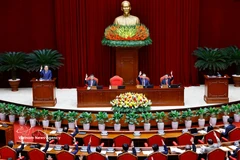
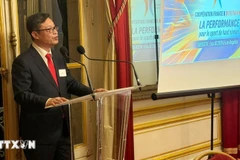
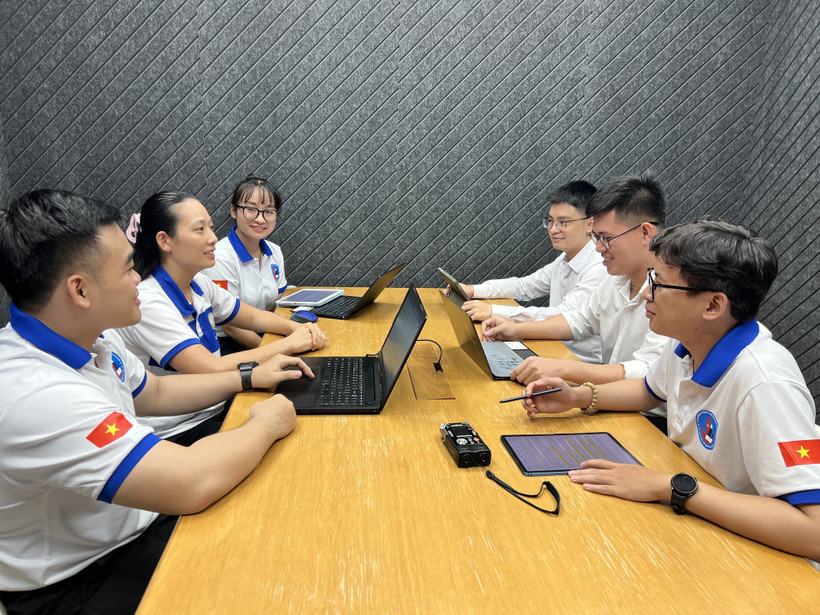
Vietnamese students at Thailand’s Chulalongkorn University contribute their ideas on the draft documents to be submitted to the 14th National Congress of the Communist Party of Vietnam. (Photo: VNA)

Bangkok (VNA) - A recent exchange session of Vietnamese students at Thailand’s Chulalongkorn University became an opportunity for them to discuss, share ideas, and provide feedback on the draft documents to be submitted at the 14th National Congress of the Communist Party of Vietnam.

Many contributions focused on how to effectively promote the intellectual resources of overseas Vietnamese (OV) students and scholars to serve the country’s development goals, and emphasised the role of science, technology, and education as key drivers of sustainable growth.

Nguyen Van Ky, a PhD student in Organic Chemistry, noted that one of the biggest challenges faced by OV students is the recognition of their degrees after completing studies abroad, due to a complex and multi-step administrative process.

He suggested Vietnam sign bilateral or multilateral agreements on degree and credit recognition with countries hosting large numbers of Vietnamese students. such as Thailand, arguing that such agreements can streamline administrative procedures and enhance transparency in degree recognition.

Meanwhile, both Nguyen Hoang Tuan, a master’s student in Oral Biology, and Nguyen Thi Thu Huong, a PhD student in Nursing, proposed establishing a network of Vietnamese students and scholars abroad through online platforms and short-term workshops to share experience, international skills, and develop mentorship programmes led by OV experts and entrepreneurs.

Huong emphasised the need to strengthen communication and education for the younger generation about national traditions, so that they always understands their responsibility and takes pride in being connected with the homeland and contributing to the common development of the country.

Pham Dinh Hai, a master’s student in Petrochemical Engineering, said that Vietnam could study, learn from, and apply Thailand’s “Happy Learning” model. Consistently providing digital learning tools to students is a practical solution, he said, stressing the need for the early launch of national initiatives such as “Coding for a Better Life” to foster digital talent from an early stage, laying the foundation for a high-quality workforce in the digital economy era.

Pham Nguyen Nhu Quynh, President of the Vietnamese Student Association in Thailand, as well as a postdoctoral researcher in Organic Chemistry, offered several recommendations to encourage OV students to act as bridges for establishing partnerships between prestigious universities worldwide and educational and research institutions in Vietnam.

Quynh also proposed the creation of a digital platform where Vietnamese students and intellectuals at leading research centres abroad could share knowledge and provide remote mentorship on new technologies and research methodologies for startups and research teams in Vietnam. Additionally, she suggested the implementation of a fast-track degree recognition process by streamlining the legal framework and introducing an online approval system to expedite degree recognition for students studying at reputable universities abroad./.

VNA
See more

A bird's eye view of Hanoi capital (Photo: VNA)

📝 OP-ED: Democracy and happiness – core values for building public trust

At the heart of the model is the principle that all policies must be designed for the people, rooted in the people’s aspirations and dedicated to serving their interests. Citizens will play an active role in governance through access to information, participation in decision-making, oversight of public affairs and equitable access to development outcomes. In this context, democracy and happiness of the people are not only development goals but also the most accurate benchmarks for evaluating the effectiveness of local governance and the capacity of grassroots authorities to serve their communities.

Prime Minister Le Minh Hung chairs a working session with the Standing Board of the Dong Nai Party Committee on June 13, 2026. (Photo: VNA)

PM urges Dong Nai to step up role as a key driver of national growth

The PM said the positive results achieved by Dong Nai in its first year as a centrally governed city stemmed from a crucial factor, a shift in mindset, thinking and methods of implementation, reflecting the leadership’s determination to innovate, pursue development and embrace a spirit of initiative and responsibility.

Standing Deputy Minister of Foreign Affairs Nguyen Minh Vu receives Representative Director and Executive Vice President of Idemitsu Kosan Atsuhiko Hirano in Hanoi on June 12, 2026. (Photo: Ministry of Foreign Affairs)

Deputy FM urges Idemitsu Kosan to expand green energy investment in Vietnam

Receiving IKC Representative Director and Executive Vice President of Idemitsu Kosan Atsuhiko Hirano in Hanoi on June 12, Deputy FM Vu commended the company’s efforts in promoting investment and cooperation in Vietnam over the years, especially its role as a shareholder in the Nghi Son Refinery and Petrochemical (NSRP) project.

Prime Minister Le Minh Hung chairs a working session with the Standing Board of the Ho Chi Minh City Party Committee on June 13, 2026. (Photo: VNA)

Ho Chi Minh City must maximise role as economic powerhouse: PM

Prime Minister Le Minh Hung called for a comprehensive review of Ho Chi Minh City’s 2026 economic growth scenarios, with a focus on identifying untapped potential across sectors and deploying effective measures to maximise growth in the remaining quarters of the year, particularly in manufacturing, pharmaceuticals, logistics, finance and banking, and other high-value-added industries.

The national flags of Vietnam and the Philippines. Photo: VNA

Vietnam congratulates Philippines on Independence Day

General Secretary of the Communist Party of Vietnam and State President To Lam and Prime Minister Le Minh Hung on June 12 sent congratulatory messages to Philippine President Ferdinand Romualdez Marcos Jr on the occasion of the 128th anniversary of the Declaration of Independence of the Republic of the Philippines (June 12, 1898 – 2026).

Former Deputy Minister of Foreign Affairs Ambassador Pham Quang Vinh. (Photo: VNA)

AFF 2026 marks Vietnam’s transition from participant to regional agenda-setter

With sharp strategic mindset and a proven capacity for practical action at both bilateral and multilateral levels, Vietnam has demonstrated its role as a builder and agenda-setter, contributing to a robust platform for dialogue and cooperation in pursuit of a resilient, peaceful, and truly people-centred ASEAN Community by 2045

Party General Secretary and State President To Lam addresses the national conference disseminating and implementing Politburo Resolution No. 06-NQ/TW (Photo: VNA)

📝OP-ED: When foreign affairs pioneer in shaping nation's future

Resolution No. 06-NQ/TW represents both a continuation and a development of the Party’s comprehensive foreign policy and President Ho Chi Minh’s thought. If international integration helped create a favourable environment for development, diplomacy today is tasked with protecting and expanding that space.

An overview of the 4th session of the 17th Hanoi People’s Council for the 2026–2031 term. (Photo: VNA)

Capital Law 2026 paves way for Hanoi’s new development model

One of the key breakthroughs of the new resolutions is the shift from a traditional management-oriented approach to a development-enabling model. The proposed policies are designed not only to address current issues but also to establish the foundation for a more modern, proactive and flexible system of urban governance.