Hanoi (VNA) – The renewed mindset, development aspirations, and national self-reliance spirit reflected in the draft documents for the 14th National Congress of the Communist Party of Vietnam (CPV) has received support from overseas Vietnamese (OVs), including intellectuals, experts, business leaders.
These contributions from the Vietnamese community abroad have reflected their expectations for Vietnam’s next breakthroughs following the 14th National Party Congress, along with their readiness to join hands in the country’s development in the new era.
What OVs and intellectuals appreciate most in the draft documents is the clear direction toward a fast and sustainable growth model anchored in science, technology, innovation, and digital shifts.
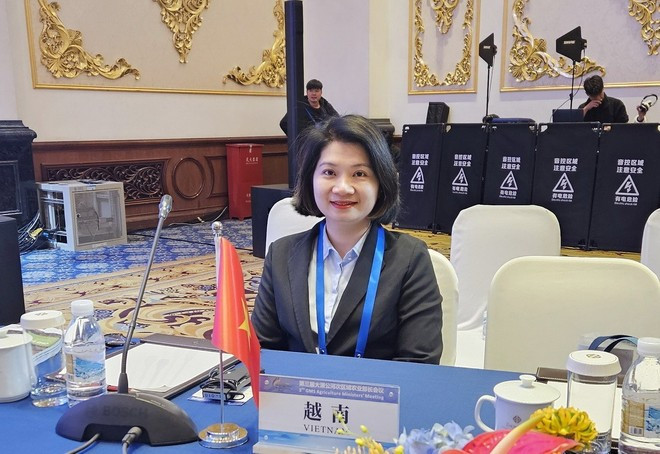
Dr. Pham Thi Thanh Loan, General Director of Guangdong Viet–Viet Travel and Service Co. Ltd., noted that this approach reflects a strategic mindset consistent with global development trends, particularly in the context of the fourth Industrial Revolution’s far-reaching influence on socio-economic development.
Clearly identifying these core drivers reflects a strong determination to shift from a capital- and low-cost labour-based growth model to one fueled by knowledge, technology, and high-quality productivity, she said, adding that aligning technological breakthroughs with the three key institutional pillars - the socialist-oriented market economy, the socialist rule-of-law state, and the socialist democracy - creates a comprehensive framework for breakthrough development.
Affirming the appropriateness of adopting a new growth model mainly driven by technology and digital transformation, Dr. Nguyen Quoc Hung, Vice President of the Union of Vietnamese Organisations in Russia, said the draft documents demonstrate both breakthrough mindset in science and technology and a commitment to sustainable development and social equity. He stressed the need to further clarify the role of science, technology, and digital transformation in the new growth model.
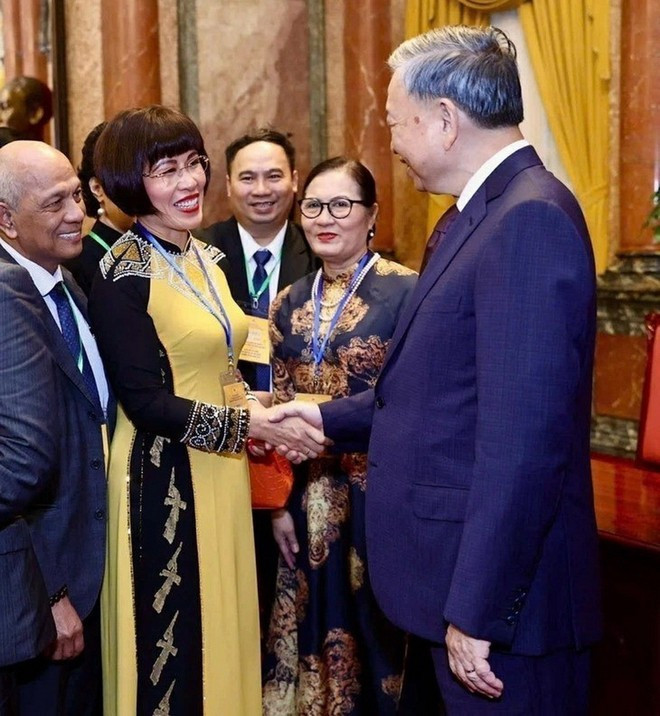
Meanwhile, Dr. Phan Bich Thien, member of the Vietnam Fatherland Front (VFF) Central Committee and Chairwoman of the Vietnamese Women Forum in Europe (VWFE), emphasised the need for breakthrough mechanisms for research and development (R&D), fostering the establishment and expansion of hi-tech enterprises, and developing regional innovation and startup hubs, especially in localities with strong potential of young labour force.
Dr. Nguyen Thai Chinh, a specialist in earth science and satellite geodesy and member of the Vietnam – Germany Innovation Network (VGI), praised the Party and State’s policy of developing select research-oriented universities into science, technology, and innovation centres comparable to those in developed countries. He proposed that Vietnam should pursue targeted investments rather than broad-based funding, first selecting the right fields and institutions, then establishing suitable orientations and policies to elevate these establishments.
The draft documents’ inclusion of “environmental protection” alongside socio-economic development as a central task has been highly praised by OV experts and intellectuals, who affirmed it as both timely and well-founded.
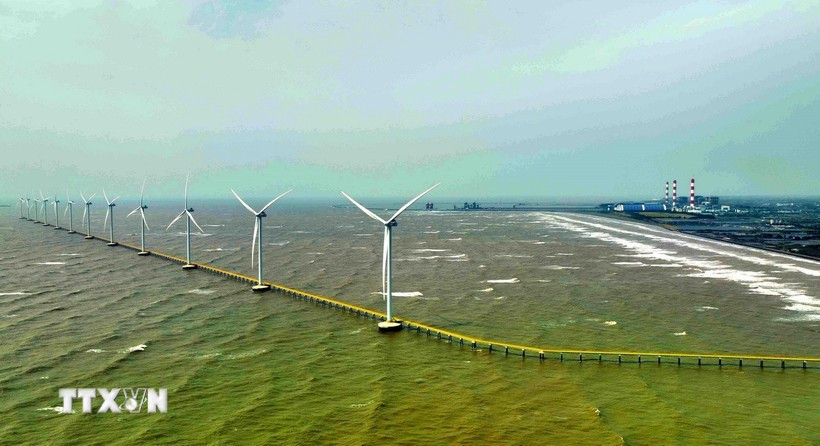
Thien emphasised that the green and circular economy should be viewed not just as a trend but as a strategic imperative to address climate change and create new growth opportunities. Meanwhile, Chinh suggested that the draft of action programmes must place even greater emphasis on green economic and energy development, considering these core pillars of the national development strategy in the new period.
It is crucial to clarify the role of pioneering technologies such as green hydrogen, alongside promoting green architecture, to create urban spaces that are adaptive, sustainable, and in harmony with nature, experts noted.
With the view that the people are the most important resource, OVs have focused on offering numerous recommendations to promote education and training and improve the quality of Vietnam’s workforce in the new era.
In Thien’s proposal, human-resource transformation should be emphasised as one of three strategic pillars in the new era, alongside green transition and digital transformation, to realise the three foundational values - national independence, self-reliance, and humanity - as the basis for sustainable development. She stressed the need for more specific policies and targets to develop a modern vocational education system closely aligned with the demands of businesses and meeting skill standards in the global value chains.
Meanwhile, Loan stressed the need to clarify special and superior mechanisms to turn policies on developing a high-quality workforce and attracting talent into reality, noting that truly attractive incentives, a scientific working environment, and strong autonomy for research institutes and universities are essential to attract and retain leading scientists, including Vietnamese expats.
Highlighting that knowledge-based education is the foundation for a high-quality workforce in the digital era, Dr. Heng Lihong, Standing Vice President and Secretary General of the Vietnam–Cambodia Business Association (VCBA), proposed three key measures for education development - enhancing practical and hands-on training to develop a capable workforce; reducing achievement-oriented formalities and diploma inflation, ensuring transparent examinations and proper talent selection; and investing comprehensively in the teaching workforce, recognising them as the key to successful educational reform.
From the perspective of overseas Vietnamese intellectuals, experts, and entrepreneurs, the draft documents are visionary and ambitious, with a clear direction that harmoniously balances continuity and innovation.
The contributions aimed at clarifying mechanisms, tools, and specific roadmaps to realise strategic goals reflect the desire to make the draft documents a guiding beacon, gathering the nation’s collective strength in the national development and nation-building process in the new era./.