Party chief presides over Central Military Commission’s 14th conference

The Party chief attributed the achievements in the first half to the continuous, direct, and comprehensive leadership of the Politburo and the Secretariat of the Party Central Committee, and the close and effective coordination of relevant ministries, sectors and localities.

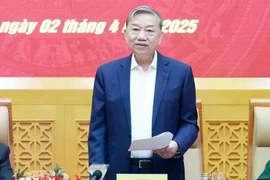
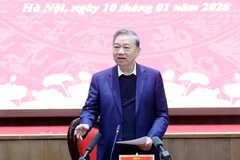
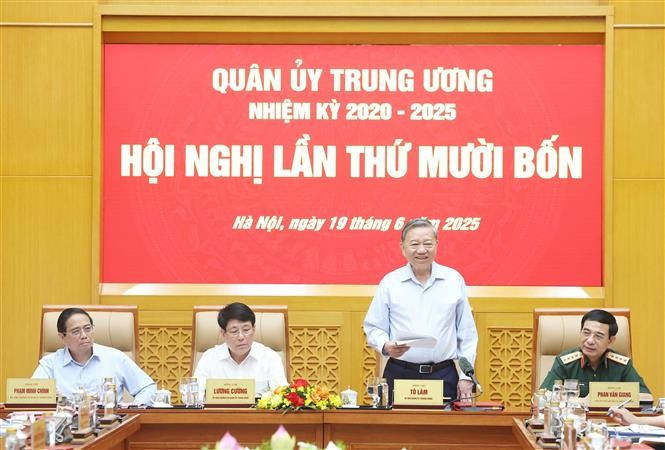
Party General Secretary To Lam, Secretary of the Central Military Commission, speaks at the commission's 14th conference on June 19. (Photo: VNA)

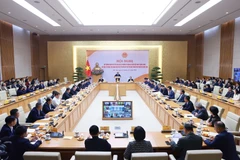
Hanoi (VNA) – Party General Secretary To Lam, Secretary of the Central Military Commission, on June 19 chaired its 14th conference in the 2020-2025 tenure, which aimed to review its military and defence tasks in the first half of 2025, and roll out orientations for these missions and Party‑building tasks in the People’s Army for the second half of the year.

In his remarks, the Party chief hailed the Central Military Commission’s Standing Board for directing and carefully preparing the contents submitted to the Commission.

He attributed the achievements in the first half to the continuous, direct, and comprehensive leadership of the Politburo and the Secretariat of the Party Central Committee, and the close and effective coordination of relevant ministries, sectors and localities.

Lam highly valued the Commission for upholding principles, fostering solidarity, and boosting innovation in working method and style, saying that it has accurately identified key priorities and breakthrough tasks and pursued those with resolute leadership and comprehensive, practical, and effective measures.
to-lam-2.jpg
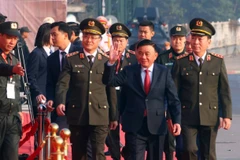
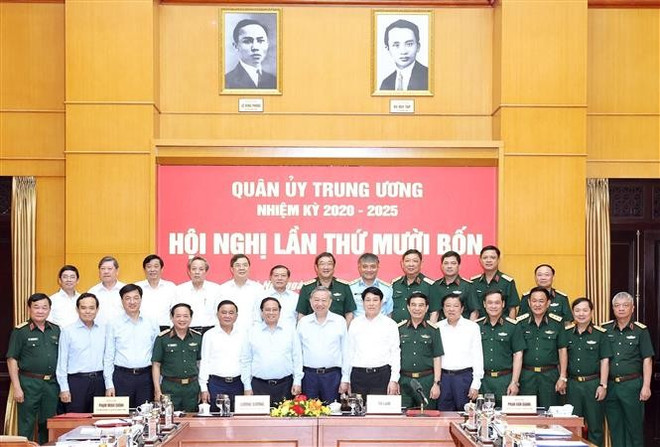
Party General Secretary To Lam, Secretary of the Central Military Commission, and high-ranking officials in a photo at the conference (Photo: VNA)

The Party chief urged the Central Military Commission to concentrate its leadership and guidance on decisively and effectively carrying out the core tasks, focusing on successfully organising the 12th Military Party Congress, and preparing contents serving the 14th National Party Congress with the highest responsibility and best quality.

He requested the Central Military Commission to lead and direct the reorganisation of local military structures to align with the two‑tier local administration apparatus; bolster its forecasting, research, and accurate situational assessments; and promptly advise the Party and State on policies and strategies that safeguard the nation’s interests and steadfastly protect the country’s independence, sovereignty, unity, and territorial integrity.

He asked for stronger efforts to vigorously implement the “Digital Literacy for All” movement, promote administrative reforms and digital transformation in military administrative management to make sure that every officer and soldier become a “digital warrior,” mastering digital platforms and skills to support their missions.

“Modernising personnel” must precede “modernising weapons and equipment,” he stressed, calling for vigorous and decisive implementation of key military and defence projects.

The Party leader emphasised the imperative of decisively sustaining, consolidating, and expanding trusted defence cooperation with all partners, prioritising neighbouring and regional countries, major powers, strategic partners and comprehensive partners, and traditional friends —to build and reinforce strategic trust and safeguard the nation’s highest interests.

He ordered effectively carrying out programmes and projects to remediate post-war consequences and support UN peacekeeping operations.

At the conference, State President Luong Cuong, Prime Minister Pham Minh Chinh, and representatives of central agencies, and the Central Military Commission also delivered speeches to clarify the outcomes in implementing duties in the first six months, and discuss and adopt leadership orientations and solutions for the second half of 2025./.
VNA

See more

A bird's eye view of Hanoi capital (Photo: VNA)

📝 OP-ED: Democracy and happiness – core values for building public trust

At the heart of the model is the principle that all policies must be designed for the people, rooted in the people’s aspirations and dedicated to serving their interests. Citizens will play an active role in governance through access to information, participation in decision-making, oversight of public affairs and equitable access to development outcomes. In this context, democracy and happiness of the people are not only development goals but also the most accurate benchmarks for evaluating the effectiveness of local governance and the capacity of grassroots authorities to serve their communities.

Prime Minister Le Minh Hung chairs a working session with the Standing Board of the Dong Nai Party Committee on June 13, 2026. (Photo: VNA)

PM urges Dong Nai to step up role as a key driver of national growth

The PM said the positive results achieved by Dong Nai in its first year as a centrally governed city stemmed from a crucial factor, a shift in mindset, thinking and methods of implementation, reflecting the leadership’s determination to innovate, pursue development and embrace a spirit of initiative and responsibility.

Standing Deputy Minister of Foreign Affairs Nguyen Minh Vu receives Representative Director and Executive Vice President of Idemitsu Kosan Atsuhiko Hirano in Hanoi on June 12, 2026. (Photo: Ministry of Foreign Affairs)

Deputy FM urges Idemitsu Kosan to expand green energy investment in Vietnam

Receiving IKC Representative Director and Executive Vice President of Idemitsu Kosan Atsuhiko Hirano in Hanoi on June 12, Deputy FM Vu commended the company’s efforts in promoting investment and cooperation in Vietnam over the years, especially its role as a shareholder in the Nghi Son Refinery and Petrochemical (NSRP) project.

Prime Minister Le Minh Hung chairs a working session with the Standing Board of the Ho Chi Minh City Party Committee on June 13, 2026. (Photo: VNA)

Ho Chi Minh City must maximise role as economic powerhouse: PM

Prime Minister Le Minh Hung called for a comprehensive review of Ho Chi Minh City’s 2026 economic growth scenarios, with a focus on identifying untapped potential across sectors and deploying effective measures to maximise growth in the remaining quarters of the year, particularly in manufacturing, pharmaceuticals, logistics, finance and banking, and other high-value-added industries.

The national flags of Vietnam and the Philippines. Photo: VNA

Vietnam congratulates Philippines on Independence Day

General Secretary of the Communist Party of Vietnam and State President To Lam and Prime Minister Le Minh Hung on June 12 sent congratulatory messages to Philippine President Ferdinand Romualdez Marcos Jr on the occasion of the 128th anniversary of the Declaration of Independence of the Republic of the Philippines (June 12, 1898 – 2026).

Former Deputy Minister of Foreign Affairs Ambassador Pham Quang Vinh. (Photo: VNA)

AFF 2026 marks Vietnam’s transition from participant to regional agenda-setter

With sharp strategic mindset and a proven capacity for practical action at both bilateral and multilateral levels, Vietnam has demonstrated its role as a builder and agenda-setter, contributing to a robust platform for dialogue and cooperation in pursuit of a resilient, peaceful, and truly people-centred ASEAN Community by 2045

Party General Secretary and State President To Lam addresses the national conference disseminating and implementing Politburo Resolution No. 06-NQ/TW (Photo: VNA)

📝OP-ED: When foreign affairs pioneer in shaping nation's future

Resolution No. 06-NQ/TW represents both a continuation and a development of the Party’s comprehensive foreign policy and President Ho Chi Minh’s thought. If international integration helped create a favourable environment for development, diplomacy today is tasked with protecting and expanding that space.

An overview of the 4th session of the 17th Hanoi People’s Council for the 2026–2031 term. (Photo: VNA)

Capital Law 2026 paves way for Hanoi’s new development model

One of the key breakthroughs of the new resolutions is the shift from a traditional management-oriented approach to a development-enabling model. The proposed policies are designed not only to address current issues but also to establish the foundation for a more modern, proactive and flexible system of urban governance.