Hanoi (VNA) – Lo Lo Chai, home to centuries-old rammed-earth houses, sits at the foot of the Rong (Dragon) Mountain, roughly one km from the Lung Cu flag tower in Dong Van commune, Tuyen Quang province. The village evokes a fairy-tale settlement at Vietnam’s northernmost frontier.
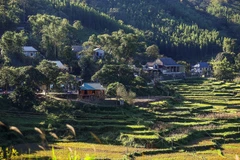
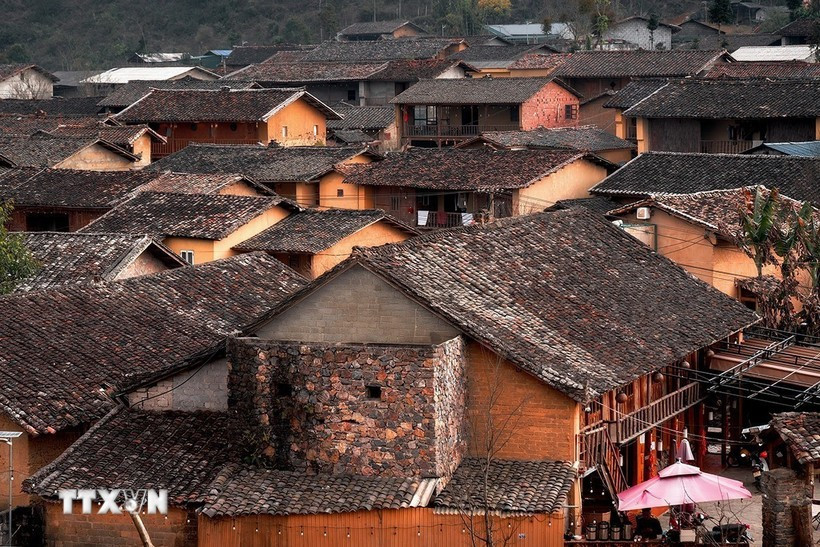
The entry path is narrow and gently sloped. Lo Lo Chai unfolds with rows of ancient three-compartment houses featuring rammed-earth walls and yin-yang roof tiles, many enduring for centuries.
To wander Lo Lo Chai is to eavesdrop on a culture that has refused to modernise its soundtrack. About 90% of its residents belong to the Lo Lo group. They still embroider, carve, and dance. Festivals occur on schedule: offerings to the forest spirits, toasts to the first rice harvest, and house-warming rites.
Lo Lo rammed-earth houses use clay and compacted soil for walls 50–60 cm thick, maintaining warmth in winter and coolness in summer, dubbed “two-season houses”.
Foundations employ river stones, with wooden frames shaping layered compressed earth, with roofs that feature yin-yang tiles. The structures showcase highland aesthetic and engineering prowess.
Today, Lo Lo Chai retains 37 original rammed-earth houses, each exceeding a century in age.
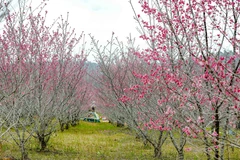
Visitors encounter green mustard fields at doorsteps, brown earthen walls, stone fences and roofs with drying corn. The village flourishes year-round, though spring remains its most vivid season, with peach, plum, pear, and wild chrysanthemums adding vibrant bursts of colour.
Lo Lo Chai remains photogenic across seasons. Summer casts golden sunlight on stone fences and ochre walls under weathered brown roof tiles.
Lunar New Year visitors can join unique traditions: outdoor gatherings to welcome fortune, awaiting the first rooster crow at midnight, all-night sticky-rice cooking, corn-liquor sharing, fireside chats and “borrowing good luck” via greens, corn husks or small logs.
Guests are invited to sample local corn liquor with roasted peanuts or a rich cup of northern highlands coffee while elders share village lore and customs.
Tourists can don traditional Lo Lo attire - hand-embroidered, multicoloured garments by local women, patterned with bird tracks, eyes, buckwheat flowers and terraced fields, or try instruments like drums and wind pipes.
Entering a Lo Lo home brings warm welcomes of forest tea, pipe tobacco or aromatic Ha Giang corn liquor. Overnight stays enable deeper cultural engagement.
At dawn, stepping out to crisp highland air, observing elders in quiet reflection and children at play, visitors sense the calm rhythm of daily life.
Given its proximity to Vietnam’s northernmost point, the Lung Cu flag tower on Long Son Mountain is visible from nearly everywhere in the village, half hidden in clouds, a red punctuation mark on the edge of the map.
Since earning Cultural Tourism Village status in early 2022, residents have installed modern guest restrooms while preserving exteriors and environmental harmony.
Local authorities and villagers now partner on professional tourism operations, attracting more and more guests seeking authentic experiences.
The village now welcomes around 1,000 visitors monthly. Peak periods, especially year-end buckwheat-flower season, see homestays fully booked, highlighting Lo Lo Chai’s growing tourism momentum./.