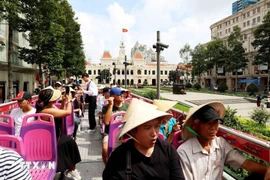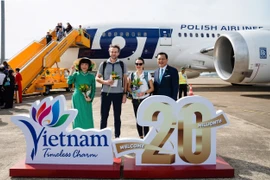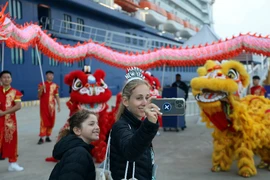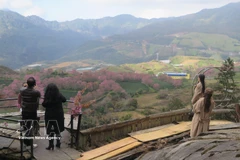
Hanoi (VNA) – The northeastern mountainous province of Lang Son and Hoi An ward in the central city of Da Nang have marked a positive start to their tourism activities in 2026 by welcoming the first international tourist delegations of the year.
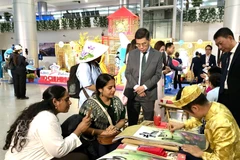
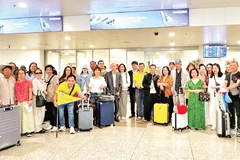
On the morning of January 1, at the Huu Nghi International Border Gate, the Lang Son Centre for Investment, Trade and Tourism Promotion, in coordination with relevant agencies, held a ceremony to welcome the first foreign visitors to the province this year.
Hoang Xuan Thuan, Director of the centre, affirmed that Lang Son will continue efforts to improve the tourism environment, ensure security and safety, and better service quality. At the same time, it will focus on developing distinctive tourism products so that every journey to the province brings visitors positive experiences and lasting impressions.
In 2025, Lang Son welcomed an estimated 4.4 million tourist arrivals, including more than 300,000 international tourists, with total tourism revenue reaching approximately 4.5 trillion VND (171.1 million USD), according to the centre.
Notably, the province has identified border tourism as one of the key pillars of the sector’s development strategy. It has actively promoted tourism cooperation with the Guangxi Zhuang Autonomous Region of China, including the successful development of a two-day, one-night tour for travellers using laissez-passers – a concrete outcome of the two sides’ agreements on cross-border tourism cooperation.

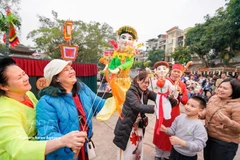
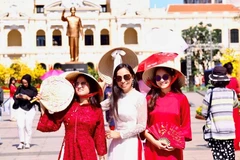
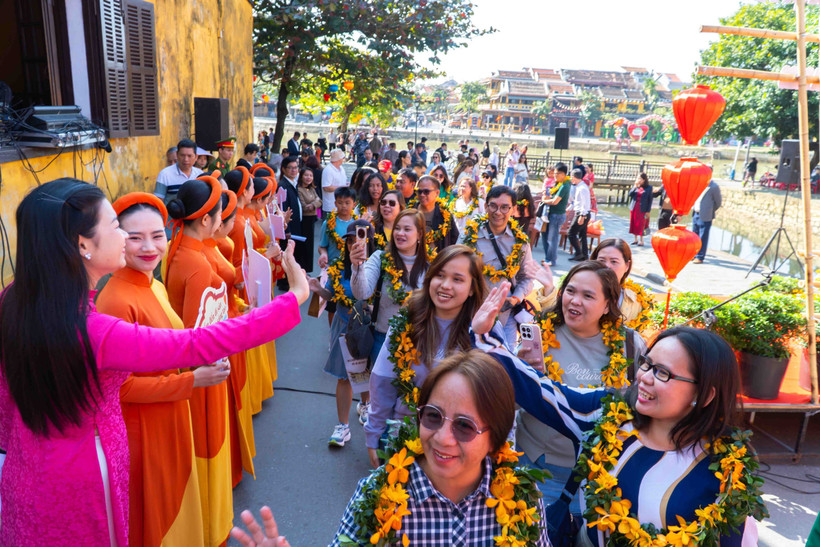
Also on January 1, at Chua Cau (Japanese Covered Bridge) in Hoi An ward, the Da Nang Department of Culture, Sports and Tourism, together with local authorities and residents of the ancient town, organised an event to greet the first tourist group to visit Hoi An this year.
The group consisted of 29 holiday makers from the Philippines, organised by Visit Indochina – one of 2025’s top 10 international tour operators bringing tourists to Vietnam.
For Hoi An, the Philippines is considered a promising market for cultural and heritage tourism, particularly experiences closely associated with the daily life of the ancient town and local culture.
Pham Phu Ngoc, Director of the Hoi An World Cultural Heritage Conservation Centre, noted that in 2026, his centre plans to launch a series of new cultural and tourism products, with a focus on distinctive and novel experiences, and develop a creative tourism ecosystem linked with Hoi An's status as a member of UNESCO's Network of Creative Cities in the field of crafts and folk art./.