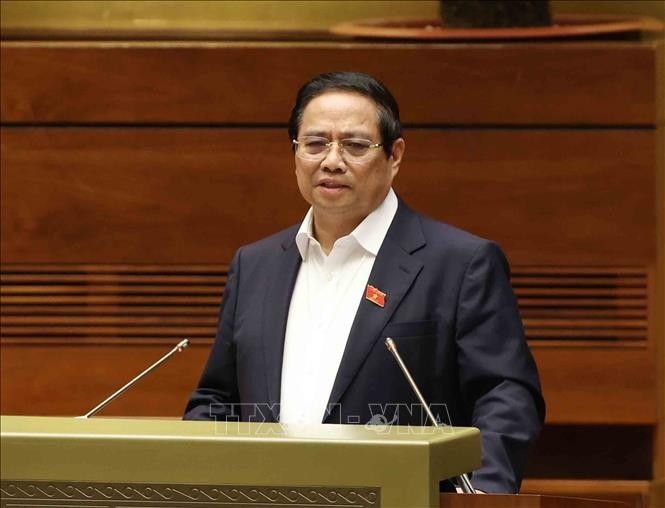
Hanoi (VNA) - Prime Minister Pham Minh Chinh called for drastic actions from all ministries, sectors and localities to swiftly translate No. 68-NQ/TW on developing the private economic sector into reality.
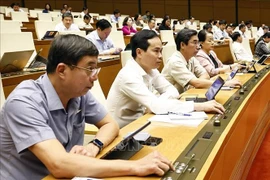
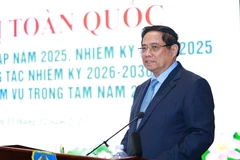
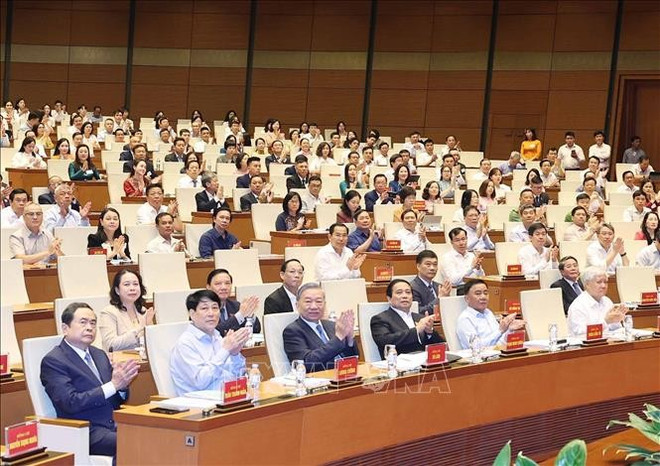
Addressing a national online conference to disseminate and implement the Politburo's Resolutions No. 66-NQ/TW and No. 68-NQ/TW on May 18, PM Chinh stressed that private sector development has consistently been a major policy direction throughout nearly 40 years of reform.
It has played a vital role in mobilising resources, spurring economic growth, boosting budget revenues, creating jobs, enhancing living standards, and fostering global integration.
Currently, nearly one million private enterprises operate across Vietnam. This sector accounts for around 50% of GDP. From 2017 to 2024, it employed an average of 43.5 million workers, more than 82% of the country’s total workforce. In 2024 alone, it contributed 56% of total investment capital, over 30% of state budget revenue, and 30% of import-export turnover.
The PM acknowledged, however, that despite these contributions, the private sector has yet to realise its full potential in terms of size, capacity, GDP contribution, and integration with other economic sectors. He identified ongoing challenges in access to land, capital, and skilled human resources, as well as limited links with State-owned and foreign-invested enterprises.
He emphasised the need for breakthrough policies to unleash private sector growth, adding that under the Politburo’s guidance, the Government has urgently prepared proposals for the Party and National Assembly to issue tailored resolutions, including Resolution 68.
Resolution 68 outlines five guiding principles, notably reaffirming the private sector as one of the key driving forces of the national economy. It calls for rapid, sustainable, and high-quality growth in the sector and for eliminating outdated mindsets and prejudices.
The resolution promotes a transparent, competitive business environment, encourages entrepreneurship and lawful wealth creation, and highlights the role of private enterprises in national development. It also underlined the need for the fostering of a strong entrepreneurial class and stronger leadership and facilitation roles from the Party and State.
Specific targets set by the resolution include 2 million private businesses, 20 businesses per 1,000 people, at least 20 large firms participating in global value chains, and private sector contributions of 55–58% of GDP and 35–40% of state revenues by 2030, as well as 3 million active enterprises, with the private sector contributing over 60% of GDP and competing effectively on the global stage by 2045.
Resolution 68 sets out eight groups of tasks and solutions that align with Vietnam’s three strategic breakthroughs - institutional reform, human resource development, and infrastructure. These are also connected to four major Politburo resolutions on science and technology, international integration, legal reform, and private sector development.
The roadmap includes reforms in mindset and institutional quality, stronger protection of ownership and business rights, and clearer differentiation between criminal, administrative, and civil liability to enhance corporate trust, said PM Chinh.
The Government leader noted that to operationalise Resolution 68, the Government issued Resolution 138/NQ-CP on May 16, setting out eight task groups and 117 specific actions, assigning clear responsibilities to ministries, sectors, and localities.
The tasks includes 5 tasks on shifting perceptions and approaches to private sector development; 50 tasks related to legal and institutional reform, including proposed amendments to 11 laws; 31 tasks to improve access to land, credit, and high-quality labour; and 4 groups of tasks promoting science, technology, innovation, digital and green transformation.
It also comprises 6 groups focused on building links among different enterprise types; 7 tasks to nurture medium and large enterprises, including a programme to support 1,000 pioneering firms in innovation and digitalisation; 5 groups of tasks supporting micro and small businesses; and 12 tasks related to business ethics and social responsibility.
Meanwhile, the National Assembly on May 17 adopted Resolution 198/2025/QH15, establishing special mechanisms and policies to bolster the private sector. It introduces clear guidelines on inspections, licensing, enforcement, and resource access. Notably, it also clarifies legal responsibilities between corporations and individuals, and across civil, administrative, and criminal domains, he noted.
Particularly, the NA resolution affirmed that the State will offer 2% interest subsidies for green and circular projects, tax and fee reductions, and procurement preferences for small and medium enterprises (SMEs).
Tax incentives will allow businesses to allocate up to 20% of taxable income to technology and innovation funds, with 200% of these costs deductible, while State budget will support training of 10,000 CEOs by 2030, it said.
PM Chinh also pointed to a number of other resolutions issued by the Government and NA in the field.
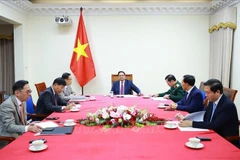
At the conference, PM Chinh discusses with business leaders on how to effectively realise the new resolutions.
He called on all ministries, sectors, and localities to act with urgency, discipline, and accountability, thus swiftly and comprehensively implementing Resolution 68./.