NA adopts resolution in support of private sector

According to the resolution, each enterprise, household business, or individual business must not be inspected more than once a year, except in cases where clear signs of violations are found.

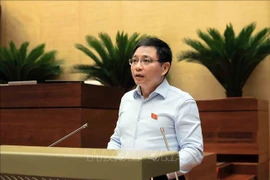
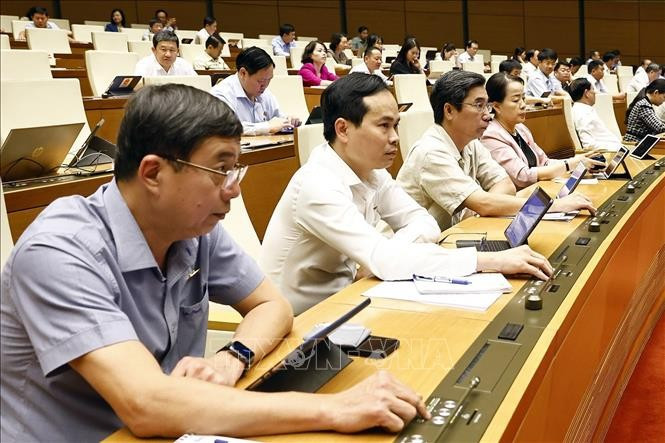
Lawmakers vote to adopt the resolution on several special mechanisms and policies for private sector development on May 17. (Photo: VNA)

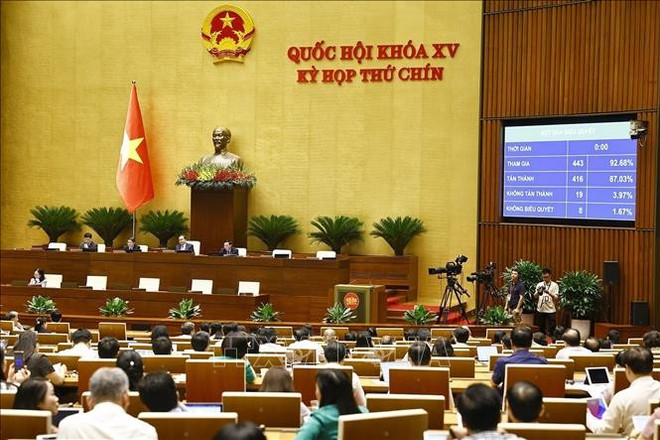
Hanoi (VNA) – With 429 out of 434 legislators present at the sitting on May 17 voting in favour, the 15th National Assembly (NA) approved the resolution on several special mechanisms and policies for private sector development at its ongoing 9th session in Hanoi.

The resolution that consists of seven chapters and 17 articles is to promptly institutionalise the Party’s guidelines outlined in Resolution No. 68-NQ/TW, with a view to improving the investment and business environment; facilitating private sector access to resources; promoting science, technology, innovation, digital and green transformation; developing human resources; and expanding the participation of private enterprises in national key projects. It began to take into effect on May 17.

Specifically, according to the resolution, each enterprise, household business, or individual business must not be inspected more than once a year, except in cases where clear signs of violations are found.

The resolution requires strict handling of acts of abuse or taking advantage of inspections and checks to cause difficulties for enterprises, household businesses, or individual businesses.

There will be a strong shift from pre-inspection to post-inspection in association with improving the effectiveness and efficiency of inspections and supervisions. Regarding the management of business conditions, there will be a shift from licensing and certificating to publishing business conditions and post-inspection, except for a few areas that are required to carry out licensing procedures according to international regulations and practices.

The resolution stipulates corporate income tax exemption for small and medium-sized enterprises for three years from the date of issuance of the first business registration certificate.
uuid676c519f-aa5c-4b4d-97af-2b5bd858a5b7code001library1type1mode1loctruecaptrue.jpg
Lawmakers at the ongoing 9th session of the 15th National Assembly. (Photo: VNA)

It also stipulates corporate income tax exemption for two years and a 50% reduction in the amount of tax payable for the next four years for income from innovative start-up activities of innovative start-up enterprises, innovative start-up investment fund management companies, and intermediary organisations supporting innovative start-up.

The determination of tax exemption and reduction periods shall be implemented in accordance with the provisions of the law on corporate income tax.

Individuals and organisations now can enjoy exemption of personal income tax and corporate income tax for income from the transfer of shares, capital contributions, capital contribution rights, rights to purchase shares, and rights to purchase capital contributions in innovative start-up enterprises.

Personal income tax is exempted for two years and tax payable is reduced half for the next four years for income from salaries and wages paid to experts and scientists by innovative startups, research and development centres, innovation centres, and intermediary organisations supporting innovative startups.

Regarding financial and credit support, the resolution clearly states that private enterprises, household businesses, and individual businesses will receive a 2% annual interest subsidy from the State on loans used for green and circular projects and for adopting the environmental, social, and governance (ESG) standards framework.

Lump-sum tax for household businesses will be removed from January 1, 2026 instead of July 1, 2026. To reduce burdens and costs, and encourage them to engage in digital transformation, the resolution stipulates that the State allocates funds to provide free digital platforms and accounting software for the group./.


VNA

See more

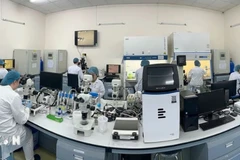
A biotechnology laboratory of the International University at Vietnam National University-Ho Chi Minh City. (Photo: VNA)

Resolution 57: Role of intellectuals in advancing science and technology research

Prof. Dr. Tran Dai Lam, Director of the Institute of Materials Science at the Vietnam Academy of Science and Technology (VAST), emphasised that intellectuals should nurture national responsibility and ambition, be ready to take on challenges, evaluate research outcomes by international standards, and engage in collaboration across different sectors.

Professor Vu Minh Khuong, of the Lee Kuan Yew School of Public Policy (right), talks to a Vietnam News Agency correspondent in Singapore. (Photo: VNA)

Resolution 57 - catalyst for scientific and technological breakthroughs

The resolution also seeks to create stronger mechanisms to mobilise social and private resources and support an innovation ecosystem; link digital transformation in the public sector with the modernisation of national governance; and prioritise the development of elite human resources and internationally-standard research infrastructure.

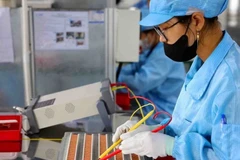
Workers produce electronic components (Photo: VNA)

Science, technology drive Vietnam’s rising global profile: expert

Assoc. Prof. Le Duc Anh from Tokyo University held that for fast and sustainable development, Vietnam should prioritise science – technology and innovation as the main driver of productivity, focusing on sectors with high spillover effects such as semiconductors, AI, data, new energy and materials, biomedical technology, automation – robotics, and cybersecurity.

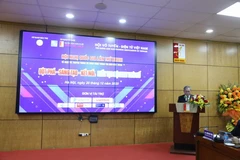
An overview of the workshop. (Photo: nafosted.gov.vn)

National portal expected to transform innovation into reality

The portal, which can be accessed at sangkien.gov.vn, was built to address the urgent need to mobilise collective intelligence and unlock the creativity of the entire population, in accordance with the directives of the steering committee for the implementation of the Politburo’s Resolution No. 57-NQ/TW on creating breakthroughs in science, technology, innovation and national digital transformation.

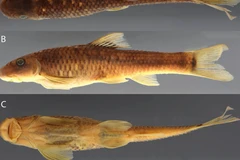
Sucker-mouthed minnow (Supradiscus varidiscus). (Photo: researchgate.net)

Vietnamese fish, bee named among 70 species newly identified in 2025

One of the most notable “hidden” finds is a small sucker-mouthed minnow endemic to Vietnam’s highlands, discovered in the Lo River. Scientifically named Supradiscus varidiscus, the specimen was collected and shelved some 25 years ago but has only now been studied and formally described.

The Ministry of Science and Technology launches a centralised one-stop-shop unit on December 19. (Photo: VNA)

Vietnam pushes sci-tech, innovation as growth drivers under Resolution 57

The Ministry of Science and Technology (MoST) bears the responsibility of “paving the way”, guided by a consistent spirit of transitioning from a management-oriented mindset to a facilitative one, from “input-based management” to “output-based evaluation”, and from fragmented investment to a focused approach centred on strategic technologies.

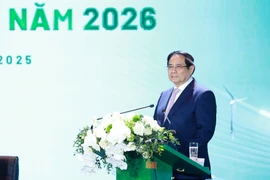
Prime Minister Pham Minh Chinh visits a display of science and technology development, innovation and digital transformation. (Photo: VNA)

Gov't leader requests greater efforts to step up development of sci-tech, innovation

Emphasising three strategic digital breakthroughs - digital institutions, digital infrastructure and digital human resources - PM Chinh called for close integration of science and technology development, innovation, administrative reforms, digital transformation and Project 06 with efforts to streamline the organisational apparatus and modernise leadership, management and working styles.

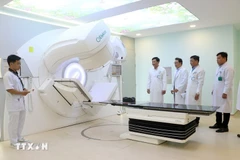
Doctors from Cho Ray Hospital (Ho Chi Minh City) and Vinh Long General Hospital (Vinh Long province) test the operation of a linear accelerator radiotherapy system for cancer treatment (Photo: VNA)

Vietnam sets orientations for applying nuclear energy across sectors

The plan aims to ensure the effective implementation of Decision No. 245/QD-TTg dated February 5, 2025, which approved the national master plan, while concretising objectives, orientations, solutions and resources for applying radiation and radioisotopes across sectors. It also assigns responsibilities to ministries, sectors and localities, and sets roadmaps and priorities for key programmes and projects.