PM sees global tensions as chance to reshape economy

The PM outlined a dual strategy: revitalising traditional growth engines of investment, exports, and consumption, while accelerating breakthroughs in sci-tech, innovation, digital transformation, and green transition.

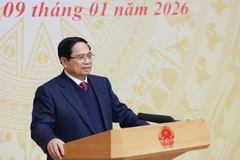
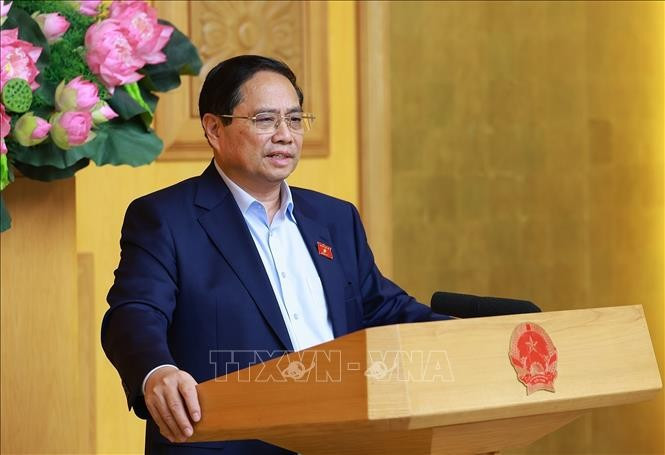
Prime Minister Pham Minh Chinh speaks at the meeting. (Photo: VNA)

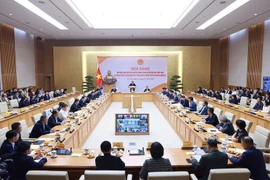
Hanoi (VNA) – Prime Minister Pham Minh Chinh chaired a meeting in Hanoi on June 23, urging permanent Cabinet members, ministries, and agencies to respond to escalating Middle East conflicts and other global disruptions that threaten Vietnam’s economic trajectory.

In his address, PM Chinh framed the challenges as a chance to pivot toward a greener, more sustainable economic model, urging a bold restructuring of markets, products, and production to diversify the nation’s economic base.
pm2.jpg
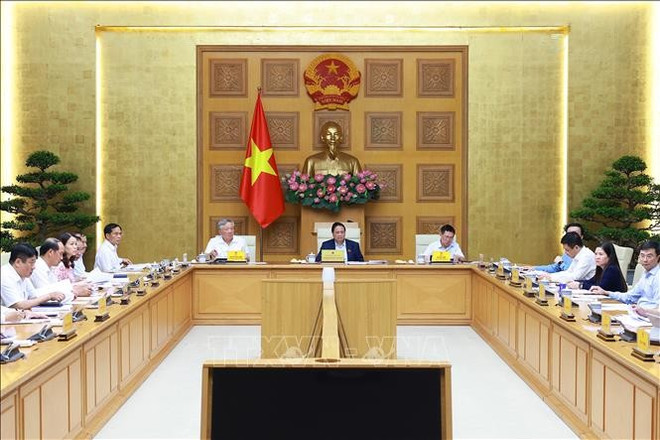
Prime Minister Pham Minh Chinh (C) chairs the meeting in Hanoi on June 23. (Photo: VNA)

Drawing on lessons from his Government’s tenure, he called for calm and consistency, exhorting ministries, businesses, and citizens to stay focused on long-term goals while keeping a sharp eye on global shifts. Proactive, timely, and appropriate measures, he insisted, must be tailored to each sector’s responsibilities.

The PM outlined a dual strategy: revitalising traditional growth engines of investment, exports, and consumption, while accelerating breakthroughs in sci-tech, innovation, digital transformation, and green transition. This approach, he said, aligns with Vietnam’s consistent policy of building an independent, self-reliant economy that is integrating into the global ecosystem.

On fiscal policy, he requested tax exemptions, deferrals, and reductions to ease burdens on businesses and households. He pushed for boosting revenues, curbing wasteful spending, and expediting public investment, particularly in strategic infrastructure, like transportation and energy. Efficient spending, coupled with robust market and price controls, is the backbone of stability, he argued.

Monetary policy, he warned, needs to walk a tightrope, flexible but cautious with a firm grip on exchange rates and inflation. Favourable interest rates must unlock credit access, while speculation in gold and foreign currencies needs to be removed. Credit growth, he said, should zero in on deep-processing industries, agriculture, and exports, with a lifeline for farmers battered by economic storms.

Fiscal and monetary policies must move in lockstep, he stressed, each bolstering the other to keep the economy on track. Securing macroeconomic stability, especially food and energy security, is critical, he added, demanding steady supplies and prices for essentials like fuel and electricity, alongside bulletproof telecom and information networks.

Turning to trade, the PM pushed for new free trade agreements and maximising existing ones to bolster exports. Streamlined customs, lower business costs, and steadfast tariff talks signal Vietnam’s unrelenting trade hustle. Logistics and trade promotion, he said, were vital to keeping Vietnam competitive.

At the local level, he urged chairpersons of the people’s committees of provinces and centrally-run cities to stabilise two-tier governance swiftly, while ministries and agencies must intensify decentralisation and delegation of authority to eliminate bureaucratic bottlenecks. Combating counterfeit goods, especially fake medicines and food, was a priority, alongside ramped-up market surveillance to fuel business growth and consumer trust.

In closing, he leaned hard into the power of communication, urging officials to highlight Vietnam’s achievements to build public trust and social consensus./.
VNA

See more

Cargo containers are handled at Gemalink International Port, Ho Chi Minh City. (Illustrative photo: VNA)

Government delegation for international economic, trade negotiations established

The delegation is tasked with assisting the Prime Minister in directing ministries, sectors and localities in the negotiation, signing, coordination of ratification and approval, as well as implementation of international treaties and agreements on economic and trade matters involving the Vietnamese State and Government.

Lotte Mart Vietnam is currently distributing around 900 private-label products manufactured in Vietnam under the retailer’s strict quality control. (Photo: VNA)

RoK steps up trade cooperation with Vietnam, Malaysia

The Korean business delegation's trip aims to provide Korean firms with information on import – export trends across the ASEAN region and developments in local markets, while also offering opportunities to explore the latest industry trends and technologies.

An overview of the Vietnam-China Green Industry Cooperation and Exchange Programme held in Beijing.(Photo: VNA)

Vietnam, China boost cooperation in green industry development

The Vietnamese Embassy in China, in coordination with the International Cooperation Centre under China’s National Development and Reform Commission (NDRC), on May 18 organised the Vietnam–China Green Industry Cooperation and Exchange Programme in Beijing to strengthen policy exchanges, share experience, and promote substantive cooperation in green industry amid climate change and growing global environmental challenges.

The infrastructure of Thang Long 3 Industrial Park in Phu Tho province is comprehensive and modern, creating favourable conditions for businesses and investors. (Photo: VNA)

Strong economic conglomerates drive domestic economic growth

In manufacturing, THACO has built one of Southeast Asia’s largest automobile and mechanical engineering ecosystems in Quang Nam province, while VinFast has become Vietnam’s first electric vehicle producer, establishing a major factory in Hai Phong, listing on Nasdaq and expanding into North America, Europe and Southeast Asia.

Producing garments for export to the EU market at TDT Thai Nguyen Garment Company. (Photo: VNA)

Vietnam’s textile industry draws high-tech FDI amid green, smart shift

With export turnover rising steadily in recent years and a target of 50 billion USD by 2026, Vietnam remains among the world’s top three textile exporters. Beyond its traditional appeal as a low-cost manufacturing base, the country is now positioning itself as a strategic hub for high-value and technology-driven investment.

An FDI enterprise invests in factory facilities at Chau Duc Industrial Park, a project spanning approximately 2,290 ha. (Photo: VNA)

Ho Chi Minh City targets next-generation, high-value FDI

The southern economic hub attracted nearly 3.3 billion USD in FDI during the first four months of 2026, marking a sharp year-on-year increase of 227.1%. The total included 539 newly licensed projects with registered capital exceeding 791.8 million USD and 58 existing projects adding 259.3 million USD in supplementary investment.

The VinFast electric vehicle charging station at the CT1 apartment complex of 103 Hospital in Hanoi. (Photo: VNA)

Vietnam accelerates drive to master EV technologies

By the end of 2025, Vietnam had established 28 standards and technical regulations related to charging stations, charging equipment and batteries. The legal framework is expected to be fully completed in the third quarter of 2026.

Duyen Hai Wind Power Plant in Truong Long Hoa ward, Vinh Long province. (Photo: VNA)

Energy sector seen as key pillar for Vietnam’s green, double-digit growth ambitions

Chairman of the Vietnam National Industry-Energy Group (Petrovietnam) Le Ngoc Son said Vietnam’s energy demand will continue rising sharply, creating enormous pressure on power generation investment. To sustain GDP growth of around 10%, electricity demand is expected to increase by 12-15% annually, requiring an additional 7,000-8,000 MW of new capacity each year.

A view of the Lien Chieu Container Port construction project in Da Nang city (Photo: VNA)

Logistics set to drive Vietnam’s rise in global supply chains

Amid sweeping restructuring in global trade driven by digitalisation, green transition and geopolitical shifts, logistics is no longer a back-end function. It is increasingly a decisive factor in economic performance, especially as Vietnam deepens integration into international supply chains. The challenge now extends beyond faster delivery to building a modern and interconnected logistics ecosystem capable of organising supply chains at a regional scale.

Coupang.com, one of the Republic of Korea's leading online retail corporations, has actively cooperated with the Vietnamese Embassy in handling issues related to products and items with wrong information of Vietnam. (Screenshot of the site)

Coordinated efforts help safeguard healthy online marketplaces

As the digital environment continues to evolve rapidly, stronger coordination among authorities, platform operators and user communities is becoming increasingly important to build a healthy cyberspace that respects cultural identity while helping reinforce friendship and mutual understanding among people worldwide.

Vietnam will host the 21st Asian-Australasian Association of Animal Production Societies (AAAP) Animal Science Congress (AAAP 21) from October 28 - 31 in Hanoi. (Photo: aaap2026.org)

Vietnam to host 21st AAAP animal science congress

According to the Animal Husbandry Association of Vietnam (AHAV), the event is expected to gather between 1,300 - 1,500 delegates, including around 500 leading international scientists, experts and businesses in the livestock sector.