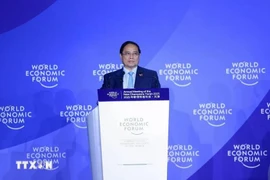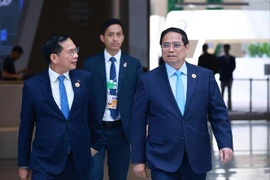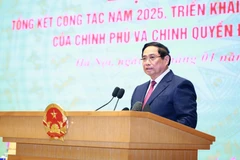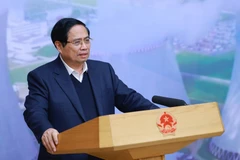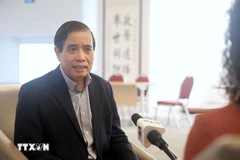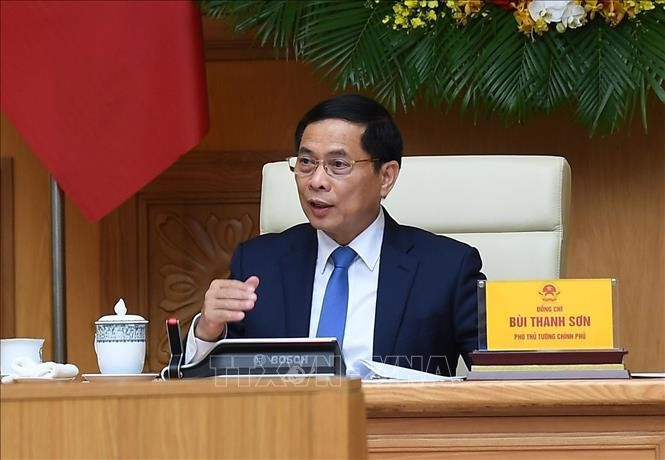
Hanoi (VNA) – Prime Minister Pham Minh Chinh's working trip to attend the 16th Annual Meeting of the New Champions of the World Economic Forum (WEF) in Tianjin, and engage in various activities in China from June 24 to 27 contributes to improving Vietnam’s image on the international stage, according to Deputy Prime Minister and Foreign Minister Bui Thanh Son.
With the participation of over 1,700 delegates from governments, businesses, international organisations, and scholars from nearly 100 countries and territories, the WEF Tianjin is a key event fostering a comprehensive platform for dialogue and linkages between governments and businesses, and between policymaking and practical implementation in the broader context of regional and global economic landscapes.
Given the global scale and significance of the meeting, PM Chinh’s working trip conveyed an important message that aligns with the event's theme -the spirit of entrepreneurship for a new era- aiming to maximise international resources in service of national development, stated Son.
At the same time, in the context of increasingly complex global and regional developments, it reaffirmed Vietnam’s consistent foreign policy of independence, self-reliance, and multilateralisation and diversification, and proactive international integration in a broad, deep, and effective manner. It also served as a concrete step in implementing the Politburo’s Resolution 59 on international integration in the new context, Son said.
Concerning China, the visit demonstrates the effective implementation of the common perceptions reached by the top leaders of the two Parties and two countries, reflecting the spirit of the Comprehensive Strategic Cooperative Partnership and the building of a “Vietnam–China Community with a shared future which carries strategic significance,” especially in the context of the two countries commemorating the 75th anniversary of the establishment of their diplomatic relations and jointly carrying out the Year of Humanistic Exchanges.
With 30 activities during the working trip, the Vietnamese delegation made a strong impression and contributed significantly to the overall success of the meeting, which was reflected in four key aspects:
First, PM Chinh engaged in extensive and substantive discussions with leaders of the WEF, numerous countries, and international organisations, and participants to clarify the broader picture of the global and regional economy amidst turbulence, risks, and potential challenges, particularly adjustments in global trade.
Second, with a special policy dialogue themed “Vietnam’s New Era: From Vision to Action” with WEF President and CEO Børge Brende, the Vietnamese Government leader shared with international friends an inspiring story of a Vietnam that is thinking big, acting bold, and implementing major reforms, with four strategic policy pillars: breakthroughs in science and technology, the private economy, deep international integration, and legal reform. Many delegates expressed appreciation for Vietnam’s strategic vision, acknowledged its all-round development achievements, and recognised the country’s rapid transformation toward a new era of development.
Third, from a multilateral perspective, the PM offered insightful assessments of the global situation, affirming that Asia has a solid foundation and ample potential to continue rising and playing a central, leading role in the global economy. He proposed five pioneer orientations for Asia in maintaining a peaceful and stable environment: advancing science, technology, and innovation; promoting economic connectivity and global integration; fostering entrepreneurship and business development; and enhancing cultural and social connectivity while ensuring that people remain at the centre of all strategic policies. He also proposed two specific initiatives: the “Asian Innovation Network” and the “Asian Innovation Portal”, aimed at enhancing connections among regional research institutes and universities, and supporting small and medium-sized enterprises, said Son.
Fourth, on the sidelines of the meeting, Son went on, the Prime Minister held meetings and engagements with heads of state and Government leaders of other countries, as well as partners and business representatives. In these meetings, PM Chinh and foreign leaders reached important and practical agreements on directions and measures to strengthen bilateral relations, for the benefit of each country and for peace, stability, and cooperation in the region and the world.
At the same time, the PM’s open, sincere, and in-depth discussions on investment opportunities in Vietnam, especially in high-tech sectors such as artificial intelligence and semiconductors, where Vietnam has growing demand, were well received by international partners and the global business community, with many expressing strong interest in expanding long-term investment and cooperation with Vietnam, Son shared.
The working trip to China by PM Chinh took place as Vietnam–China relations enter a new stage of more comprehensive, effective, substantive and sustainable development, Son said. It focused on concretising the common perceptions reached by top Party and State leaders of both countries, especially the Joint Statements made during the state visit to China by Party General Secretary and President To Lam in August 2024 and the state visit to Vietnam by Chinese Party General Secretary and President Xi Jinping in April 2025.
PM Chinh's trip to China was very successful and achieved substantial results in many aspects, Son said.
First, PM Chinh had an in-depth meeting with Chinese Premier Li Qiang to enhance political trust, expand substantive cooperation, better manage disagreements, and advance the stable, healthy, effective and long-term development of the Vietnam–China Comprehensive Strategic Cooperative Partnership and the community with a shared future with strategic significance.
Both sides affirmed the importance of maintaining high-level strategic exchanges, bolstering political trust, and promoting the role of strategic orientation for bilateral relations. Bilateral activities in Tianjin and Shanghai with Chinese leaders have laid the foundation and orientation for Vietnamese ministries, sectors, and localities to enhance friendly exchanges and substantive cooperation.
Second, in the spirit of the Vietnam–China Joint Statements reached during the visits of the two General Secretaries, the two leaders agreed to enhance the effectiveness of cooperation mechanisms to better meet the development requirements of the two countries and Vietnam–China relations in the new era.
Third, the two sides agreed to promote people-to-people exchanges and to organise activities in the Year of Vietnam–China Humanistic Exchange 2025, commemorating the 75th anniversary of the establishment of their diplomatic ties. Vietnam and China will continue to strengthen cooperation in culture, education, and tourism; well implement and improve the effectiveness of friendly exchange mechanisms; and step up communication work on the traditional friendship between the two Parties, the two countries, and the two peoples.
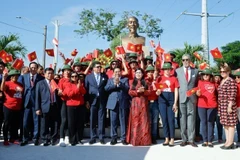
Finally, with diverse activities in Tianjin and Shanghai, the trip has contributed to expanding cooperation opportunities, enhancing mutual understanding, and bringing practical opportunities for people, businesses, and localities of the two countries. Notably, at the Vietnam–China business connectivity forum in Tianjin, companies from both sides signed nine cooperation agreements spanning power, infrastructure, agricultural processing, and digital transformation.
With the important results achieved, in the coming time, the two sides need to continue to deepen the Comprehensive Strategic Cooperative Partnership and promote the building of the Vietnam–China community with a shared future that carries strategic significance, focusing on the following key aspects:
First, it is necessary to maintain regular strategic dialogue at all levels to reinforce political trust between the two Parties and two countries and focus cooperation on key priorities.
Second, it is essential to enhance existing cooperation mechanisms and create new ones in high-quality human resources training, finance, culture, and people-to-people exchanges.
Third, priority should be given to boosting infrastructure connectivity, fostering sustainable trade, attracting high-quality Chinese investment into Vietnam, and turning science and technology into a pillar of bilateral ties.
Fourth, it should strengthen people-to-people exchanges, especially between young people, and encourage tourism to improve mutual understanding.
Fifth, the two countries should jointly manage and resolve differences, contributing to building a peaceful and stable environment.
Sixth, the two sides should maintain close coordination at multilateral mechanisms and forums and join hands with other countries to respond to global security and development challenges.
Deputy PM and FM Son said he believes that under the strategic orientation of the high-ranking leaders of both Parties and States and the leadership of the two governments, the substantial outcomes of the trip will be effectively implemented, thus paving the way for practical projects that benefit businesses and people of both countries for peace, stability, and cooperation in the region and the world./.
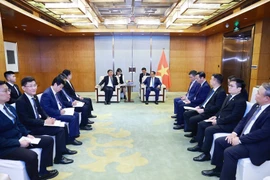
PM works with China's leading aviation, infrastructure enterprises
Congratulating COMAC on its initial trade relations with Vietnamese airlines, PM Chinh considered it a foundation for long-term cooperation.