Hanoi (VNA) – The restructuring of administrative units in Vietnam has been a long journey, reflecting the nation’s evolving development needs. From the provincial splits following the Doi moi (Renewal) reforms in 1986 to the fresh policy of provincial merger, each stage has embodied the strategic mindset aligned with the country’s priorities in every development period.
After the launch of Doi moi in 1986, as Vietnam embarked on building a socialist-oriented market economy, the country comprised 40 provinces and cities. The need for dividing provinces soon became an inevitable trend.
The first major wave came in 1989 with the division of three provinces: Binh Tri Thien split into Quang Binh, Quang Tri, and Thua Thien-Hue; Nghia Binh into Quang Ngai and Binh Dinh; Phu Khanh into Phu Yen and Khanh Hoa. This brought the number of administrative units in Vietnam to 40 provinces, three cities, and one special zone of Vung Tau - Con Dao.
The year 1991 witnessed 11 new splits. Specifically, Hoang Lien Son province was divided into Lao Cai and Yen Bai; Ha Tuyen split into Ha Giang and Tuyen Quang; Ha Binh Son split into Ha Tay and Hoa Binh; Ha Nam Ninh into Nam Ha and Ninh Binh; Gia Lai-Kon Tum split into Gia Lai and Kon Tum; Nghe Tinh split into Nghe An and Ha Tinh; Thuan Hai split into Binh Thuan and Ninh Thuan; Hau Giang split into Can Tho and Soc Trang; while Cuu Long split into Tra Vinh and Vinh Long. Some suburban districts of Hanoi were added to Vinh Phu and Ha Tay; three districts from Dong Nai and the Vung Tau - Con Dao special zone were merged to form Ba Ria-Vung Tau. By the end of this phase, Vietnam had 53 provinces and cities.
In 1997, eight more provinces were divided, increasing the total to 61. Notable changes included Bac Thai becoming Bac Kan and Thai Nguyen; Ha Bac split into Bac Giang and Bac Ninh; Nam Ha into Ha Nam and Nam Dinh; Hai Hung into Hai Duong and Hung Yen; Vinh Phu into Vinh Phuc and Phu Tho; Quang Nam–Da Nang into Quang Nam province and Da Nang city; Song Be into Binh Duong and Binh Phuoc; and Minh Hai into Bac Lieu and Ca Mau.
These decisions were intended not only to improve administrative management but also to enable each region to leverage its unique economic and cultural strengths.
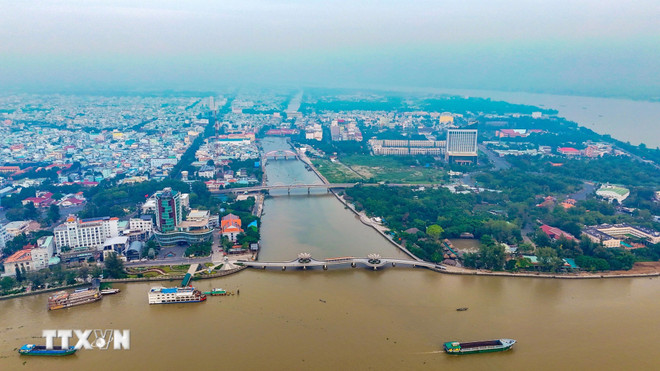
The urban development strategy continued in 2004, with Can Tho split into Hau Giang and Can Tho city. That same year, Lai Chau was divided into Lai Chau and Dien Bien, while Dak Lak divided into Dak Lak and Dak Nong. These adjustments brought the total to 64 provinces and cities, the highest in Vietnam’s history.
From 1989 to 2004, the number of provincial-level administrative units increased from 40 to 64, demonstrating a strong commitment to regional development. However, while the splits brought opportunities, they also created challenges, including administrative inefficiencies and financial pressures on smaller provinces. These experiences laid the groundwork for a more strategic approach to the current restructuring.
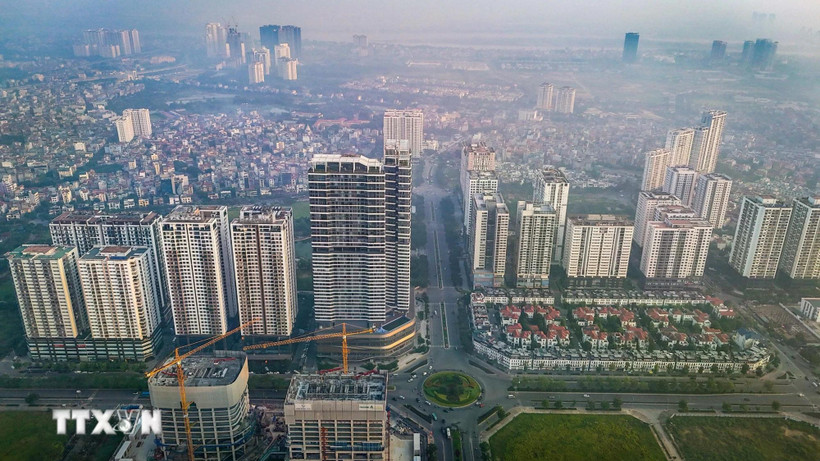
In 2008, Vietnam began shifting from provincial splits to mergers, aiming to expand development space and streamline governance. In that year, Ha Tay province, four communes from Hoa Binh province, and Me Linh district from Vinh Phuc province were merged into Hanoi, officially expanding the capital’s boundaries. Since then, the country has maintained 63 provinces and centrally-run cities.
Merging provinces, communes, eliminating district level: Bold vision for administrative reform
Vietnam’s administrative unit restructuring journey entered a new phase in 2017 with the issuance of Resolution No. 18 by the 12th-tenure Central Party Committee, laying the foundation for comprehensive reform. Since then, the country has made significant strides in streamlining its administrative apparatus. Two major rounds of reorganisation took place from 2019–2021 and 2023–2025, reducing the number of district-level administrative units from 713 to 696, and commune-level ones from 11,162 to 10,035.
The year 2025 marks a critical turning point, following the issuance of Conclusions No. 126-KL/TW and 127-KL/TW by the Politburo and the Party Central Committee’s Secretariat, reaffirming the commitment to downsizing the political system’s organisational structure. Notably, the policy direction now includes merging provinces and communes, and eliminating the district level, showing a bold and transformative mindset in administrative reform.
Conclusion No. 126-KL/TW, issued in late February 2025, outlines the need to study the elimination of the intermediate administrative level (the district level), continue reorganising commune-level units in accordance with the new organisational models, and merge some provincial-level administrative units.
Soon after, Conclusion No. 127-KL/TW followed, directing relevant bodies to study and propose further restructuring of the political system, with a focus on province and commune mergers and the removal of district-level units. For provinces, the Politburo and Secretariat emphasised that beyond population size and geographic area, the reorganisation must also consider national, regional, and local master plans, along with socio-economic development strategies and sectoral development plans.
Additionally, when merging provinces and cities, it is essential to evaluate opportunities for expanding development space, leveraging comparative advantages, and meeting the development goals of each locality within the broader national context.
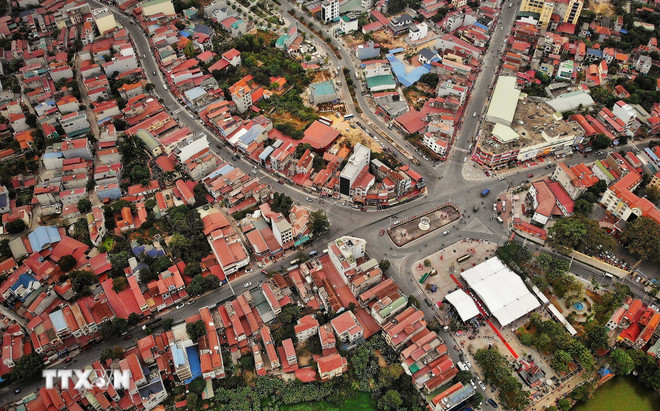
On March 20, the Central Steering Committee for reviewing the Resolution 18 implementation issued a roadmap for continued reform. It confirmed that the National Assembly will pass a resolution on the merger of provincial-level administrative units before June 30.
The Party Committee of the Government was assigned to lead coordination with the Party Central Committee’s Organisation Commission and other relevant agencies to gather feedback, finalise the proposals, and report to the Politburo by March 25 and to the Central Party Committee before April 1.
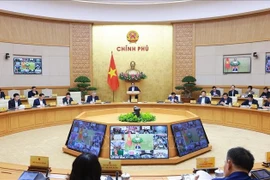
At the first meeting of the Government's Steering Committee for science – technology development, innovation, and digital transformation, and Project 06, Minister of Home Affairs Pham Thi Thanh Tra stated that her ministry is working intensively on restructuring province- and commune-level units, and building a new two-tier local government model. The process is being carried out with caution, urgency, and efficiency.
According to the minister, the reorganisation of commune-level administrative units is expected to be completed by June 30 to allow new administrative structures to become operational on July 1. Provincial-level mergers are scheduled to be finished by August 30 so that provincial-level administrative units can start working on September 1.
Maximising local potential through provincial mergers
The mergerence of provinces and cities aims to promote sustainable development and administrative efficiency. Primarily, the move helps streamline the administrative apparatus by reducing intermediate layers, thereby cutting costs and improving the effeciency of state governance. This also enables optimising resources, unlocking economic potential, and strengthening local financial autonomy, particularly for smaller provinces or those with limited revenue sources.
Moreover, the mergence is expected to foster regional linkages, form larger economic hubs, and enhance competitiveness and investment attraction, and match global integration trends.
In today’s context, the advancement of e-Government and digital technology application has significantly improved administrative management. These innovations facilitate borderless public services and reduce geographical barriers between provinces. At the same time, inter-provincial and inter-transport infrastructure has been substantially developed, including expressways, national highways, and modern public transit systems, laying a solid stepping stone for effective integration after the mergence.
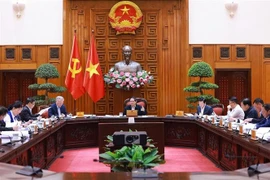
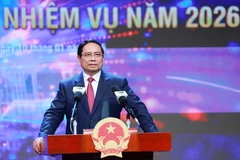
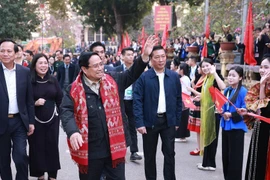
At recent meetings of the Standing Board of the Government’s Party Committee regarding the reorganisation of administrative units and the development of a two-tier local government model, Prime Minister Pham Minh Chinh emphasised that this policy enjoys strong public support and reflects current capabilities and needs, especially as digital and transport infrastructure have advanced considerably.
Importantly, restructuring administrative units will create new development space and unlock the distinct potentials, unique opportunities, and competitive advantages of each locality. The Government’s Party Committee has agreed to propose a plan that would reduce the number of provincial-level administrative units by around 50%, and grassroots-level units by 60–70%.
PM Chinh stressed that, beyond land area and population, other factors must be considered such as history, tradition, culture, ethnicity, geography, economic and social development, and infrastructure. The naming of new provincial units must reflect continuity, while the selection of administrative-political centers should take into account history, location, infrastructure connectivity, development space, national defence, security, and integration potential.
Merging provinces and cities presents a major opportunity to stimulate economic growth by leveraging the unique strengths of each locality. With distinct advantages in natural resources, culture, tourism, or industry, merged localities can better collaborate and support one another, driving common development for regions and the nation as a whole./.