Hanoi (VNA) - Over 434 trillion VND (16,44 billion USD) of public investment has been disbursed by the end of August, reaching 39.79% of the yearly target, the Ministry of Finance (MoF) reported.
While this marks an improvement over the same period last year, authorities warn that stronger efforts are needed to meet the full-year goals.
The Government aims to achieve at least 60% disbursement by the end of the third quarter and 100% by year-end, as part of a broader strategy to stimulate economic growth amid global headwinds.
The MoF said that the 2025 public investment plan, approved at a historic 1.09 quadrillion VND, represents the largest capital allocation in Vietnam’s history. It is designed to fuel infrastructure upgrades, job creation, and post-pandemic economic recovery.
Of this, the Government allocated 884.6 trillion VND, while local budget surpluses contributed an additional 141.34 trillion VND. A further 64.92 trillion VND was rolled over from previous years.
By the end of August, 987.44 trillion VND had been officially allocated to specific projects, equating to 95.65% of the government-assigned total, excluding local additions. However, nearly 38.5 trillion VND remains unallocated at project level, particularly in 18 out of 42 ministries and central agencies, and 29 of 34 provinces and cities, delaying disbursement.
The unallocated capital stems from diverse issues. About 1.94 trillion VND from the original plan has yet to be assigned. Another 31.76 trillion VND was added later from 2024 budget surpluses and National Target Programmes, while nearly 4.7 trillion VND is currently under review by the National Assembly for reallocation among agencies and localities based on revised funding needs.
These bottlenecks have hindered project rollout, despite early planning efforts.
By August 31, 409.17 trillion VND of the 2025 capital plan had been disbursed, accounting for 39.9% of the total and 46.3% of the Prime Minister’s assigned target. This represents a modest year-on-year improvement compared to 2024, when just 36.9% of the plan and 40.4% of the PM target had been disbursed by the same point.
However, progress in August slowed compared to July, raising concerns that momentum could weaken in the final quarter. Disbursement of carried-over capital reached only 38.25%, far below the 100% target.
To accelerate disbursement and fulfil the yearly target, the MoF has called for urgent and coordinated efforts across all government levels to meet the disbursement goals.

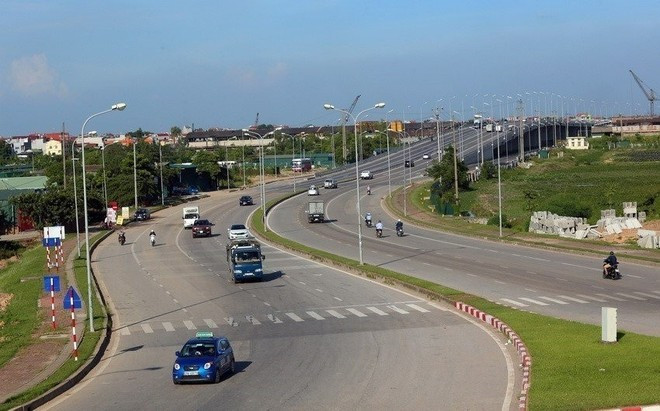
Key measures include completing allocation of all outstanding capital by September 30, and establishing monthly and quarterly disbursement targets for all project owners. They must also accelerate site clearance and compensation - a frequent cause of delay - and prioritising major infrastructure works, especially national highways and urban ring roads. Additionally, authorities are urged to amend outdated policies and laws obstructing timely capital deployment.
In support of long-term reform, several ministries are now working to resolve structural challenges. The Ministry of Justice is reviewing decentralisation-related legislation, the Ministry of Home Affairs is issuing guidance on establishing local public service units to manage project execution, and the Ministry of Construction is updating regulations to clarify project ownership at the commune level.
These reforms aim to create a more efficient governance structure, especially under Vietnam’s new two-tier local government model.
The government has placed special emphasis on Official Development Assistance (ODA) and National Target Programmes, urging faster progress in project preparation, scheduling, and implementation.
The MoF and localities have been urged to speed up the implementation of their tasks, contributing to completing at lease 3,000km of expressways and more than 1,000km of coastal roads within 2025./.