Recovered COVID-19 patients urged to donate plasma

The National Hospital for Tropical Diseases has called on recovered COVID-19 patients to donate their plasma, which would be used to treat the critically ill.
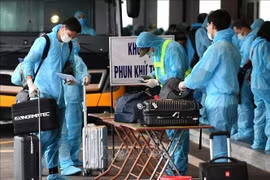
Recovered COVID-19 patients urged to donate plasma ảnh 1People returning from Da Nang city carry out procedures for rapid COVID-19 testing in Hai Ba Trung district of Hanoi on August 1 (Photo: VNA) 

Hanoi (VNA) - The National Hospital for Tropical Diseases has called onrecovered COVID-19 patients to donate their plasma, which would be used totreat the critically ill.

The call was made as the Health Ministry approved a study on the safetyand efficiency of a new method that employs convalescent plasmatherapy to treat other patients with illness at medium, serious andcritical levels.

The study was conducted by Dr Pham Ngoc Thach, director of the NationalHospital for Tropical Diseases, Prof and Dr Nguyen Thanh Liem, head of theprivate Vinmec Research Institute of Stemcell and Gene Technology and otherscientists, doctors from the National Institute of Hygiene and Epidemiology andNational Institute of Haematology and Blood Transfusion.

Plasma donors must meet criteria including aged from 18 to 65, weight of over50kg for men and 45kg for women, who have recovered from COVID-19,and were discharged from hospital for at least 14 days.

Since August 3, the National Hospital for Tropical Diseases has looked forplasma donors and so far, five people have registered for donation, one ofthem a health worker, Vietnam News Agency reported on August 6.

The donors would undergo several tests to see if their plasma is qualified fortreatment or not.

Dr Van Dinh Trang from the hospital’s Department of Microbiology and MolecularBiology, said that one recovered COVID-19 patient with eligible plasma couldhelp save the life of another patient who was in a medium, serious or veryserious health condition.

“The donation is voluntary and donors could stop donating at any time,” hesaid.

Those who want to register for the donation could contact the hospital at thehotline 19003228 or go to the hospital’s Social Affairs Desk.

On May 15, the Health Ministry issued a decision on the temporary reception,storing and transport of convalescent plasma from recovered COVID-19 patients.

As there is currently no vaccine against the new strain coronavirus, theuse of plasma from recovered COVID-19 patients is considered a possibletreatment for the disease. Vietnam’s decision to explore this path indealing with the disease was prompted by international studies andreports which suggest that blood plasma containing COVID-19antibodies drawn from recovered patients may help the body of the recipientfight off the SARS-CoV-2./.
VNA

See more

Male plastic surgery: Why masculine aesthetics require a different approach

Male plastic surgery: Why masculine aesthetics require a different approach

Plastic surgery has long been associated with procedures for women, but men also seek treatment for abdominal fat, enlarged breasts and age-related changes around the eyes and face. The American Society of Plastic Surgeons (ASPS) includes liposuction, gynecomastia surgery and eyelid surgery among procedures performed on male patients.

A speaker delivers presentations at the conference (Photo published by VNA)

Vietnam, Denmark expand cooperation in high-tech healthcare

Ambassador Nguyen Le Thanh called on Vietnamese and Danish partners to identify priority areas and promote research and training programmes, knowledge transfer and technology application in line with Politburo's Resolution No. 57-NQ/TW on breakthroughs in science – technology development, innovation and national digital transformation.

Ho Chi Minh City has favourable conditions for developing the ecosystem, including a large population, diverse healthcare needs and an extensive public and private medical network. (Illustrative photo: VNA)

Ho Chi Minh City develops multi-tier elderly care network amid population ageing

Dr. Huynh Minh Chin, Deputy Director of the department, said rising elderly care needs are putting pressure on traditional family-based care, as older people increasingly face multiple chronic illnesses, mobility problems, malnutrition, dementia and depression, requiring continuous support and closer coordination among hospitals, grassroots healthcare facilities, families and social support institutions.

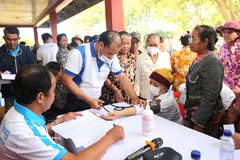
Local residents in Mondulkiri province, Cambodia, receive free medical check-ups and health consultation. (Photo: VNA)

Free medical examinations provided to remote communities in Cambodia

Vietnamese Ambassador Nguyen Minh Vu said the programme has been jointly organised by the embassy and the hospital annually in various Cambodian localities to provide healthcare support to disadvantaged households and contribute to the Cambodian Government’s efforts to improve public health. The initiative also reflects close cooperation in healthcare and the strong bonds between the people of Vietnam and Cambodia.

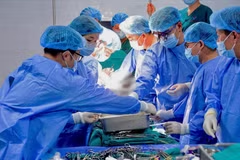
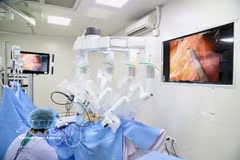
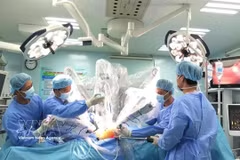
With the assistance of robotic-assisted laparoscopic surgery, doctors successfully perform a complex operation (Photo: VNA)

Vietnam advances towards high-quality, specialised healthcare

Recent developments in Hanoi and other localities highlight efforts to develop specialised treatment, standardise professional practices and apply artificial intelligence (AI) and advanced medical techniques, towards a more modern healthcare system.

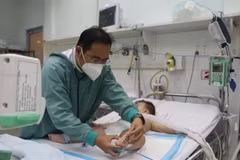
Collecting a sample from a pediatric patient for influenza testing (Photo: VNA)

Ho Chi Minh City acute respiratory infections surge over 64%

According to the Ho Chi Minh City Centre for Disease Control (HCDC), influenza viruses are are among the fastest-rising pathogens, with 151 positive samples in a single week. Influenza A is the dominant strain, with A/H1N1pdm09 in 116 samples, or nearly 77%.