Resolution 70-NQ/TW aims to strengthen Vietnam’s role in global energy value chain

Significantly, Resolution 70-NQ/TW emphasises the equal role of the private sector, encouraging deeper engagement from both domestic and foreign enterprises.

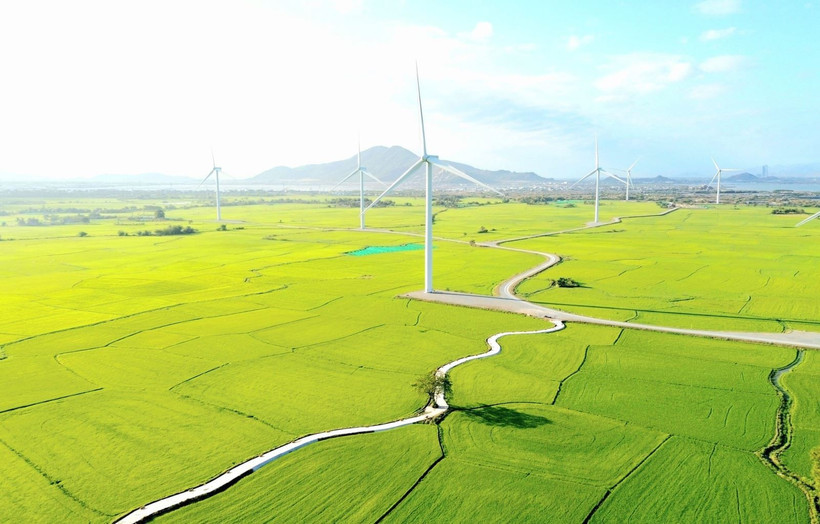
Dam Nai wind energy farm in Khanh Hoa province (Photo: VNA)

Hanoi (VNA) – The Politburo has issued Resolution 70-NQ/TW, setting a long-term strategy for national energy security until 2030 with a vision to 2045. The landmark policy positions renewable and clean energy at the forefront, paves the way for a competitive electricity market, and aims to draw investment from all social sources.

A policy turning point

According to Le My Nga, former Project Director at the World Energy Council in Vietnam, the resolution represents a decisive turning point that will help safeguard energy security in the new era. It outlines an ecosystem-wide vision – from traditional to renewable and clean energy, and from conventional to advanced technologies such as hydrogen, green ammonia, and small modular nuclear reactors (SMRs).

Significantly, Resolution 70-NQ/TW emphasises the equal role of the private sector, encouraging deeper engagement from both domestic and foreign enterprises. Experts said the resolution paves the way for Vietnam to move from a model of “shortage and concern” to “proactivity and sustainable growth,” making energy a true pillar of long-term socio-economic development.

The new resolution also represents an advance as compared to the Politburo’s Resolution No. 55-NQ/TW in 2020, which laid out Vietnam’s national energy development strategy but left challenges unresolved, including electricity shortages, stalled nuclear power planning, incomplete market reforms, and cross-subsidisation in electricity pricing.

Nguyen Anh Tuan, General Director of Vietnam Electricity (EVN), said Resolution 70-NQ/TW opens a new chapter in energy security and provides the foundation for EVN’s action plans, including the adoption of a two-part electricity pricing. He stressed that the resolution represents a decisive institutional reform, removing key bottlenecks to accelerate the restructuring of Vietnam’s power sector toward a competitive market. It reinforces equality and non-discrimination, creating greater opportunities for the private sector's participation in the electricity supply and service chain, while ensuring consumers can freely choose providers—an essential step toward a truly competitive electricity market.

Boosting private investment

Resolution 70-NQ/TW aims to unlock the competitive power market and attract private investment. Nga noted that market reform and the private sector's participation are both urgent and necessary, with the resolution affirming equality and non-discrimination to create opportunities for enterprises at every stage of the supply chain. It also positions Vietnamese companies to move from participants to leaders in certain energy technologies.

The resolution also calls for the early implementation of direct power purchase agreements (DPPA) between generators and large customers, along with transparent, long-term contracts to protect investors' interests.

This marks a major step forward, but attracting private investment requires balancing the interests of investors, consumers, and the State.

Energy experts believed Resolution 70-NQ/TW maximises opportunities for the private sector's investment, but investors prioritise profit and low risk. The resolution addresses this by streamlining administrative procedures and cutting processing time by 30–50%, sending a strong signal to reduce risks and build investor confidence.

To build a modern, smart and sustainable energy ecosystem, experts stressed the need to quickly remove legal and planning bottlenecks. Clear and consistent policies are the key to investor confidence, alongside a unified legal framework, fair treatment of enterprises, financial incentives for green projects, and the development of high-quality human resources.

As Vietnam deepens global integration, Resolution 70-NQ/TW provides a timely framework to ensure energy security, promote sustainable development and strengthen the country’s position in the global energy value chain. If effectively implemented, it could become a key driver of national prosperity in the decades to come./.
VNA

See more

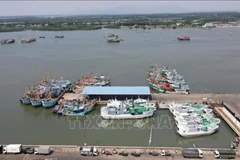
Cat Lo Fishing Port in Phuoc Thang ward, Ho Chi Minh City. (Photo: VNA)

HCM City earmarks over 2.54 million USD for fisheries transition

The project targets the conversion of around 6% of the city’s fishing fleet, focusing on nearshore and inshore vessels and part of the offshore trawler fleet, towards fishing methods with lower environmental impact, including hook-and-line, gillnets, purse seines, traps and cages, as well as fisheries logistics services.

LS Eco Energy factory (Photo: Iscns.co.kr)

RoK company expands rare earth metal production in Vietnam

LS Eco Energy, a company specialising in renewable energy and rare earth elements under the Republic of Korea (RoK)'s LS Cable & System, has approved a plan to expand its rare earth metal business in Vietnam, in a bid to seek long-term growth in the strategic materials sector.

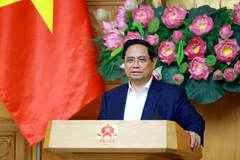
Prime Minister Pham Minh Chinh speaks at the fourth meeting of the Central Steering Committee for Housing Policy and Real Estate Market on December 17. (Photo: VNA)

PM calls for stronger efforts to meet housing demand, ensure people's right to housing

PM Chinh noted that the real estate and housing market showed positive changes in 2025. With the engagement of the entire political system and society, Vietnam completed the elimination of temporary and dilapidated housing nationwide with more than 334,000 units, five years ahead of schedule. Nonetheless, continued efforts are needed to ensure no one is left without shelter.

Officers of the Hon Gai port border gate guard station coordinate inspections and handle vessels engaged in illegal fishing activities in Ha Long Bay. (Photo: Quang Ninh Newspaper)

Quang Ninh province strengthens fishing vessel controls

In the coming period, Quang Ninh will continue to implement government and ministerial directives on combating IUU fishing, contributing to efforts to meet the EC’s recommendations and move toward the lifting of the yellow card warning against Vietnam’s seafood exports.

The draft is designed to implement a plan to simplify business regulations for banks, in line with the Government's Resolution No. 66/NQ-CP. (Photo: VNA)

SBV plans to simplify business regulations for banks

Under a draft circular to replace Circular 32/2024/TT-NHNN, now open for public comment, many administrative procedures for establishing and relocating commercial bank branches and transaction offices will be significantly shortened.

Illustrative image (Photo: VNA)

Vietnam consolidates position as one of Asia’s economic bright spots

Next year, Vietnam is expected not only to maintain a high growth rate relative to the region but also to further reinforce its status as one of Asia’s economic bright spots thanks to macroeconomic stability, a dynamic domestic market, and a clear orientation towards attracting strategic investments.

Many vessels have installed additional vessel monitoring systems to ensure uninterrupted information connectivity with shore-based stations during fishing trips. (Photo: VNA)

Decisive moment of fight against IUU fishing violations

Under the close direction of the Prime Minister, coastal localities nationwide, particularly in central Vietnam, are urgently implementing assigned tasks with clear schedules and milestones, delivering tangible weekly progress.

Prime Minister Pham Minh Chinh speaks at the 26th meeting of the National Steering Committee for Combating Illegal, Unreported and Unregulated (IUU) Fishing. (Photo: VNA)

Local leaders must be held accountable for IUU fishing violations: PM

PM Chinh requested the Government Inspectorate to promptly identify localities that lack determination or fail to handle violations thoroughly, including cases where vessels not meeting legal requirements are still allowed to leave ports, and to clarify responsibilities and impose sanctions without delay.

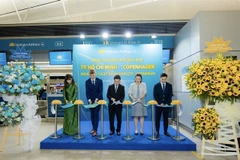
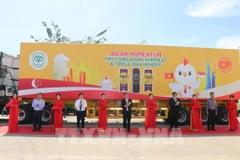
The ribbon-cutting ceremony marking the export of C.P. Vietnam's first container shipment to Singapore. (Photo: VNA)

C.P. Vietnam exports first processed chicken batch to Singapore

The CPV Food Binh Phuoc plant operates a closed-loop system and holds international certifications, including HACCP, BRC, ISO 22000, and Halal. Before reaching Singapore, the company’s processed chicken was already exported to Japan, Hong Kong (China), Cambodia, and Laos, with Japan alone importing 10,000 tonnes by November 2025.