Hanoi (VNA) - Vietnam’s rising exchange rates are creating mounting challenges for businesses, especially importers, as increasing input costs put pressure on operations. In response, experts have proposed various strategies to help enterprises mitigate the impact.
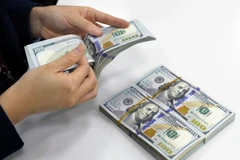
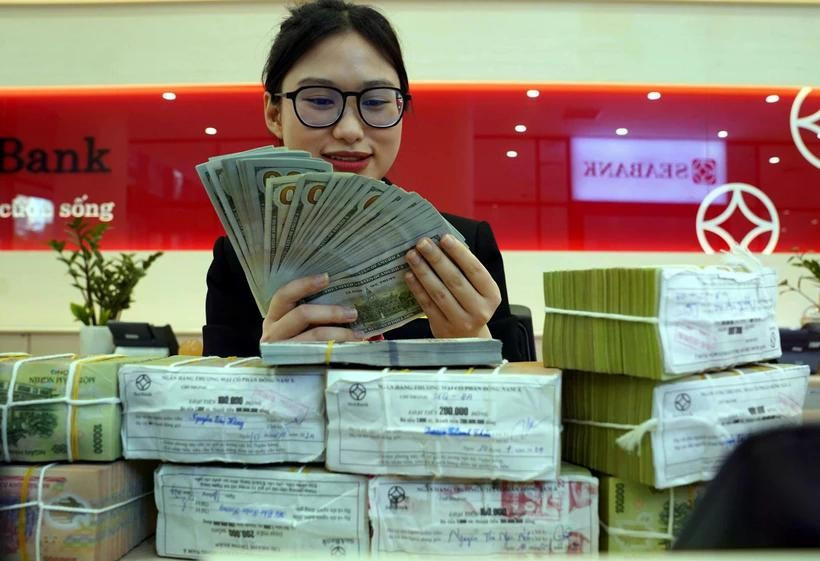
As of February 18, after the Tet holiday, the exchange rate set by the central bank stood at 24,602 VND/USD, up 277 VND from February 3.
Major banks such as Vietcombank, Vietinbank, and BIDV are selling USD at 25,750 VND. Private commercial banks like Techcombank, Eximbank, and VPBank are offering similar rates, ranging between 25,400 and 25,750 VND.
According to United Overseas Bank (UOB) experts, one of the key drivers behind the strengthening dollar is the escalating trade tension between the US and China. After US President Donald Trump imposed a 25% tariff on imported steel and aluminum, China swiftly retaliated with its own list of US goods subject to new tariffs. This has fueled fears of a prolonged trade war, making the dollar a safe haven for investors.
Additionally, rising inflation risks in the US could push the Federal Reserve to maintain high interest rates to curb inflation, further boosting the dollar’s attractiveness. As a result, the USD/VND exchange rate has climbed 0.18% since the start of the year, reaching 25,530 VND and setting a new peak.
The rising US dollar is reshaping global capital flows, drawing investors toward US markets and dollar-denominated assets. This shift has led to capital outflows from emerging markets like Vietnam, contributing to short-term adjustments in the VN-Index.
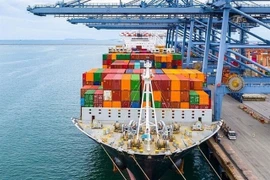
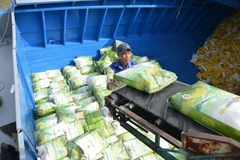
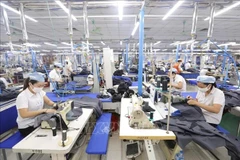
For businesses, rising exchange rates pose significant challenges. Importers face increased input costs, while the transportation sector is impacted by rising fuel and logistics costs. Higher exchange rates also push up the price of imported goods, weakening consumer demand for imported products.

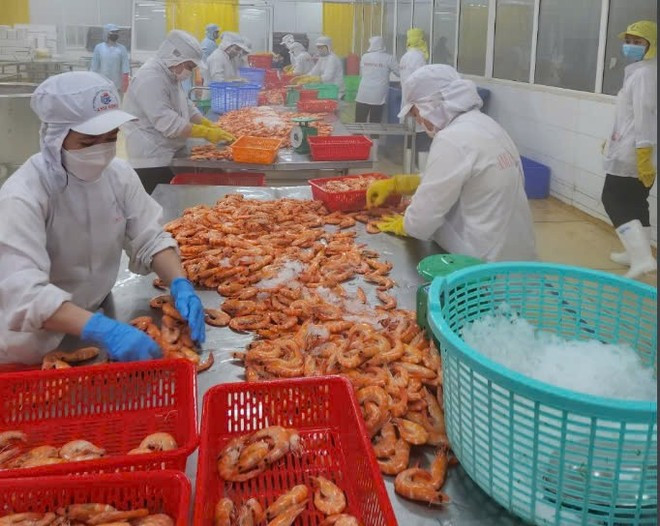
A strong US dollar also give exporters challenges as the rising costs of imported raw materials and logistics drive up production expenses. Additionally, companies with USD-loans face increased repayment costs as the VND depreciates.
To navigate these challenges, Dr. To Hoai Nam, Vice Chairman and General Secretary of the Vietnam Association of Small and
Medium Enterprises (SMEs), highlighted businesses’ efforts to adopt flexible strategies. These include shifting export markets toward major partners like Japan and China and taking loans in the currencies of their trading partners. Companies are also using hedging tools to minimise exchange rate risks.
Some businesses are diversifying their payment currencies to ease risks, while others are investing in exchange rate insurance to stabilise costs.
Associate Professor Dr. Dinh Trong Thinh emphasised the importance of such risk management measures, including diversifying supply sources, collaborating with banks offering preferential trade financing, establishing foreign exchange reserve funds, and making early repayments on foreign currency loans.
Financial expert Nguyen Tri Hieu pointed out that Vietnam’s exchange rates in 2025 will continue to be influenced by the global value of the USD.
He stressed the need for Vietnam to maintain macroeconomic stability, control inflation, and ensure the resilience of its financial system. Flexible exchange rate management and strengthening foreign exchange reserves will be crucial in stabilising the market and mitigating volatility.
Deputy Governor of the State Bank of Vietnam Dao Minh Tu also acknowledged the unpredictable factors that could pressure the exchange rate and the foreign currency market in 2025. He reaffirmed the central bank’s commitment to closely monitor market developments and adopt flexible policies to maintain macroeconomic stability, control inflation, and support businesses amid global uncertainty./.