RMIT urged to expand role in Vietnam’s high-quality workforce development

Prime Minister Pham Minh Chinh praised RMIT’s contributions, particularly those of RMIT Vietnam over the past 25 years, to training skilled human resources and promoting educational cooperation between Vietnam and Australia.

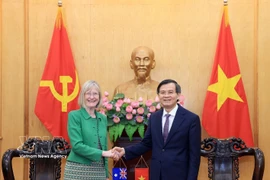
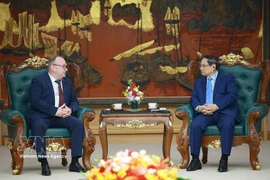
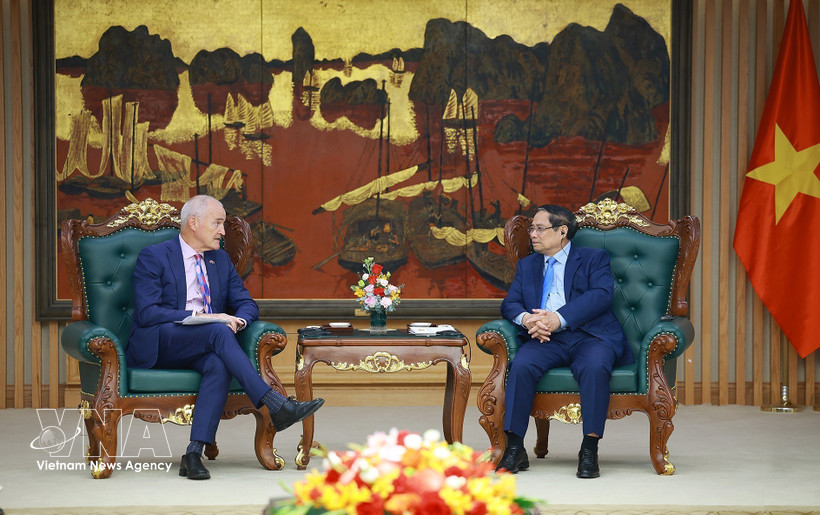
Prime Minister Pham Minh Chinh (right) and RMIT President and Vice-Chancellor Professor Alec Cameron at their meeting on April 2 (Photo: VNA)

Hanoi (VNA) – Vietnam considers education and training, along with the development of high-quality human resources, a top national policy and a key strategic priority, particularly in the context of promoting digital transformation, innovation and a knowledge-based economy in service of its long-term development goals.

Prime Minister Pham Minh Chinh made the statement on April 2 while receiving a delegation from Australia’s Royal Melbourne Institute of Technology (RMIT), led by President and Vice-Chancellor Professor Alec Cameron, who is on a working visit to Vietnam.

The PM praised RMIT’s contributions, particularly those of RMIT Vietnam over the past 25 years, to training skilled human resources and promoting educational cooperation between Vietnam and Australia. He noted that reputable international institutions like RMIT have helped improve training quality, expand academic exchanges and strengthen mutual understanding between the two countries.

To further strengthen cooperation, PM Chinh suggested that RMIT continue to effectively implement its training programmes in Vietnam, contributing to improving the quality of human resources and enhancing Vietnamese students’ capacity for international integration, while supporting the development of the country’s higher education system.

He suggested that if RMIT considers Vietnam a strategic base, it should step up investment in infrastructure, strengthen its teaching staff and ensure adequate learning resources to operate as a comprehensive university. He also encouraged the expansion of training scale and diversification of disciplines, particularly in areas of strong demand such as digital technology, artificial intelligence, green economy, innovation and technology governance.

He further called on the university to enhance collaboration with Vietnamese enterprises, research organisations and educational institutions, contributing to the development of the innovation and startup ecosystem as well as knowledge transfer. He encouraged the university to expand scholarship programmes and research partnerships, creating more opportunities for Vietnamese students to access international education and develop comprehensively.
vnanet-rmit2.jpg
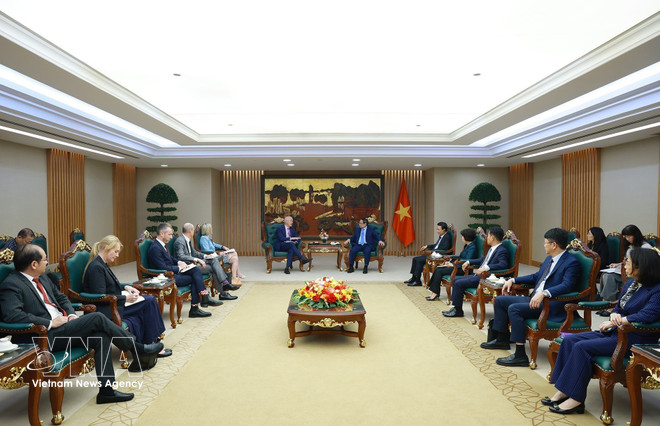
An overview of the reception (Photo: VNA)

For his part, Professor Cameron affirmed that RMIT’s presence in Vietnam is not solely profit-driven but also aims to contribute to the country’s human resources development.

He said the university plans to expand its operations by establishing additional campuses in Hanoi and Ho Chi Minh City, and expressed appreciation for the Vietnamese Government’s support. He expressed his hope that relevant ministries, sectors and localities will continue to expedite procedures to support RMIT’s expansion in Vietnam.

Affirming that the Government consistently creates favourable conditions for reputable international educational institutions, including RMIT, to operate in Vietnam in accordance with Vietnamese law and contribute to the national education system, the Government leader said relevant agencies are actively addressing procedures and obstacles to facilitate the establishment of RMIT Vietnam’s campus in Hanoi.

He called on Professor Cameron, with his experience and prestige in international education, to continue proposing initiatives to further enhance cooperation in education, training and research between RMIT and Vietnam, thereby contributing to strengthening the Vietnam–Australia partnership./.
VNA

See more

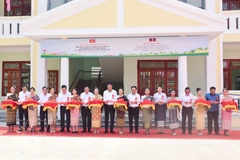
Representatives from both countries cut the ribbon to inaugurate the Friendship Primary and Secondary School in Salavan province of Laos (Photo: VNA)

Da Nang-funded school project strengthens Vietnam–Laos education ties

Funded by Da Nang city, the project includes a two-storey building with five classrooms, two offices and supporting facilities, at a total cost of nearly 6 billion VND (about 228,000 USD). Once operational, it is expected to improve educational infrastructure in Khongsedone district and Salavan province in general.

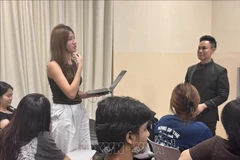
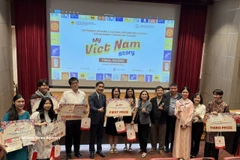
Students share their understanding and impressions of Vietnamese history during the class. (Photo: VNA)

Vietnam’s history, culture resonate in Singapore classroom

Courses such as Introducing Vietnam, therefore, not only provide knowledge but also create spaces for dialogue and cultural connection, strengthening the foundation of understanding and cooperation between Vietnam and Singapore, as well as with other countries in an increasingly integrated world.

Fishing vessels moored at An Thoi port. (File photo: VNA)

An Giang steps up action in line with EC's anti-IUU fishing recommendations

Over the past two years, An Giang's enforcement efforts have resulted in fines of nearly 30 billion VND (1.39 million USD) for vessels violating foreign waters, with 55 criminal cases prosecuted, including 33 that have already gone to trial. Violations related to loss of VMS connection and crossing maritime boundaries have also resulted in fines exceeding 26 billion VND.

Delegates at the ceremony (Photo: VNA)

Da Nang funds hospital project in Laos’ Sekong province

Secretary of the Da Nang municipal Party Committee Le Ngoc Quang said the central city of Da Nang has decided to provide 6.7 million USD in non-refundable aid from its local budget to support Sekong province in building the Da Nang–Sekong Friendship Hospital during the 2026–2030 period.

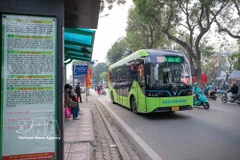
Hanoi rolls out 10 electric bus routes from April 1. (Photo: VNA)

Hanoi launches 10 electric bus routes from April 1

By the end of April, the number of buses using electricity and other green energy sources in the city is expected to reach 822, including 683 electric buses and 139 compressed natural gas (CNG) buses, representing 42.1% of the total number of vehicles.

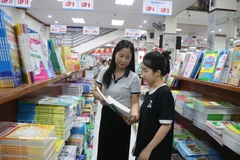
A parent chooses textbooks for her daughter ahead of the new school year. (Photo: VNA)

Free textbooks proposed nationwide from 2029–2030

The free textbook policy is scheduled to be implemented nationwide from the 2029–2030 school year. Localities with sufficient budget capacity are encouraged to introduce the scheme earlier, with priority given to border areas, islands, ethnic minority and mountainous regions, and areas facing particularly difficult socio-economic conditions.

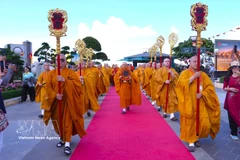
Vesak celebrations in Vietnam in 2025 (Photo: VNA)

Religious freedom must not be separated from civic responsibility

The Vietnamese Ministry of Foreign Affairs has repeatedly rejected what it calls “unobjective and inaccurate” claims in various reports. Most recently on March 4, the US Commission on International Religious Freedom (USCIRF) released its 2025 Annual Report on international religious freedom, which gave biased allegations about the religious situation in Vietnam.