Hanoi launches 10 electric bus routes from April 1

By the end of April, the number of buses using electricity and other green energy sources in the city is expected to reach 822, including 683 electric buses and 139 compressed natural gas (CNG) buses, representing 42.1% of the total number of vehicles.

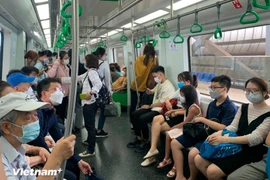
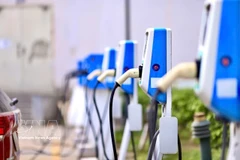
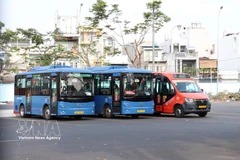
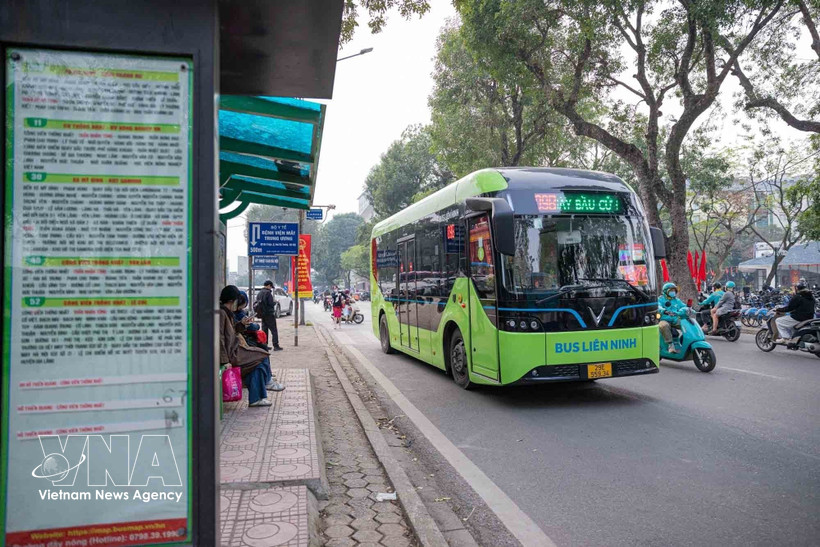
Hanoi rolls out 10 electric bus routes from April 1. (Photo: VNA)

Hanoi (VNA) – Hanoi has put into operation 10 electric bus routes with a total of 288 vehicles from April 1, marking a significant step in the capital city’s roadmap to develop greener public transport.

According to the municipal Department of Construction, the routes were introduced through a bidding process as part of efforts to accelerate the transition to environmentally friendly vehicles.

Under the plan, route No. 74 will be supplemented with 33 electric buses from April 3. By April 30, the city will add another 170 electric buses across 11 routes, bringing the total number of electric bus routes to 39 with 683 vehicles, accounting for 35% of the total fleet.

By the end of April, the number of buses using electricity and other green energy sources in the city is expected to reach 822, including 683 electric buses and 139 compressed natural gas (CNG) buses, representing 42.1% of the total number of vehicles.

The results reflect Hanoi’s determination to develop a sustainable public transport system and move toward building a greener, more modern urban environment.

According to the Hanoi Public Transport Management and Operation Centre, the city is implementing plans to adjust and strengthen bus routes to support the transition to green vehicles and the development of low-emission zones.

Specifically, by July 1, 100% of buses operating within Ring Road 1 will use green energy such as electricity or CNG. The transition will expand to Ring Road 2 by January 1, 2028, and to Ring Road 3 by 2030.

As of March, Hanoi’s bus network comprises 155 routes, including 128 subsidised routes, 11 non-subsidised routes, 13 inter-provincial routes and three city tour routes. The network covers all 126 communes and wards in the city and connects Hanoi with five neighbouring localities – Hai Phong, Bac Ninh, Hung Yen, Ninh Binh and Phu Tho.

The system currently includes 5,024 bus stops, 354 shelters, five transfer stations, 133 terminals and 12.9 kilometres of dedicated bus lanes.

A total of 11 transport companies are operating the subsidised routes, with Hanoi Transport Corporation accounting for the largest share at 68 routes, or 53.1%.

The city’s bus fleet totals 2,239 vehicles, including 1,925 subsidised buses, with more than 1,500 meeting Euro 4 emission standards or higher.

Hanoi currently offers three types of tickets – single-trip tickets, monthly passes and free passes. Fare policies include free travel for five groups: people with meritorious service to the nation, persons with disabilities, senior citizens aged over 60, children under six, and members of poor households. Students, workers in industrial zones and office employees purchasing group monthly passes receive subsidies of 50% and 30%, respectively.

With a network covering all communes and wards, buses, together with urban railway lines, have become a key mode of public transport in the capital./.
VNA

See more

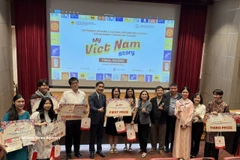
Students share their understanding and impressions of Vietnamese history during the class. (Photo: VNA)

Vietnam’s history, culture resonate in Singapore classroom

Courses such as Introducing Vietnam, therefore, not only provide knowledge but also create spaces for dialogue and cultural connection, strengthening the foundation of understanding and cooperation between Vietnam and Singapore, as well as with other countries in an increasingly integrated world.

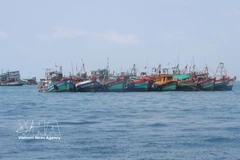
Fishing vessels moored at An Thoi port. (File photo: VNA)

An Giang steps up action in line with EC's anti-IUU fishing recommendations

Over the past two years, An Giang's enforcement efforts have resulted in fines of nearly 30 billion VND (1.39 million USD) for vessels violating foreign waters, with 55 criminal cases prosecuted, including 33 that have already gone to trial. Violations related to loss of VMS connection and crossing maritime boundaries have also resulted in fines exceeding 26 billion VND.

Delegates at the ceremony (Photo: VNA)

Da Nang funds hospital project in Laos’ Sekong province

Secretary of the Da Nang municipal Party Committee Le Ngoc Quang said the central city of Da Nang has decided to provide 6.7 million USD in non-refundable aid from its local budget to support Sekong province in building the Da Nang–Sekong Friendship Hospital during the 2026–2030 period.

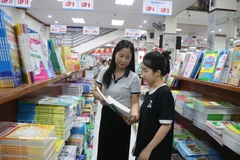
A parent chooses textbooks for her daughter ahead of the new school year. (Photo: VNA)

Free textbooks proposed nationwide from 2029–2030

The free textbook policy is scheduled to be implemented nationwide from the 2029–2030 school year. Localities with sufficient budget capacity are encouraged to introduce the scheme earlier, with priority given to border areas, islands, ethnic minority and mountainous regions, and areas facing particularly difficult socio-economic conditions.

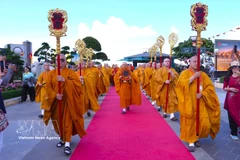
Vesak celebrations in Vietnam in 2025 (Photo: VNA)

Religious freedom must not be separated from civic responsibility

The Vietnamese Ministry of Foreign Affairs has repeatedly rejected what it calls “unobjective and inaccurate” claims in various reports. Most recently on March 4, the US Commission on International Religious Freedom (USCIRF) released its 2025 Annual Report on international religious freedom, which gave biased allegations about the religious situation in Vietnam.

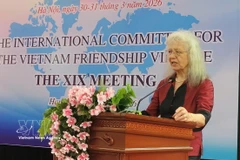
Rosemarie Mizo, President of the International Committee and of the German National Committee for the Vietnam Friendship Village, speaks at the 19th meeting of the International Committee for the Vietnam Friendship Village in Hanoi on March 31. (Photo: VNA)

MoU signed for better AO/dioxin victim care during 2026–2027

Participants affirmed that sustaining and expanding international cooperation not only improve the effectiveness of activities at the Vietnam Friendship Village, but also help to spread a humanitarian message of peace, reconciliation and shared responsibility in addressing the consequences of war.