MoU signed for better AO/dioxin victim care during 2026–2027

Participants affirmed that sustaining and expanding international cooperation not only improve the effectiveness of activities at the Vietnam Friendship Village, but also help to spread a humanitarian message of peace, reconciliation and shared responsibility in addressing the consequences of war.

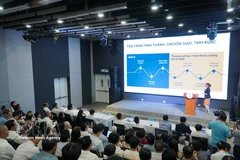
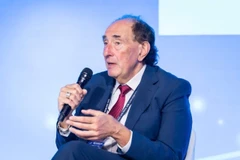
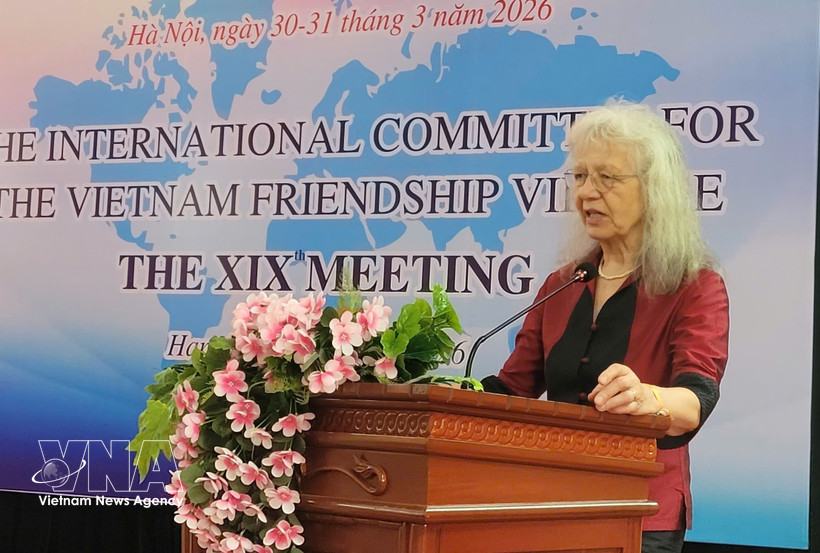
Rosemarie Mizo, President of the International Committee and of the German National Committee for the Vietnam Friendship Village, speaks at the 19th meeting of the International Committee for the Vietnam Friendship Village in Hanoi on March 31. (Photo: VNA)

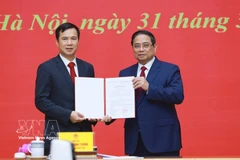
Hanoi (VNA) – Representatives of the International Committee and national committees for the Vietnam Friendship Village signed a memorandum of understanding (MoU) on March 31, agreeing on a range of key areas of cooperation aimed at improving care, rehabilitation and support for victims of Agent Orange/dioxin during the 2026–2027 period.

The MoU was signed during the 19th conference of the International Committee for the Vietnam Friendship Village. The event was attended by Rosemarie Mizo, President of the International Committee and of the German National Committee for the Vietnam Friendship Village; Senior Lieutenant General Pham Hong Huong, Vice Chairman of the Vietnamese War Veterans' Association and head of the Vietnamese National Committee; along with representatives from the national committees of France, the US and Japan.

Under the agreement, the parties pledged to maintain and enhance care services for around 60 war veterans and former youth volunteers each month, as well as 110–120 children affected by AO/dioxin currently residing at the village. Comprehensive programmes covering rehabilitation, special education, vocational training and community reintegration will continue to be implemented.

In the field of health care, the memorandum emphasises stronger coordination with specialised medical institutions, combining traditional and modern treatment methods, and expanding physiotherapy and rehabilitation services. Disease prevention, community health care and capacity-building for medical personnel are also identified as focal tasks.

In education and vocational training, the parties agreed to sustain specialised classes and training programmes in areas such as tailoring, embroidery, information technology, flower-making and handicrafts. Greater focus will also be placed on life skills training, psychological support and career guidance. Community integration initiatives, including the “George Mizo Scholars” project, will be further expanded.

On the external relations front, international cooperation is set to be strengthened through closer engagement with organisations, embassies, businesses and donors both at home and abroad. The parties also agreed to enhance communications efforts and resource mobilisation to better support the village’s activities.

Notably, the conference confirmed funding commitments for the 2026–2027 period. Expenditure is projected at over 20.3 billion VND (nearly 770,600 USD) in 2026 and nearly 23.2 billion in 2027 VND, sourced from the state budget, the Ministry of National Defence, domestic organisations and individuals, as well as contributions from the International Committee and its member countries.

The agreement also includes the implementation of a number of specific projects such as community integration support for children, infrastructure upgrades, staff training, the reception of international volunteers, and cooperation with organisations like Outreach Vietnam in education and health care.

At the ceremony, participants affirmed that sustaining and expanding international cooperation not only improve the effectiveness of activities at the Vietnam Friendship Village, but also help to spread a humanitarian message of peace, reconciliation and shared responsibility in addressing the consequences of war.

The MoU is expected to provide an important foundation for the coordinated implementation of programmes and projects in the near future, with the goal of delivering better care for war veterans, former youth volunteers and children affected by AO/dioxin while supporting the sustainable development of the Vietnam Friendship Village.

The village, run by the Vietnamese War Veterans’ Association, covers over 3 hectares in Hanoi and is intended to support war veterans, former youth volunteers and their children who are AO/dioxin victims. It was built with cooperation of six countries – the US, Germany, France, Japan, Canada, and the UK – following the initiative of George George Mizo, a US veteran who used to join the war in the South of Vietnam./.

VNA

See more

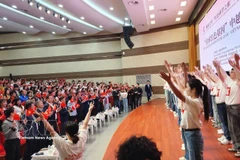
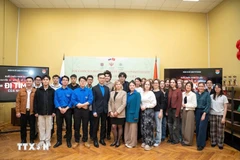
Vietnamese and Chinese youth, along with guests, sing “Vietnam–China" song by renowned composer Do Nhuan. (Photo: VNA)

China – Vietnam youth forum highlights “red gene” legacy

In his opening remarks, Dong Xia, head of the CYLC Central Committee’s International Liaison Department, emphasised that China and Vietnam are close neighbours and partners sharing common ideals, with youth playing a key role in advancing bilateral ties. He noted that leaders of both countries have consistently highlighted young people as the future of the relationship.

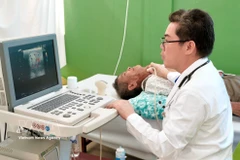
Dr Ton Thanh Tra, Director of Cho Ray–Phnom Penh Hospital, personally examines and performs an ultrasound for a critically ill patient, who was later admitted for free surgery at the hospital. (Photo: VNA)

Vietnam delivers free medical care to communities in Cambodia

During the programme in Prey Veng, a team of 26 doctors and medical staff, equipped with modern medical equipment, provided check-ups and health consultations to 500 residents, including 250 people of Vietnamese origin and 250 Cambodian citizens.

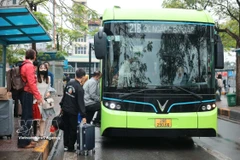
Hanoi’s bus network covers 100% of communes and wards, with 155 routes in operation, including 128 subsidised ones. (Photo: VNA)

Hanoi plans major bus network overhaul to accelerate green transition

Under the plan, Hanoi targets that by July 1, 2026, all buses operating within Ring Road 1 will use green energy (electricity or compressed natural gas – CNG). The policy will then be expanded to Ring Road 2 by January 1, 2028, and further extended to Ring Road 3 from 2030.

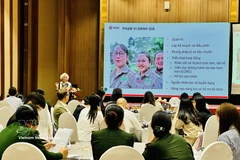
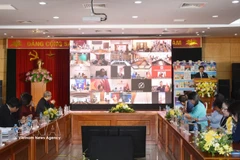
A view of the workshop on gender integration in Vietnam’s post-war mine action activities was held in Hanoi on March 30. (Photo: VNA)

Gender integration promoted in post-war mine action efforts

Commending Vietnam’s progress, Ramla Khalidi, Resident Representative of UNDP in Vietnam, highlighted that women contribute critical expertise in areas such as engineering, digital mapping, public governance and community leadership. Their involvement, she said, enhances the quality of mine action at every stage, improves data accuracy, and supports decision-making that reflects the needs of the entire community.

A standout moment of the “Hanoi binh yen” (Peaceful Hanoi) live concert on March 28 comes in the finale, when the entire venue goes dark in unison in support of Earth Hour. (Photo: VNA)

Vietnam saves 463,000 kWh during Earth Hour 2026

Vietnam marked Earth Hour 2026 by saving an estimated 463,000 kWh of electricity, as households and businesses nationwide switched off their lights from 8:30 to 9:30 pm on March 28, according to the National System and Market Operation Company (NSMO).

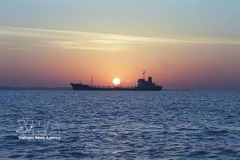
An oil tanker anchored off Qeshm Island in the Strait of Hormuz. (Photo: Middle East Eye/VNA)

Vietnam seeks priority passage for vessels through Strait of Hormuz

According to the administration, 19 vessels owned by Vietnamese enterprises are currently operating in the Middle East, including four flying the Vietnamese flag and 15 registered under foreign flags. Amid growing security concerns in the region, VIMAWA stressed the need for stronger coordination with relevant partners to safeguard maritime operations and crew safety.

On March 13, 2026, the Ho Chi Minh City Department of Science and Technology holds a conference to launch a pilot scheme on policies designed to promote the commercialisation and rapid application of research outcomes and intellectual property generated from the state budget into production and business activities. (Photo: VNA)

Bridging talent gap key to unlocking Vietnam’s IP potential: experts

Vietnam is moving to ease human resource bottlenecks in Intellectual Property (IP) valuation and unlock the commercial potential of IP assets, as an amended Intellectual Property Law taking effect on April 1 establishes a legal framework for valuing such assets, insiders said.

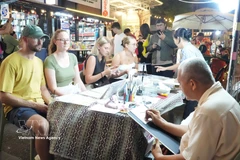
Foreign visitors at the event (Photo: VNA)

Night book festival livens up Ho Chi Minh City

Running from 6 pm to 10 pm, the event offers a vibrant cultural space for residents and visitors, featuring book exchanges, cultural discussions and interactive activities aimed at promoting reading and knowledge.

Professor, Doctor of Economics Georgy Davidovich Toloraya, Chief Research Fellow at the Centre for World Politics and Strategic Analysis under the Russian Academy of Sciences (Photo: VNA published)

Russian scholar sees Vietnam strengthening national security strategy

Professor, Doctor of Economics Georgy Davidovich Toloraya, Chief Research Fellow at the Centre for World Politics and Strategic Analysis under the Russian Academy of Sciences, highlighted the significance of the agreement with Russia’s Rosatom to build Vietnam’s first nuclear power plant, especially amid ongoing conflict in the Middle East and the global energy crisis.

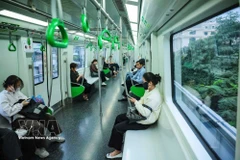
Urban train has become a favourable travel solution for Hanoi's residents. (Photo: VNA)

Metro, buses, electric vehicles becoming top choice for Hainoians

For young people today, transport is no longer merely about moving from one place to another but also about comfort and emotional experience. Modern metro lines and smooth electric buses have largely met these expectations. Elevated metro stations with minimalist, contemporary designs have become popular “check-in” spots, while images of young commuters enjoying coffee and music as they overlook the city from train windows have become familiar on social media.