Russian scholar sees Vietnam strengthening national security strategy

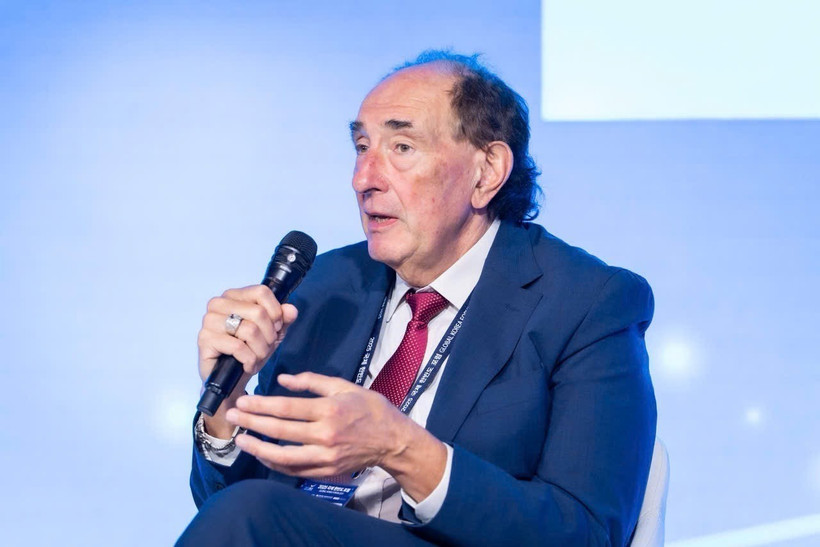
Professor, Doctor of Economics Georgy Davidovich Toloraya, Chief Research Fellow at the Centre for World Politics and Strategic Analysis under the Russian Academy of Sciences, highlighted the significance of the agreement with Russia’s Rosatom to build Vietnam’s first nuclear power plant, especially amid ongoing conflict in the Middle East and the global energy crisis.

Professor, Doctor of Economics Georgy Davidovich Toloraya, Chief Research Fellow at the Centre for World Politics and Strategic Analysis under the Russian Academy of Sciences (Photo: VNA published)

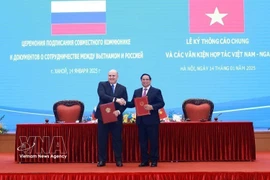
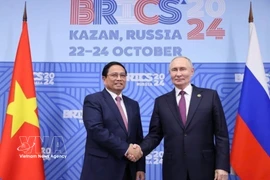
Moscow (VNA) — Prime Minister Pham Minh Chinh’s recent visit to Russia, during which several cooperation agreements were reached, particularly in the energy sector, has been viewed by Russian experts as a strategic move that could reshape bilateral cooperation.

Professor, Doctor of Economics Georgy Davidovich Toloraya, Chief Research Fellow at the Centre for World Politics and Strategic Analysis under the Russian Academy of Sciences, highlighted the significance of the agreement with Russia’s Rosatom to build Vietnam’s first nuclear power plant, especially amid ongoing conflict in the Middle East and the global energy crisis.

According to Toloraya, the agreement could serve as a catalyst for strengthening bilateral cooperation, with energy diplomacy likely to become a key pillar of Vietnam–Russia relations.

Toloraya emphasised that the revival of the nuclear power project carries strategic significance, reflecting Vietnam’s determination to strengthen national security and sovereignty.

He said Russian Prime Minister Mikhail Mishustin has described the project as a “new symbol of friendship,” while President Vladimir Putin highlighted the importance of further deepening the comprehensive strategic partnership between the two countries.

Beyond energy cooperation, Toloraya said Russia could also become an important logistics hub for Vietnam’s exports to Europe, particularly agricultural products and furniture. Transport routes through the ports of St. Petersburg and Vladivostok, along with plans to expand railway services via Russia and Kazakhstan, could help ease shipping delays and rising insurance costs currently facing Vietnamese exporters.

The two countries also reached agreements in fields such as artificial intelligence, cybersecurity and the digitalisation of public services. Toloraya said the expanded cooperation reflects Vietnam’s geopolitical vision in building alternative supply chains in energy, logistics and technology to reduce risks associated with unstable traditional supply networks.

Looking ahead, he suggested that the two sides could develop a nuclear industry cluster covering supply chains, plant operations and workforce training, with the goal of putting the nuclear power plant into operation by the end of 2031. Russia could also play a role in developing LNG centres and gas infrastructure in southern Vietnam, enhancing regional energy connectivity.

Toloraya also emphasised the importance of establishing alternative financial channels to ensure uninterrupted cooperation amid global uncertainties. He added that the two countries could move toward a technology alliance integrating Russian cybersecurity and AI solutions into Vietnam’s energy infrastructure management.

In urban development, potential cooperation in planning and transport infrastructure could include Russian participation in designing and constructing metro systems in Hanoi and Ho Chi Minh City. Meanwhile, digital economy collaboration may expand through projects involving digital identification, cloud computing and cybersecurity.

According to Toloraya, the visit and the agreements signed mark a shift from traditional trade relations toward deeper integration aimed at reducing external risks, which he described as a sound strategic approach by Vietnam’s leadership./.
VNA

See more

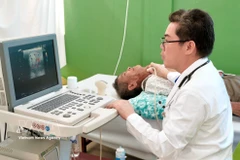
Dr Ton Thanh Tra, Director of Cho Ray–Phnom Penh Hospital, personally examines and performs an ultrasound for a critically ill patient, who was later admitted for free surgery at the hospital. (Photo: VNA)

Vietnam delivers free medical care to communities in Cambodia

During the programme in Prey Veng, a team of 26 doctors and medical staff, equipped with modern medical equipment, provided check-ups and health consultations to 500 residents, including 250 people of Vietnamese origin and 250 Cambodian citizens.

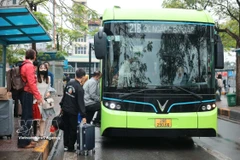
Hanoi’s bus network covers 100% of communes and wards, with 155 routes in operation, including 128 subsidised ones. (Photo: VNA)

Hanoi plans major bus network overhaul to accelerate green transition

Under the plan, Hanoi targets that by July 1, 2026, all buses operating within Ring Road 1 will use green energy (electricity or compressed natural gas – CNG). The policy will then be expanded to Ring Road 2 by January 1, 2028, and further extended to Ring Road 3 from 2030.

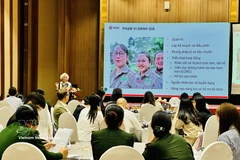
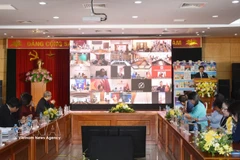
A view of the workshop on gender integration in Vietnam’s post-war mine action activities was held in Hanoi on March 30. (Photo: VNA)

Gender integration promoted in post-war mine action efforts

Commending Vietnam’s progress, Ramla Khalidi, Resident Representative of UNDP in Vietnam, highlighted that women contribute critical expertise in areas such as engineering, digital mapping, public governance and community leadership. Their involvement, she said, enhances the quality of mine action at every stage, improves data accuracy, and supports decision-making that reflects the needs of the entire community.

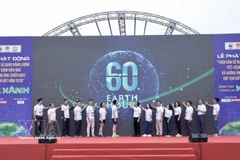
A standout moment of the “Hanoi binh yen” (Peaceful Hanoi) live concert on March 28 comes in the finale, when the entire venue goes dark in unison in support of Earth Hour. (Photo: VNA)

Vietnam saves 463,000 kWh during Earth Hour 2026

Vietnam marked Earth Hour 2026 by saving an estimated 463,000 kWh of electricity, as households and businesses nationwide switched off their lights from 8:30 to 9:30 pm on March 28, according to the National System and Market Operation Company (NSMO).

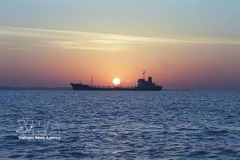
An oil tanker anchored off Qeshm Island in the Strait of Hormuz. (Photo: Middle East Eye/VNA)

Vietnam seeks priority passage for vessels through Strait of Hormuz

According to the administration, 19 vessels owned by Vietnamese enterprises are currently operating in the Middle East, including four flying the Vietnamese flag and 15 registered under foreign flags. Amid growing security concerns in the region, VIMAWA stressed the need for stronger coordination with relevant partners to safeguard maritime operations and crew safety.

On March 13, 2026, the Ho Chi Minh City Department of Science and Technology holds a conference to launch a pilot scheme on policies designed to promote the commercialisation and rapid application of research outcomes and intellectual property generated from the state budget into production and business activities. (Photo: VNA)

Bridging talent gap key to unlocking Vietnam’s IP potential: experts

Vietnam is moving to ease human resource bottlenecks in Intellectual Property (IP) valuation and unlock the commercial potential of IP assets, as an amended Intellectual Property Law taking effect on April 1 establishes a legal framework for valuing such assets, insiders said.

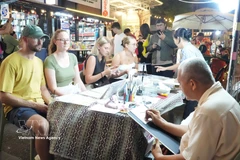
Foreign visitors at the event (Photo: VNA)

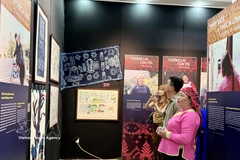
Night book festival livens up Ho Chi Minh City

Running from 6 pm to 10 pm, the event offers a vibrant cultural space for residents and visitors, featuring book exchanges, cultural discussions and interactive activities aimed at promoting reading and knowledge.

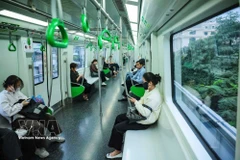
Urban train has become a favourable travel solution for Hanoi's residents. (Photo: VNA)

Metro, buses, electric vehicles becoming top choice for Hainoians

For young people today, transport is no longer merely about moving from one place to another but also about comfort and emotional experience. Modern metro lines and smooth electric buses have largely met these expectations. Elevated metro stations with minimalist, contemporary designs have become popular “check-in” spots, while images of young commuters enjoying coffee and music as they overlook the city from train windows have become familiar on social media.

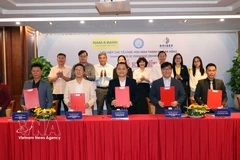
The Da Nang Union of Friendship Organisations (DAFO) signs a new round of MoUs with foreign non-governmental organisations, mobilising pledged assistance worth about 2.79 million USD across various spheres. (Photo: VNA)

Da Nang secures 2.79 million USD in international NGO aid

As part of the 2026–2030 foreign NGO aid mobilisation plan, the Da Nang Union of Friendship Organisations formalised cooperation with six partners, including Habitat for Humanity International and the Social Assistance Program for Vietnam (US); Korea Food for the Hungry International and Share Sarangbat (Republic of Korea); Activity International (the Netherlands); and Catalyste+ (Canada).

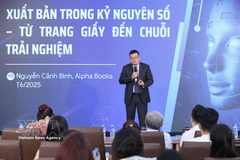
Nguyen Canh Binh, Chairman of Alpha Books, shares his views at the Vietnam Digital Publishing Summit 2025 (DPS 2025) with the theme "The Future of Publishing in a Global Digital Age". (Photo: VNA).

Publishing sector accelerates digital ecosystem development

According to the Department of Publishing, Printing and Distribution, the country currently has 52 publishing houses. In 2025, the industry produced more than 51,000 publications, with around 543 million copies and online accesses, generating total revenue of over 4.1 trillion VND (nearly 155.64 million USD).