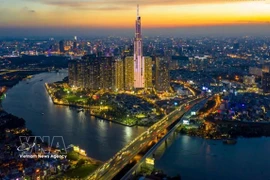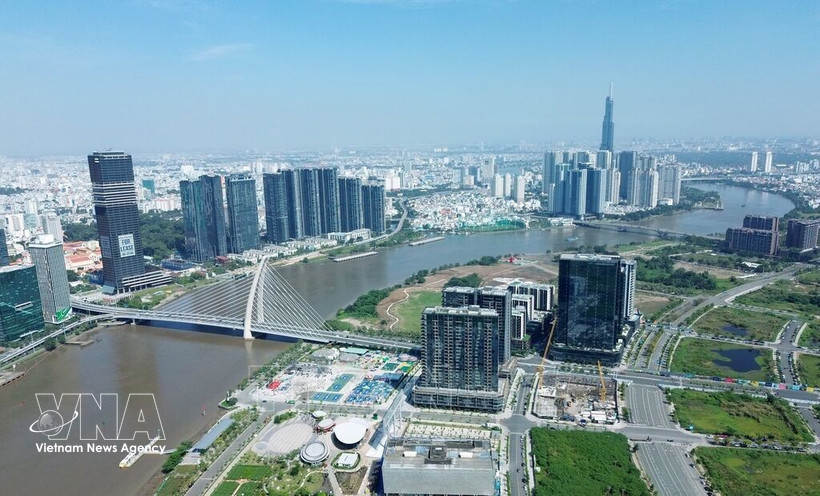
Ho Chi Minh City (VNA) – Ho Chi Minh City aims to rank among the world’s top 50 smart cities by 2030 under a draft smart urban development plan for 2026–2030, with a vision to 2035.
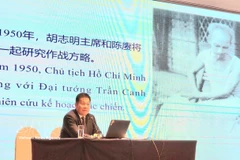
The plan was discussed at a workshop held on March 27 to gather expert feedback, jointly organised by the municipal Department of Science and Technology and the Department of Construction.
According to the draft, the city also targets becoming one of three national-level smart urban operation centres by 2035, serving as a hub for data coordination, technology and innovation nationwide.
The plan highlights that smart urban development goes beyond technology adoption, focusing instead on transforming governance based on data and digital technologies. It proposes the application of artificial intelligence, large language models (LLMs), predictive analytics and digital twin technology to support decision-making, provide early warnings and optimise operations.
Placing people and businesses at the centre is identified as a core principle, with digital infrastructure and services designed to be more efficient, transparent, personalised and secure, while ensuring digital equity.
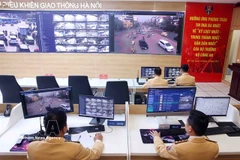
According to the roadmap, the 2026–2027 period will prioritise building foundational platforms, refining institutions and launching pilot projects, including the establishment of a coordination council, shared data systems and technology sandboxes. From 2028 to 2029, the city plans to expand implementation and integration, while completing its intelligent operations centre (IOC).
The plan also emphasises data-driven governance, with a unified shared data platform serving as the backbone of urban management and service delivery. A digital twin system integrating real-time IoT data will be deployed to support comprehensive urban simulation and management.
To realise these goals, the city will focus on improving institutions, ensuring clear responsibilities, mobilising resources and developing specialised human resources, alongside advancing smart infrastructure, socio-economic systems and digital governance.
Dinh Hong Ky, Chairman of Secoin company, praised the draft plan for recognising the new Ho Chi Minh City as a multi-centered, multi-functional urban region. He noted that the biggest challenge is not adding more technology, but redesigning the governance model for a mega urban region.
According to him, the plan needs to shift more decisively from a “technology-driven smart city” approach to an “institution-driven smart city.” Without institutional reform leading the way, investments in technology risk becoming fragmented.
He added that while using data as a foundation is the right direction, the plan should go further by developing an “urban regional operating system,” rather than merely a shared data repository. Three key governance challenges the city should prioritize to deliver tangible benefits to residents and businesses are inter-regional transport and logistics; flooding, environment, emissions and climate adaptation; and public services and labour mobility that are not constrained by administrative boundaries.
Participants also underscored the need to align smart city development with green and sustainable growth, aiming towards a financial–industrial–port urban model with efficient resource management and reduced emissions./.