Resolution 80: Positioning Vietnam as attractive destination for cultural, artistic events

Vietnam’s cultural scene has become more vibrant with the regular presence of international-standard performances.

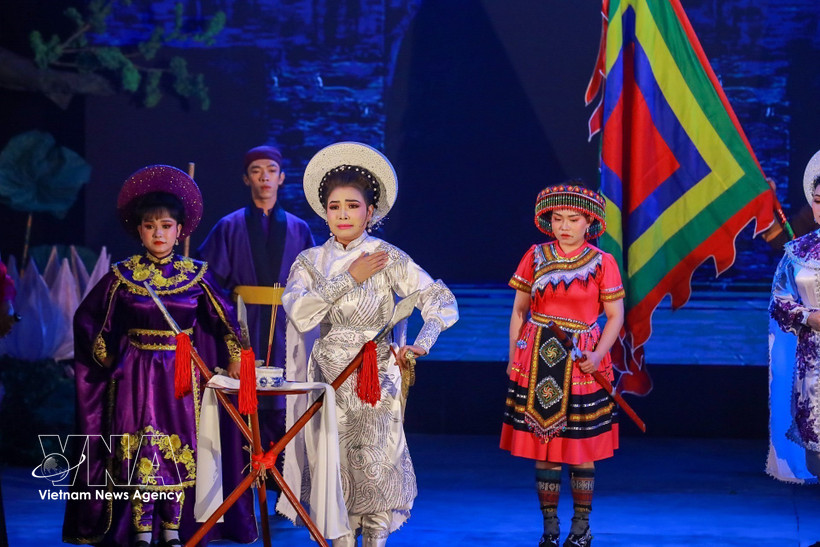
A performance by the Vam Co Cai Luong Art Troupe (Tay Ninh) during an art programme on March 9, 2026 in Hanoi (Photo: VNA)

Hanoi (VNA) – Vietnam has hosted a rising number of high-quality artistic performances, international festivals and cultural exchanges in recent years, affirming its growing role not only as a recipient but also as an attractive destination for global cultural values.

Resolution No. 80-NQ/TW issued by the Politburo on developing Vietnamese culture sets the goal of turning Vietnam into a compelling venue for regional and world-class cultural and artistic events, highlighting the selective absorption of global cultural achievements. The policy contributes not only to cultural development but also to tourism growth, economic expansion and national branding.

A meeting place for global cultural excellence

Vietnam’s cultural scene has become more vibrant with the regular presence of international-standard performances.

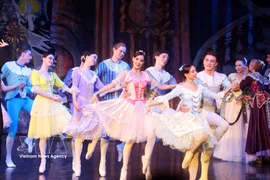
From March 25–27, the Russian State Ballet staged The Nutcracker and Romeo and Juliet at Ho Guom Theatre, reflecting the rising appeal of Vietnam’s performing arts market. Artistic Director Viktor Davydov praised Vietnamese audiences for their warmth and enthusiasm, describing them as evidence of increasingly refined artistic tastes.

Earlier, the dance drama Peacock, choreographed by China’s Yang Liping, received strong public and critical acclaim in Hanoi, demonstrating growing demand for high-quality performances and signalling Vietnam’s emergence as a dynamic space for classical and contemporary arts.

International exchanges have expanded through concerts and cultural programmes such as Hungary – Vietnam: A Symphonic Dialogue, The Russian Soul in Vietnam, and performances by orchestras from Austria, Germany and Italy. Major events including the Hanoi International Film Festival, the Da Nang Asian Film Festival and international theatre festivals have further strengthened cultural connectivity, positioning Vietnam as a lively hub for artistic dialogue and creative exchange.

Collaborations among Vietnamese and international artists have fostered meaningful cultural interaction, deepening global integration while promoting mutual understanding among nations.

A strategic vision

Experts note that the growing presence of international performances reflects sustained cultural integration rather than a temporary trend. According to Meritorious Artist Phan Luong of the Vietnam National Opera and Ballet, Vietnamese audiences, particularly younger generations, are increasingly receptive to academic arts.

International performances also help domestic artists improve professional standards and provide valuable learning opportunities for arts students.

The development of Vietnam’s cultural life is closely aligned with strategic orientations set by the Party and State. Resolution 80-NQ/TW identifies cultural integration as both a necessity and a driver for enhancing national capacity, prestige and soft power, outlining tasks including proactive international cultural cooperation and promotion of Vietnamese cultural values.

Experts view the resolution as marking a shift toward proactive and well-directed cultural integration. Selective absorption of global cultural achievements, if implemented strategically, can enrich national culture, stimulate creativity and support the development of distinctive cultural products.

The resolution positions culture as both a societal foundation and a pillar of external relations, calling for stronger cultural diplomacy, expanded international commitments and greater integration of cultural elements into economic and trade cooperation.

The success of international artistic programmes highlights the growing appeal of Vietnam’s cultural market, the maturity of audiences and improved organisational capacity. More importantly, it affirms Vietnam’s gradual emergence as a cultural destination of global significance, with Resolution 80 serving as a strategic guide for modern, internationally integrated cultural development grounded in national identity./.

VNA
See more

Artisans and students take part in cultural activities and exchanges in the Xoan singing performance space at Hung Lo ancient communal house in Phu Tho province (Photo: VNA)

Ancestral legends revived through contemporary performance

Beyond cultural value, well-organised festival programmes linked with tourism and media can contribute to the development of cultural industries and enhance Vietnam’s cultural soft power, positioning heritage-based events as distinctive national cultural brands in the international arena.

Khue Van Cac (Khue Van Pavilion) stands as a defining cultural symbol of Hanoi, closely associated with Vietnam’s long-standing tradition of valuing education and honouring knowledge. (Photo: VNA)

Greater efforts needed for heritage to shape Hanoi’s identity

As suggested by UNESCO experts, heritage should be approached as an integrated system encompassing space, people and everyday life. This perspective can inform urban planning, cultural tourism development and the creation of clear economic drivers.

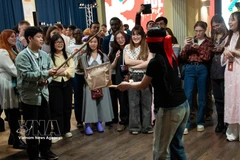
Participants at the gathering (Photo: VNA)

Lao, Cambodian students welcome traditional New Year in Ho Chi Minh City

In his speech, Vice Chairman of the municipal People’s Committee Nguyen Manh Cuong said the municipal Party organisation, authorities and people always value the close ties and solidarity among Vietnam, Laos and Cambodia. He described the three nations’ longstanding ties, forged through shared hardships, as an invaluable spiritual asset and a bedrock for sustainable development.

Vietnamese kickboxers win 32 gold medals at the Kickboxing World Cup 2026. (Photo: Vietnam Kickboxing Federation)

Vietnam finish third at Kickboxing World Cup 2026

According to Vu Duc Thinh, President of the Vietnam Kickboxing Federation, the strong results reflected careful preparation by local training centres and the determination of Vietnamese fighters. The team’s participation, funded largely through socialised and local resources, also demonstrated growing support for the development of kickboxing in Vietnam.

Politburo member, Secretary of the Party Central Committee and Head of the Party Central Committee’s Commission for Information, Education and Mass Mobilisation Trinh Van Quyet speaks at the event (Photo: VNA)

National Radio Festival opens in Quang Ninh

The opening night was combined with an artistic programme titled “sounds of the new era,” drawing around 50,000 spectators. The programme was structured in three chapters: Origins of Sound, Heritage Sound, and Sound of the New Era.

Vietnamese puppetry faces pressure to adapt to modern lifestyles, particularly amid growing competition from diverse entertainment forms (Photo: VNA)

Vietnamese puppetry seeks renewal amid preservation challenges

People’s Artist Nguyen Hoang Tuan, Chairman of the Hanoi Theatre Association, noted that while northern Vietnam had 27 puppetry guilds in 1986, only 14 remain today. Many traditional plays and original scripts have been lost, hurting restoration and preservation efforts.

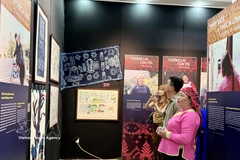
Visitors enjoy the "Stone History Preserves Memories" exhibition, featuring a traditional format combined with digital technology solutions (Photo: VNA)

Project on digital transformation in cultural sector approved

By 2030, the project targets the establishment of shared digital platforms across 100% of cultural sectors. All digitised cultural heritage will be standardised under the national data framework and shared in accordance with regulations, while 80% of public digital heritage assets are expected to receive digital identifiers to clarify ownership and management, encouraging organisations and individuals to do the same and support market development.