Bridging talent gap key to unlocking Vietnam’s IP potential: experts

Vietnam is moving to ease human resource bottlenecks in Intellectual Property (IP) valuation and unlock the commercial potential of IP assets, as an amended Intellectual Property Law taking effect on April 1 establishes a legal framework for valuing such assets, insiders said.

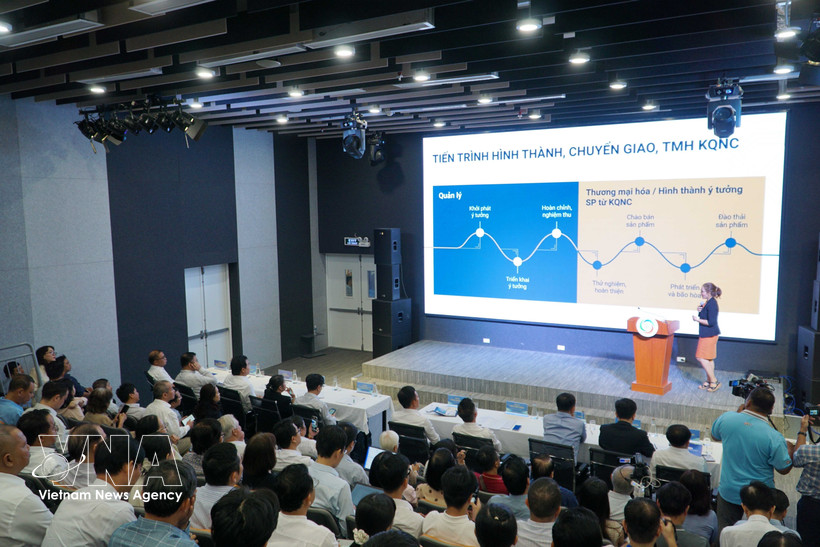
On March 13, 2026, the Ho Chi Minh City Department of Science and Technology holds a conference to launch a pilot scheme on policies designed to promote the commercialisation and rapid application of research outcomes and intellectual property generated from the state budget into production and business activities. (Photo: VNA)

Hanoi (VNA) - Vietnam is moving to ease human resource bottlenecks in Intellectual Property (IP) valuation and unlock the commercial potential of IP assets, as an amended Intellectual Property Law taking effect on April 1 establishes a legal framework for valuing such assets, insiders said.

The law is expected to facilitate the transformation of IP rights into transferable and mortgageable assets, opening up new growth opportunities for startups and businesses seeking to leverage innovation for sustainable development.

Human resource bottlenecks

IP valuation plays a critical role in converting creative ideas into tangible economic value. It enables businesses to determine asset worth for transactions such as licensing, mergers and acquisitions (M&A), or using IP as collateral for loans. Accurate valuation not only supports commercialisation but also helps firms expand market access, attract investment, and scale up their operations.

However, experts say a shortage of qualified IP valuation professionals remains a major constraint.

According to Tran Le Hong, Deputy General Director of the Intellectual Property Office (IPO) of Vietnam under the Ministry of Science and Technology, while the legal corridor is gradually completed, the lack of skilled valuators, professional intermediary organisations, reliable benchmarking databases, and unified valuation standards continues to limit the ability of enterprises, especially startups, to capitalise on their IP assets.

vnanet-2.jpg
Delegates visit the Vietnam Licensing Expo 2025 in Ho Chi Minh City (Photo: VNA)

The International Valuation Standards Council (IVSC) outlines three common approaches to IP valuation: income-based, market-based, and cost-based methods. All require the involvement of IP valuation experts, including both individuals and specialised firms, to ensure objectivity and accuracy.

To address the human resource gap, Vietnam has stepped up cooperation with the World Intellectual Property Organisation (WIPO), which plays a leading global role in developing IP valuation expertise. Through initiatives such as the WIPO Academy, training programmes on IP management, commercialisation, and valuation are being delivered to strengthen capacity in developing countries, including Vietnam.

The country is encouraged to draw on international experience and adopt valuation tools to build a professional workforce and enhance the overall effectiveness of IP commercialisation.

Stronger exploitation of IP rights

Beyond human resources, legal and market risks remain key challenges. While IP certificates serve as legal proof of ownership, they may still be invalidated or infringed upon during transactions such as collateralisation, potentially leading to financial losses. In addition, the lack of data connectivity between relevant agencies complicates asset verification, increasing transaction risks.

Vietnam also lacks risk mitigation instruments, such as insurance products for IP-backed loans or specialised credit guarantee mechanisms. Addressing these gaps is essential to fostering a more robust ecosystem for IP exploitation.

According to the IVSC, IP is a core business asset in the knowledge economy, supporting enterprises in expanding production and business activities and markets, and even addressing trade disputes. Effective IP management, from creation through commercialisation, is therefore critical to maximising economic value.

Luu Hoang Long, Director General of the IPO of Vietnam, noted that the amended law will cut processing time for industrial property applications by about 30%, with trademark examination reduced from nine months to five months. This is expected to accelerate the establishment and protection of IP rights, facilitate technology transfer, and strengthen businesses’ ability to safeguard key assets.

Long also stressed the need to build a national database on IP asset values and introduce transparent valuation standards to boost investor confidence.

He said that standardised toolkits and frameworks will help enterprises assess the competitiveness of their inventions and promote commercialisation through licensing or transfer, contributing to the creative economic growth./.
VNA

See more

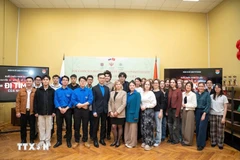
Foreign visitors at the event (Photo: VNA)

Night book festival livens up Ho Chi Minh City

Running from 6 pm to 10 pm, the event offers a vibrant cultural space for residents and visitors, featuring book exchanges, cultural discussions and interactive activities aimed at promoting reading and knowledge.

Professor, Doctor of Economics Georgy Davidovich Toloraya, Chief Research Fellow at the Centre for World Politics and Strategic Analysis under the Russian Academy of Sciences (Photo: VNA published)

Russian scholar sees Vietnam strengthening national security strategy

Professor, Doctor of Economics Georgy Davidovich Toloraya, Chief Research Fellow at the Centre for World Politics and Strategic Analysis under the Russian Academy of Sciences, highlighted the significance of the agreement with Russia’s Rosatom to build Vietnam’s first nuclear power plant, especially amid ongoing conflict in the Middle East and the global energy crisis.

Urban train has become a favourable travel solution for Hanoi's residents. (Photo: VNA)

Metro, buses, electric vehicles becoming top choice for Hainoians

For young people today, transport is no longer merely about moving from one place to another but also about comfort and emotional experience. Modern metro lines and smooth electric buses have largely met these expectations. Elevated metro stations with minimalist, contemporary designs have become popular “check-in” spots, while images of young commuters enjoying coffee and music as they overlook the city from train windows have become familiar on social media.

The Da Nang Union of Friendship Organisations (DAFO) signs a new round of MoUs with foreign non-governmental organisations, mobilising pledged assistance worth about 2.79 million USD across various spheres. (Photo: VNA)

Da Nang secures 2.79 million USD in international NGO aid

As part of the 2026–2030 foreign NGO aid mobilisation plan, the Da Nang Union of Friendship Organisations formalised cooperation with six partners, including Habitat for Humanity International and the Social Assistance Program for Vietnam (US); Korea Food for the Hungry International and Share Sarangbat (Republic of Korea); Activity International (the Netherlands); and Catalyste+ (Canada).

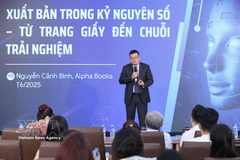
Nguyen Canh Binh, Chairman of Alpha Books, shares his views at the Vietnam Digital Publishing Summit 2025 (DPS 2025) with the theme "The Future of Publishing in a Global Digital Age". (Photo: VNA).

Publishing sector accelerates digital ecosystem development

According to the Department of Publishing, Printing and Distribution, the country currently has 52 publishing houses. In 2025, the industry produced more than 51,000 publications, with around 543 million copies and online accesses, generating total revenue of over 4.1 trillion VND (nearly 155.64 million USD).

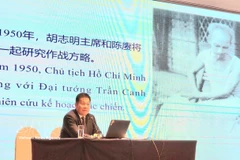
Prof. Hu Xianzhong speaks at the seminar. (Photo: VNA)

Vietnam sends students to “Red study tour” of Ho Chi Minh’s footsteps in China

Initiated by Party General Secretary To Lam, State President Luong Cuong and Chinese Party General Secretary and President Xi Jinping during the Vietnam-China friendship meeting in April last year, the activity is run by the Communist Youth League of China (CYLC) and coincides with the 95th anniversary of the Ho Chi Minh Communist Youth Union (HCYU) (March 26).

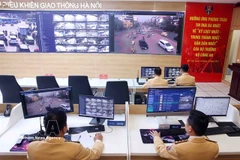
Police officers at the Hanoi traffic control centre (Photo: VNA)

A turning point in Hanoi’s city management

With 1,837 AI cameras integrated into traffic signals at 195 key intersections, Hanoi now operates a citywide network capable of monitoring and regulating traffic in real time.

The Vietnam National University, Ho Chi Minh City leads Vietnamese institutions in natural sciences, social sciences, and management, ranking in the 401–450 and 341 bands, respectively. (Photo: vnuhcm.edu.vn)

Vietnamese universities climb global rankings in multiple disciplines

In the broad subject rankings, seven Vietnamese universities were listed, three more than last year. Van Lang University ranked 260th globally in arts and humanities, the highest position for Vietnam in this category. Duy Tan University maintained a strong standing in engineering and technology, placing 346th worldwide.

Outstanding young Vietnamese faces and promising young Vietnamese faces in 2025 (Photo: VNA)

Top 10 Vietnamese Outstanding Young Faces of 2025 honoured

Among the 10 outstanding young Vietnamese of 2025 are Dr. Pham Anh Tuan from KTH Royal Institute of Technology in Sweden, listed among the world’s top 2% most influential scientists, and Dr. Dang Thi Le Hang from the Vietnam Academy of Science and Technology, recognised for her work in biomedical materials.

Young trailblazers power Vietnam’s digital future

Young trailblazers power Vietnam’s digital future

Digital transformation is an unstoppable trend, driving the renewal of growth models, enhancing governance, and improving the quality of life. In this shift, young people – armed with knowledge, adaptability to new technologies, and creativity – are stepping up as a leading force.