Policy recommendations for Vietnam drawn from Japan’s energy strategy

Vietnam is well-positioned to further develop a more resilient, flexible and sustainable energy system. With rapid economic growth driving rising energy demand, Vietnam has an opportunity to build a modern strategy that balances security, efficiency and sustainability.

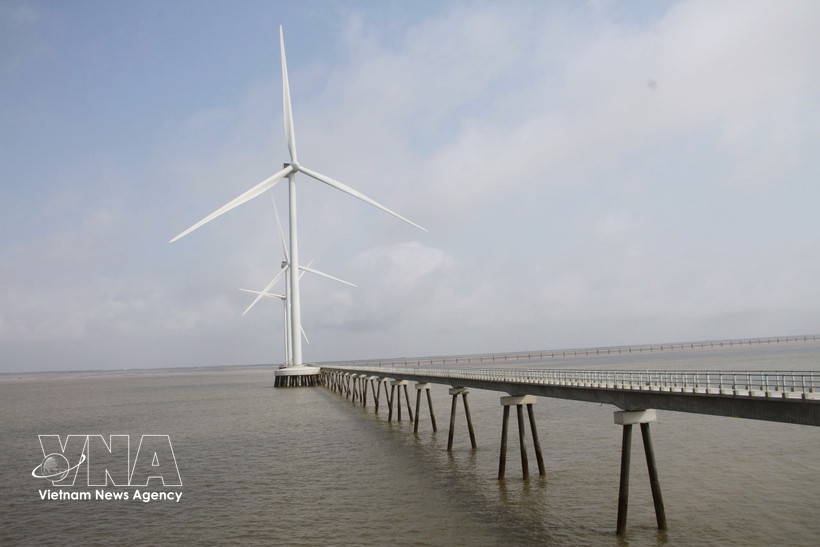
Wind turbines in Ca Mau province operate with a total capacity of over 1,610 MW per year. (Photo: VNA)

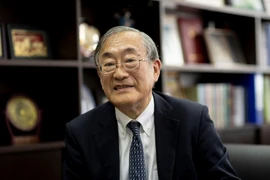
Tokyo (VNA) - Tatsuya Terazawa, Chairman and CEO of the Institute of Energy Economics of Japan, has shared how Japan weathers short-term energy shocks while staying firmly on a long-term strategic course, offering valuable policy insights for Vietnam as it seeks to strengthen energy security and pursue sustainable growth.

In an interview granted to Vietnam News Agency correspondents in Tokyo, Terazawa said Japan’s ability to respond effectively to supply disruptions—particularly amid geopolitical tensions in the Middle East—rests heavily on prior preparation.

Experiences from Japan

According to the expert, when risks to global energy flows rise, Japan activates a combination of measures, including releasing strategic reserves, diversifying import routes and adjusting the fuel mix for power generation.

Releasing reserves, he noted, is not only about supplementing supply but also about stabilising market sentiment and preventing panic.

At the same time, Japan reduces reliance on vulnerable chokepoints such as the Strait of Hormuz by expanding alternative shipping routes and sourcing energy from a wider range of regions. These measures reflect a key principle in energy policy - not only ensuring supply, but also minimising risks arising from geopolitical chokepoints.

A cornerstone of Japan’s resilience is its substantial crude oil stockpile, equivalent to around 254 days of consumption. Beyond its technical function, this buffer plays a crucial psychological role, reassuring businesses and households that supply can be maintained over an extended period, and the risk of panic is significantly reduced.

Liquefied natural gas (LNG) also forms a key pillar of Japan’s energy security. The country has developed a stable LNG import structure through long-term contracts and direct participation in upstream projects. This approach not only ensures steady supply but also mitigates price volatility and enhances control over the value chain.

Terazawa highlighted energy efficiency as another critical lesson. Since the 1973 oil crisis, Japan has consistently improved energy use, becoming one of the most energy-efficient economies in the world. Lower consumption reduces import dependence, cuts production costs and strengthens economic competitiveness, making efficiency gains a low-cost but high-impact solution in both the short and long term.

Recommendations for Vietnam

Drawing on Japan’s experience, Terazawa suggested that Vietnam is well-positioned to further develop a more resilient, flexible and sustainable energy system. With rapid economic growth driving rising energy demand, Vietnam has an opportunity to build a modern strategy that balances security, efficiency and sustainability.

Expanding crude oil reserves should be a priority to reinforce national energy security, the Japanese expert, adding that Vietnam could gradually scale up its reserves by combining state and commercial storage, and that stronger reserves will improve the country’s ability to respond to supply shocks while helping stabilise domestic markets, creating favourable conditions for production and business activities.

Vietnam can also enhance its LNG import framework by increasing the share of long-term contracts and diversifying supply sources. Deeper participation in the global LNG value chain will further strengthen its position and resilience in the global energy market, he said.

He noted that improving energy efficiency remains a long-term imperative. Continued gains across industry, construction and consumption will ease import pressure, lower costs and support green growth objectives.

As Vietnam holds significant potential in renewable energy, particularly wind power, unlocking this potential - combined with investment in interregional power transmission systems - will help optimise both the generation and distribution of electricity, the expert said, adding that a modernised grid will enable renewables to play a bigger role in the national energy mix.

Flexible backup systems are equally essential, he said, noting that LNG-fired power can quickly offset fluctuations in renewable output, while pumped-storage hydropower offers large-scale, long-duration energy storage - effectively acting as a “natural battery” to balance supply and demand.

Looking further ahead, Terazawa pointed to the importance of stable baseload power. He said that as electricity demand rises, particularly from hi-tech industries and data centres, Vietnam may consider options such as nuclear energy to ensure long-term supply security and support the transition toward a low-emission economy.

Terazawa also underscored the role of international cooperation in the field, saying that Japan, with its technological expertise and financial capacity, is a key partner for Vietnam in areas ranging from oil stockpiling and LNG infrastructure to renewable energy and emerging fuels such as hydrogen and ammonia.

Frameworks such as the Asia Zero Emission Community provide additional avenues for collaboration, he said, noting that through this platform, Vietnam not only has the opportunity to partner with Japan, but can also engage in a broader regional network to access technology, resources, and expertise./.
VNA

See more

A standout moment of the “Hanoi binh yen” (Peaceful Hanoi) live concert on March 28 comes in the finale, when the entire venue goes dark in unison in support of Earth Hour. (Photo: VNA)

Vietnam saves 463,000 kWh during Earth Hour 2026

Vietnam marked Earth Hour 2026 by saving an estimated 463,000 kWh of electricity, as households and businesses nationwide switched off their lights from 8:30 to 9:30 pm on March 28, according to the National System and Market Operation Company (NSMO).

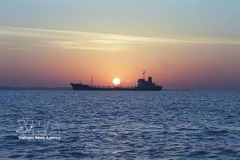
An oil tanker anchored off Qeshm Island in the Strait of Hormuz. (Photo: Middle East Eye/VNA)

Vietnam seeks priority passage for vessels through Strait of Hormuz

According to the administration, 19 vessels owned by Vietnamese enterprises are currently operating in the Middle East, including four flying the Vietnamese flag and 15 registered under foreign flags. Amid growing security concerns in the region, VIMAWA stressed the need for stronger coordination with relevant partners to safeguard maritime operations and crew safety.

On March 13, 2026, the Ho Chi Minh City Department of Science and Technology holds a conference to launch a pilot scheme on policies designed to promote the commercialisation and rapid application of research outcomes and intellectual property generated from the state budget into production and business activities. (Photo: VNA)

Bridging talent gap key to unlocking Vietnam’s IP potential: experts

Vietnam is moving to ease human resource bottlenecks in Intellectual Property (IP) valuation and unlock the commercial potential of IP assets, as an amended Intellectual Property Law taking effect on April 1 establishes a legal framework for valuing such assets, insiders said.

Foreign visitors at the event (Photo: VNA)

Night book festival livens up Ho Chi Minh City

Running from 6 pm to 10 pm, the event offers a vibrant cultural space for residents and visitors, featuring book exchanges, cultural discussions and interactive activities aimed at promoting reading and knowledge.

Professor, Doctor of Economics Georgy Davidovich Toloraya, Chief Research Fellow at the Centre for World Politics and Strategic Analysis under the Russian Academy of Sciences (Photo: VNA published)

Russian scholar sees Vietnam strengthening national security strategy

Professor, Doctor of Economics Georgy Davidovich Toloraya, Chief Research Fellow at the Centre for World Politics and Strategic Analysis under the Russian Academy of Sciences, highlighted the significance of the agreement with Russia’s Rosatom to build Vietnam’s first nuclear power plant, especially amid ongoing conflict in the Middle East and the global energy crisis.

Urban train has become a favourable travel solution for Hanoi's residents. (Photo: VNA)

Metro, buses, electric vehicles becoming top choice for Hainoians

For young people today, transport is no longer merely about moving from one place to another but also about comfort and emotional experience. Modern metro lines and smooth electric buses have largely met these expectations. Elevated metro stations with minimalist, contemporary designs have become popular “check-in” spots, while images of young commuters enjoying coffee and music as they overlook the city from train windows have become familiar on social media.

The Da Nang Union of Friendship Organisations (DAFO) signs a new round of MoUs with foreign non-governmental organisations, mobilising pledged assistance worth about 2.79 million USD across various spheres. (Photo: VNA)

Da Nang secures 2.79 million USD in international NGO aid

As part of the 2026–2030 foreign NGO aid mobilisation plan, the Da Nang Union of Friendship Organisations formalised cooperation with six partners, including Habitat for Humanity International and the Social Assistance Program for Vietnam (US); Korea Food for the Hungry International and Share Sarangbat (Republic of Korea); Activity International (the Netherlands); and Catalyste+ (Canada).

Nguyen Canh Binh, Chairman of Alpha Books, shares his views at the Vietnam Digital Publishing Summit 2025 (DPS 2025) with the theme "The Future of Publishing in a Global Digital Age". (Photo: VNA).

Publishing sector accelerates digital ecosystem development

According to the Department of Publishing, Printing and Distribution, the country currently has 52 publishing houses. In 2025, the industry produced more than 51,000 publications, with around 543 million copies and online accesses, generating total revenue of over 4.1 trillion VND (nearly 155.64 million USD).

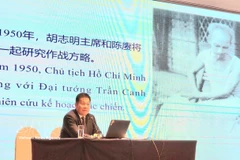
Prof. Hu Xianzhong speaks at the seminar. (Photo: VNA)

Vietnam sends students to “Red study tour” of Ho Chi Minh’s footsteps in China

Initiated by Party General Secretary To Lam, State President Luong Cuong and Chinese Party General Secretary and President Xi Jinping during the Vietnam-China friendship meeting in April last year, the activity is run by the Communist Youth League of China (CYLC) and coincides with the 95th anniversary of the Ho Chi Minh Communist Youth Union (HCYU) (March 26).

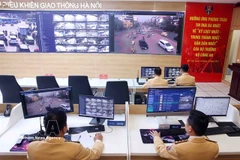
Police officers at the Hanoi traffic control centre (Photo: VNA)

A turning point in Hanoi’s city management

With 1,837 AI cameras integrated into traffic signals at 195 key intersections, Hanoi now operates a citywide network capable of monitoring and regulating traffic in real time.

The Vietnam National University, Ho Chi Minh City leads Vietnamese institutions in natural sciences, social sciences, and management, ranking in the 401–450 and 341 bands, respectively. (Photo: vnuhcm.edu.vn)

Vietnamese universities climb global rankings in multiple disciplines

In the broad subject rankings, seven Vietnamese universities were listed, three more than last year. Van Lang University ranked 260th globally in arts and humanities, the highest position for Vietnam in this category. Duy Tan University maintained a strong standing in engineering and technology, placing 346th worldwide.