Dung Quat refinery operates above capacity in first quarter

The refinery produced 2.03 million tonnes of petrol products, achieving 105% of its management plan, while sales volume reached 2.02 million tonnes, equivalent to 113% of the target. As a result, key financial indicators, including revenue, profits and contributions to the state budget, all exceeded planned levels.

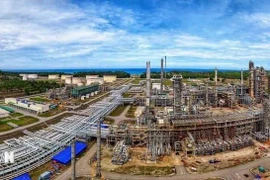
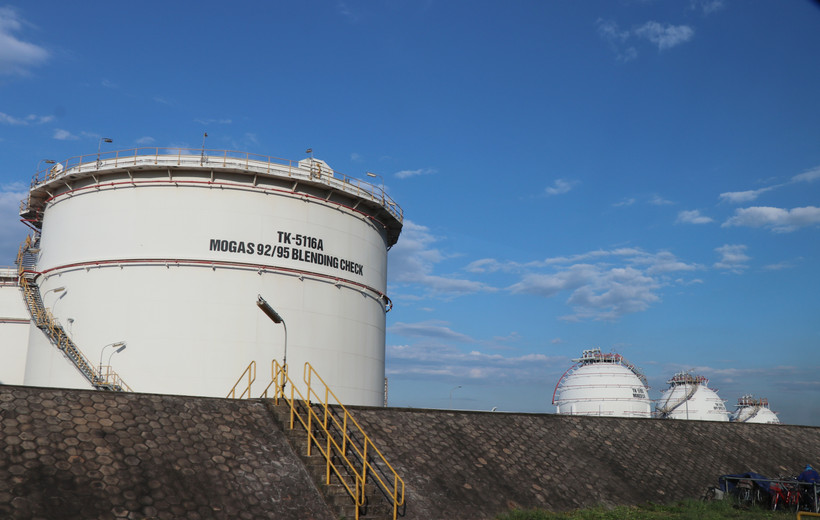
The Dung Quat refinery operates at 123.5% of its capacity, boosting domestic fuel supply. (Photo: VNA)

Hanoi (VNA) – Binh Son Refining and Petrochemical Joint Stock Company (BSR), a subsidiary of Vietnam National Industry–Energy Group, operated the Dung Quat Oil Refinery safely and stably at high capacity, reaching 123.5% of its adjusted capacity in the first quarter of 2026.

The refinery produced 2.03 million tonnes of petrol products, achieving 105% of its management plan, while sales volume reached 2.02 million tonnes, equivalent to 113% of the target. As a result, key financial indicators, including revenue, profits and contributions to the state budget, all exceeded planned levels.

BSR General Director Nguyen Viet Thang said the company has implemented comprehensive solutions to maintain stable operations amid volatility in global energy markets linked to Middle East tensions. These measures included ensuring sufficient feedstock supplies and optimising production to maintain high operating capacity.

The BSR prepared multiple operational scenarios and secured crude oil and intermediate feedstocks to support the refinery's operations at elevated capacity. The company also strengthened supply-chain cooperation, including outsourcing processing at the Phu My Condensate Plant and purchasing high-octane components such as ethanol, reformate and additives to maximise petrol output, particularly during periods of market supply shortages.

The Dung Quat Biofuel Plant has continued producing bioethanol for blending E5RON92 and E10RON95 biofuels. Upgrades to storage tanks and related systems serving E10RON95 production and blending have been completed and are ready for operation.

In the second quarter of 2026, BSR aims to maintain safe, stable and continuous operations at around 123% of adjusted capacity, with expected output exceeding 2 million tonnes. For the full year, the company targets production of 8.3 million tonnes - the highest level since the refinery began operations.

To support market stability, the BSR has adjusted sales policies, including extended payment terms and measures related to jet fuel pricing. The company has also invested in an additional truck-loading facility to improve distribution capacity, while construction of a 9th crude oil storage tank is underway and scheduled for completion in May 2026, helping increase storage capacity for the refinery's operations.

Regarding feedstock supply, the BSR has prepared approximately 2.3 million barrels of Vietnamese crude oil for May and June and plans to continue purchasing intermediate materials and high-octane components to boost RON95 petrol production. Additional ethanol purchases are also planned to support E10RON95 blending.

The company is working with partners to diversify crude oil sources, including potential imports from Russia as well as suppliers in Africa, the US and Southeast Asia. The BSR said it will continue closely monitoring market developments and adjusting procurement plans for the remainder of 2026 to ensure operational efficiency and fulfil targets assigned by Petrovietnam, contributing to national energy security./.


VNA

See more

The “Reunification Express” SE4 arrives in Da Nang on the occasion of the Reunification Day. (Photo: VNA)

Vietnam Railways Corporation to become Vietnam National Railways Group

Under the plan, the operating model of parent–subsidiary companies of the Vietnam Railways Corporation will be transformed into a model of parent–subsidiary companies of the Vietnam National Railways Group. The move is intended to strengthen its capacity to undertake and implement assigned tasks.

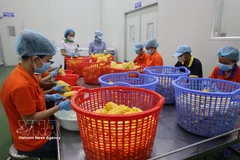
Pre-processing fruits for juice production at Wana Beverage JSC, Chau Duc Industrial Park, Ho Chi Minh City. (Photo: VNA)

Vietnam’s food sector urged to move up global value chains

Within Vietnam’s food industry, only a handful of firms, including Vinamilk and Masan Group, have achieved large-scale operations, while most businesses remain small. As a result, the highest value-added gains largely belong to companies that dominate branding and downstream markets.

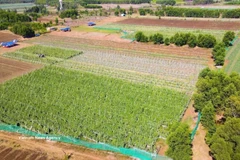
A VietGAP-oriented vegetable farming model adopted by farmers in An Phu commune, Quang Ngai province, has proven effective. (Photo: VNA)

Data, digitalisation key to unlocking sustainable growth in Vietnam’s agriculture

Close coordination among the State, businesses and farmers is also crucial. While the State provides regulatory frameworks, enterprises drive the market, and farmers supply data, effective incentives are needed to encourage farmers’ participation. When tangible benefits are clear, farmers will be more willing to adopt technology and engage in the digital ecosystem

Lao delegates attend the conference. (Photo: VNA)

Gia Lai, Lao provinces sign cooperation agreement

Gia Lai province signed a cooperation agreement for the 2026–2030 period with the four southern Lao provinces of Attapeu, Champasak, Salavan and Sekong at a conference held in the Vietnamese locality on March 29.

Finance Minister Nguyen Van Thang holds a working session with an HSBC delegation led by Group CEO Georges Elhedery on March 29, 2026. (Photo: Ministry of Finance)

Vietnam, HSBC accelerate push for credit upgrade and global capital inflows

At a recent meeting with an HSBC delegation led by Group CEO Georges Elhedery, Finance Minister Nguyen Van Thang highlighted the importance of an early credit upgrade to reinforce macroeconomic stability, reduce borrowing costs and strengthen investor confidence, while calling for continued technical support from the bank.

A representative of Denmark businesses speaks at the dialogue. (Photo published by VNA)

Vietnam, Denmark promote investment cooperation

Addressing the dialogue, Vietnamese Ambassador to Denmark Nguyen Le Thanh emphasised that Vietnam is intensifying comprehensive reforms to improve institutions and policies, enhance transparency and governance, and create a more stable and favourable business environment.

Permanent Deputy Prime Minister Nguyen Hoa Binh addresses the Vietnam–US Finance and Technology Dialogue. (Photo: VNA)

US firms eye expanding fintech investment in Vietnam

Addressing the Vietnam–US Finance and Technology Dialogue, themed “Technology and the future of global finance,” Permanent Deputy Prime Minister Nguyen Hoa Binh reaffirmed Vietnam’s commitment to a pro-investment environment, with breakthrough policies and stronger protections for foreign investors.

An LNG tanker docks at the Thi Vai LNG terminal in Ho Chi Minh City (Photo: VNA)

Solutions proposed to support firms amid Middle East conflict impacts

Top priority should be given to stabilising energy prices to ease input cost pressures and ensure supply stability – the most widely supported recommendation, chosen by 61.9% of surveyed firms. Businesses urged close monitoring of global fuel prices and supply risks, along with flexible measures to curb abnormal domestic price fluctuations and secure supplies of fuel and essential materials.

Nguyen Viet Tu (right) and a cooperative technician inspect a bird’s eye chilli field ready for harvest for export to European countries. (Photo: VNA)

Vietnamese herbs gain ground in European market

The Chau Pha Agricultural Production and Services Cooperative model is widely seen as an illustration of a new direction for Vietnam’s agriculture sector, one that combines clean production practices, modern management and proactive engagement with global markets.

Garment production for export to the EU at the TNG company in Thai Nguyen province (Photo: VNA)

Businesses pivot strategies to sustain export growth momentum

Enterprises are shifting toward reasonably priced, easy-to-consume products such as tra fish, tilapia, canned items and surimi, instead of focusing mainly on high-end products like large-sized shrimp, which are facing weaker demand in some markets.