Data, digitalisation key to unlocking sustainable growth in Vietnam’s agriculture

Close coordination among the State, businesses and farmers is also crucial. While the State provides regulatory frameworks, enterprises drive the market, and farmers supply data, effective incentives are needed to encourage farmers’ participation. When tangible benefits are clear, farmers will be more willing to adopt technology and engage in the digital ecosystem

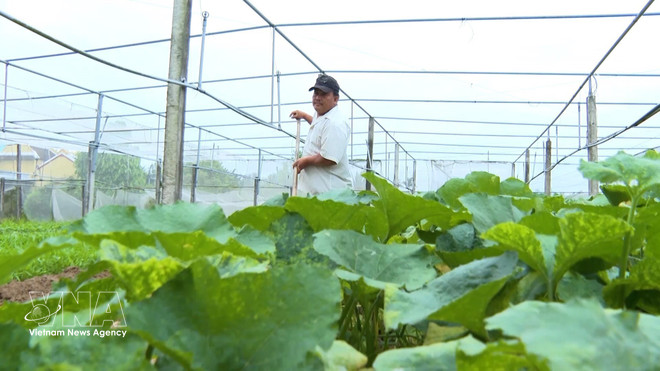
A VietGAP-oriented vegetable farming model adopted by farmers in An Phu commune, Quang Ngai province, has proven effective. (Photo: VNA)

Hanoi (VNA) – Vietnam’s agricultural sector is entering a critical phase of transformation driven by advanced technologies and the digitalisation of farming areas, with standardised databases and traceability seen as essential to ensuring greener and more sustainable development.

The sector has long been characterised by fragmented production and heavy reliance on traditional practices, leading to inconsistent quality, low value, and limited competitiveness in international markets.

According to Pham Huy Hoang, General Director of VNPT Information Technology Company (VNPT-IT), transitioning from raw exports to high-value products requires a strong data foundation, including information on farming areas, production processes and markets. Such data underpin traceability systems, improve transparency, and enhance consumers' trust.

As major markets such as the European Union, the US and Japan are tightening import requirements, insufficient data transparency has become a major barrier for Vietnamese farm produce. In contrast, products with clear and comprehensive data on origin and quality are more likely to access these markets and secure better prices.
vnanet-nong-nghiep-sach.jpg
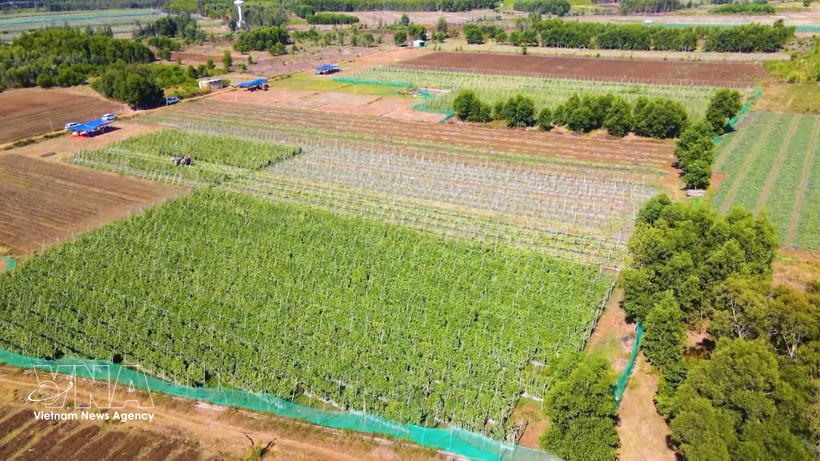
High-tech and clean agricultural production is becoming an increasingly popular choice among farmers in former Quang Ngai province. (Photo: VNA)

Nguyen Thi Thanh Hoa, General Director of EUBIZ Vietnam JSC, noted that while small-scale production can rely on manual methods, digital technologies become indispensable when expanding cultivation areas and output. Data play a crucial role in increasing product value, especially in the development of processed and organic products, she noted.

From practical implementation, many localities have identified agriculture as a key pillar of the economy in the coming years. Deputy Director of the Lao Cai provincial Department of Agriculture and Environment Nguyen Thai Binh said that in the 2026–2030 period, the province will prioritise digital transformation across the entire production chain to improve management efficiency, increase product value, and support sustainable agricultural and forestry development. He further stated that building and standardising agricultural databases is seen as a core task in this strategy.

Experts stressed that digital transformation should be implemented in phases, aligned with farmers’ capabilities. At the cultivation stage, shifting from manual record-keeping to electronic systems is crucial to help farmers gradually adapt to technology, alongside the application of tools for pest and weather monitoring, irrigation management, and pesticide control.

At the processing stage, digital technologies should be used to fully digitise production processes, allowing strict control over quantities, ingredients, and technical standards required by markets, especially international ones. In the market stage, leveraging e-commerce platforms and social media can help promote products more effectively and support brand building through professional images, content, and videos.

However, as most farmers still have limited technological skills, the implementation must go hand in hand with step-by-step training programmes that are easy to understand and apply. The involvement of consulting and implementation units is also essential to directly support farmers.

To address the data challenge, the role of technology enterprises is indispensable. These firms are actively building digital platforms, developing shared databases, and deploying Internet of Things solutions in agriculture. Such platforms not only facilitate data collection and management but also connect stakeholders across the value chain, from regulators and businesses to farmers. When data are effectively shared and utilised, the entire agricultural ecosystem will operate more smoothly and transparently.

Close coordination among the State, businesses and farmers is also crucial. While the State provides regulatory frameworks, enterprises drive the market, and farmers supply data, effective incentives are needed to encourage farmers’ participation. When tangible benefits are clear, farmers will be more willing to adopt technology and engage in the digital ecosystem./.

VNA

See more

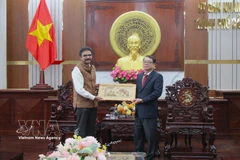
Indian Consul General in Ho Chi Minh City Vipra Pandey (left) presents a gift to Vice Chairman of the People's Committee of Can Tho Nguyen Van Khoi at the meeting on March 30. (Photo: VNA)

Can Tho seeks to expand investment cooperation with Indian partners

In recent months, many Indian enterprises have sought investment opportunities in Vietnam, particularly in technology, food processing, machinery, and the application of artificial intelligence in agriculture, via the Indian Consulate General in Ho Chi Minh City, said Consul General Vipra Pandey.

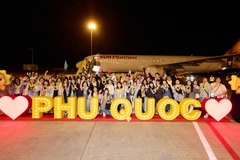
Over 200 passengers from Taiwan (China) arrive in Phu Quoc on Sun PhuQuoc Airways’ inaugural international flight. (Photo: Sun Group)

Sun PhuQuoc Airways launches its first international route to Taipei

On March 29, 2026, Sun PhuQuoc Airways - the airline of Sun Group - officially launched its first international route connecting Phu Quoc and Taipei (Taiwan, China), marking the initial step in its strategy to connect Phu Quoc with the world and gradually position the island as one of Vietnam’s emerging international gateways.

The VIFC-HCMC attracts more than 9 billion USD in committed capital in just over two months of operation. (Photo: VNA)

Deputy PM’s visit to US sparks strong interest in Vietnam int’l financial centre

The Vietnamese Government will continue to accompany and support investors, particularly in emerging financial sectors still in the experimental stage, Deputy Prime Minister Nguyen Hoa Binh stated, showing the hope that US partners will accompany Vietnam throughout the development and operation of the centre, helping position the Southeast Asian country as a vital link in the global financial network.

The “Reunification Express” SE4 arrives in Da Nang on the occasion of the Reunification Day. (Photo: VNA)

Vietnam Railways Corporation to become Vietnam National Railways Group

Under the plan, the operating model of parent–subsidiary companies of the Vietnam Railways Corporation will be transformed into a model of parent–subsidiary companies of the Vietnam National Railways Group. The move is intended to strengthen its capacity to undertake and implement assigned tasks.

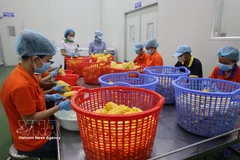
Pre-processing fruits for juice production at Wana Beverage JSC, Chau Duc Industrial Park, Ho Chi Minh City. (Photo: VNA)

Vietnam’s food sector urged to move up global value chains

Within Vietnam’s food industry, only a handful of firms, including Vinamilk and Masan Group, have achieved large-scale operations, while most businesses remain small. As a result, the highest value-added gains largely belong to companies that dominate branding and downstream markets.

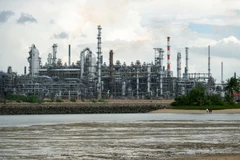
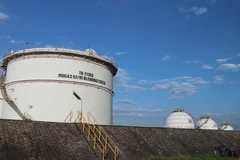
The Dung Quat refinery operates at 123.5% of its capacity, boosting domestic fuel supply. (Photo: VNA)

Dung Quat refinery operates above capacity in first quarter

The refinery produced 2.03 million tonnes of petrol products, achieving 105% of its management plan, while sales volume reached 2.02 million tonnes, equivalent to 113% of the target. As a result, key financial indicators, including revenue, profits and contributions to the state budget, all exceeded planned levels.

Lao delegates attend the conference. (Photo: VNA)

Gia Lai, Lao provinces sign cooperation agreement

Gia Lai province signed a cooperation agreement for the 2026–2030 period with the four southern Lao provinces of Attapeu, Champasak, Salavan and Sekong at a conference held in the Vietnamese locality on March 29.

Finance Minister Nguyen Van Thang holds a working session with an HSBC delegation led by Group CEO Georges Elhedery on March 29, 2026. (Photo: Ministry of Finance)

Vietnam, HSBC accelerate push for credit upgrade and global capital inflows

At a recent meeting with an HSBC delegation led by Group CEO Georges Elhedery, Finance Minister Nguyen Van Thang highlighted the importance of an early credit upgrade to reinforce macroeconomic stability, reduce borrowing costs and strengthen investor confidence, while calling for continued technical support from the bank.

A representative of Denmark businesses speaks at the dialogue. (Photo published by VNA)

Vietnam, Denmark promote investment cooperation

Addressing the dialogue, Vietnamese Ambassador to Denmark Nguyen Le Thanh emphasised that Vietnam is intensifying comprehensive reforms to improve institutions and policies, enhance transparency and governance, and create a more stable and favourable business environment.

Permanent Deputy Prime Minister Nguyen Hoa Binh addresses the Vietnam–US Finance and Technology Dialogue. (Photo: VNA)

US firms eye expanding fintech investment in Vietnam

Addressing the Vietnam–US Finance and Technology Dialogue, themed “Technology and the future of global finance,” Permanent Deputy Prime Minister Nguyen Hoa Binh reaffirmed Vietnam’s commitment to a pro-investment environment, with breakthrough policies and stronger protections for foreign investors.