Australia’s three-tier response offers lessons for Vietnam’s energy security

In the longer term, Vietnam should align clean energy industrial policy with supply chain security, while enhancing institutional coordination to ensure a balanced approach to growth, affordability, sustainability and energy security.

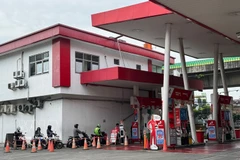
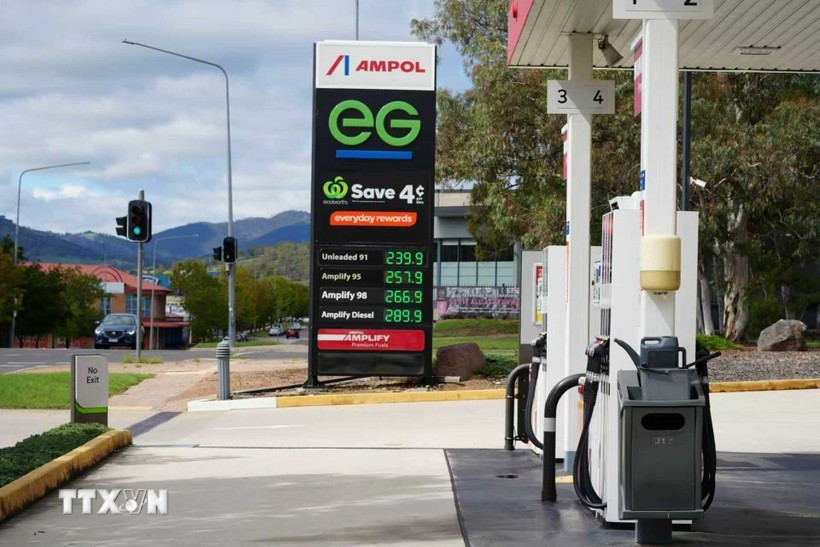
A petrol station in Canberra, Australia. (Photo: Xinhua/VNA)

Sydney (VNA) — Dr Do Nam Thang, a Vietnamese lecturer based in Australia, has suggested that Vietnam adopt a range of measures to both ensure energy security and achieve sustainable growth, drawing on Australia’s short-term energy measures and long-term strategic trends.

Thang, who is a lecturer at the Crawford School of Public Policy under the Australian National University (ANU) and Deputy Director of the ANU’s Vietnam Policy Studies Hub, told the Vietnam News Agency that as the Middle East conflict enters its fourth week, global energy supply chains, transport and trade continue to face significant disruptions. In response to emerging fuel shortages at more than 600 petrol stations nationwide, Australia has rolled out a series of emergency measures, reflecting a structured three-tier approach to energy security.

According to him, Australia’s first layer of response involves immediate market intervention. The government temporarily reduced minimum stockholding obligations for fuel importers by 20%, releasing an additional 760 million litres into the market, prioritising remote areas. Environmental fuel standards were also relaxed in the short term, while an emergency fuel task force was established to coordinate supply, monitor hoarding and price manipulation, and provide more frequent policy updates.

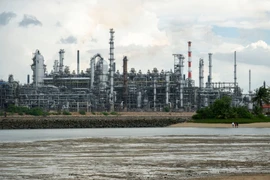
The second layer focuses on reinforcing domestic refining capacity. With only two major refineries remaining and around 90% of fuel consumption reliant on imports, Australia has extended financial support mechanisms to maintain local processing capability.

The third layer aims to strengthen gas and electricity security as a buffer for the broader energy system. The government is gradually shifting towards mechanisms that ensure domestic gas supply, though these are still being refined. Despite being one of the world’s top LNG exporters, alongside the US and Qatar, domestic gas prices, especially in eastern regions, remain closely linked to global markets.

According to Thang, these measures have helped stabilise supply chains and market sentiment in the short term but fall short of addressing structural vulnerabilities, notably heavy dependence on imported refined fuel and exposure to international price fluctuations.

Drawing lessons for Vietnam, Thang recommended strengthening short-term resilience through diversified supply, strategic reserves and long-term contracts. He also emphasised the need for a holistic power system approach, prioritising transmission, storage and market reforms.

In the longer term, Vietnam should align clean energy industrial policy with supply chain security, while enhancing institutional coordination to ensure a balanced approach to growth, affordability, sustainability and energy security./.

VNA
See more

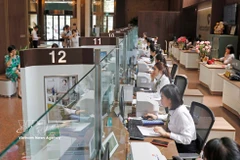
The headquarters of Vietcombank in Hanoi (Photo: VNA)

State Bank moves to keep interest rates stable

Banks must continue publicly disclosing average lending rates, the spread between deposit and lending rates, and interest rates of credit schemes and packages on their websites, making it easier for individuals and firms to access capital.

Illustrative image (Photo: VNA)

Textile firms strengthen resilience amid rising global risks

As soon as the conflict in the Middle East broke out, companies quickly developed strategies such as securing raw material supplies, diversifying sourcing and customer bases and avoiding dependence on limited clients, said a business insider.

Today, Vietnam has developed an increasingly modern and balanced economic structure spanning industry, services, and agriculture. (Photo: thanhnien.vn)

A historic opportunity for Vietnam’s economy

Amid ongoing global geopolitical turbulence, Vietnam stands at a pivotal moment, with favourable conditions and untapped potential positioning it for sustained, high-quality growth—and possibly a historic leap toward high-income status.

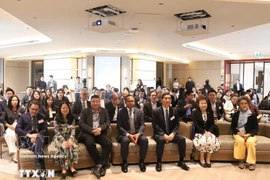
The meeting between Politburo member, Secretary of the Party Central Committee and Chairman of its Commission for Policies and Strategies Nguyen Thanh Nghi (R) and Daniel J. Kritenbrink, former US Ambassador to Vietnam and a partner at The Asia Group (TAG), in Hanoi on March 30 (Photo: VNA)

Vietnamese Party official hosts leader of US-based The Asia Group

Vietnam welcomes and encourages US businesses – known for their strengths in technology, governance, and innovation – to further expand investment and operations in the Southeast Asian country, said Chairman of the Commission for Policies and Strategies Nguyen Thanh Nghi.

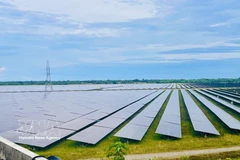
GELEX Ninh Thuan solar farm located in Phuoc Dinh commune, Khanh Hoa province. (Illustrative photo: VNA)

HSBC arranges 200 million USD loan for GELEX Infrastructure JSC

According to Tim Evans, CEO and Head of Banking, Legal Representative at HSBC Vietnam, the deal was completed amid challenging market conditions and a tight execution timeline. The syndicated loan drew strong interest from lenders and was structured to align with GELEX Infrastructure’s medium-term funding requirements.

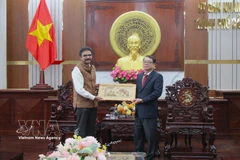
Indian Consul General in Ho Chi Minh City Vipra Pandey (left) presents a gift to Vice Chairman of the People's Committee of Can Tho Nguyen Van Khoi at the meeting on March 30. (Photo: VNA)

Can Tho seeks to expand investment cooperation with Indian partners

In recent months, many Indian enterprises have sought investment opportunities in Vietnam, particularly in technology, food processing, machinery, and the application of artificial intelligence in agriculture, via the Indian Consulate General in Ho Chi Minh City, said Consul General Vipra Pandey.

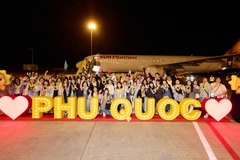
Over 200 passengers from Taiwan (China) arrive in Phu Quoc on Sun PhuQuoc Airways’ inaugural international flight. (Photo: Sun Group)

Sun PhuQuoc Airways launches its first international route to Taipei

On March 29, 2026, Sun PhuQuoc Airways - the airline of Sun Group - officially launched its first international route connecting Phu Quoc and Taipei (Taiwan, China), marking the initial step in its strategy to connect Phu Quoc with the world and gradually position the island as one of Vietnam’s emerging international gateways.

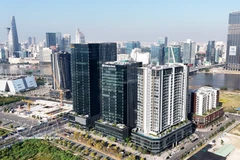
The VIFC-HCMC attracts more than 9 billion USD in committed capital in just over two months of operation. (Photo: VNA)

Deputy PM’s visit to US sparks strong interest in Vietnam int’l financial centre

The Vietnamese Government will continue to accompany and support investors, particularly in emerging financial sectors still in the experimental stage, Deputy Prime Minister Nguyen Hoa Binh stated, showing the hope that US partners will accompany Vietnam throughout the development and operation of the centre, helping position the Southeast Asian country as a vital link in the global financial network.