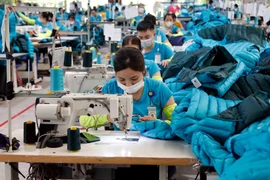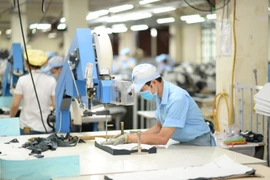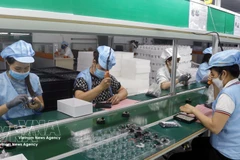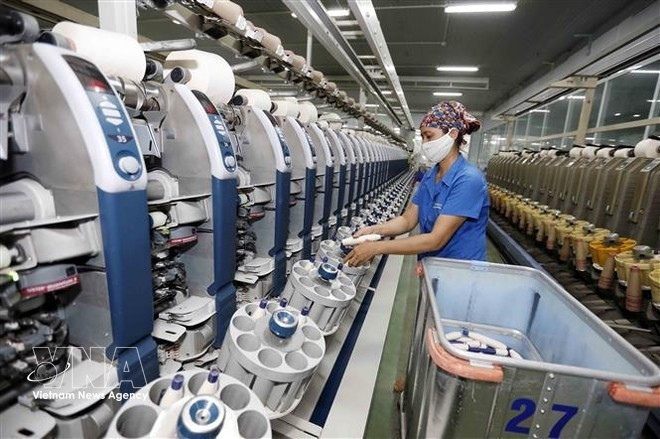
Hanoi (VNS/VNA) – Vietnamese textile and garment enterprises are steering through unpredictable global markets, rising transport costs and Middle East conflicts while securing orders, diversifying sources and eyeing domestic growth.
Unpredictable market developments and geopolitical conflicts in the Middle East have disrupted supply chains, driven up transportation and insurance costs and affected business operations. In response, authorities have proactively implemented solutions to help textile and garment enterprises maintain stable production and business activities, sustaining growth momentum and boosting exports.
Many companies have already secured orders through July and are negotiating contracts for the rest of the year. Alongside diversifying markets and customers, businesses continue to invest in modern equipment and develop new products to enhance competitiveness.
Hoang Manh Cam, chief of office of the board of directors at the Vietnam National Textile and Garment Group (VINATEX), told Nhan Dan newspaper that as soon as the conflict in the Middle East broke out, companies quickly developed strategies such as securing raw material supplies, diversifying sourcing and customer bases and avoiding dependence on limited clients.
In practice, export orders have not been significantly affected, but risks remain, particularly for shipping routes passing through the region to Europe and partly to the US East Coast. Shipping companies have increased insurance premiums, adding costs, while importing materials such as cotton from the US takes longer due to rerouting, affecting production schedules.
Orders that previously took about two months including shipping now require up to one and a half months for transportation alone, causing disruptions. Although total production time remains unchanged, longer delivery times require careful adjustment of production schedules, Cam said.
He emphasised that textile enterprises must prioritise resilience amid uncertainty by maintaining financial flexibility, managing exchange rate and raw material risks, restructuring supply chains and upgrading value-added capabilities.
“In a context where high tariffs are becoming the new normal, competitive advantage will belong to companies that control costs well, comply with origin requirements and ensure fast delivery,” he said.
Le Tien Truong, VINATEX chairman, added that amid volatility in tariffs, geopolitics and logistics costs, businesses must remain proactive and flexible, developing specific action plans based on different scenarios. For the EU market, companies need to prepare for changing transport routes, rising logistics costs and longer delivery times. For the US market, they must anticipate continued pressure from buyers to adjust prices, especially as China maintains a low yuan, increasing competition.
Companies are advised to accelerate shipments during the 150-day period when an additional 10% tariff applies to optimise delivery plans and reduce policy risks. Maintaining balance across production, finance and markets will determine business resilience, allowing companies to retain market share, stabilise employment and achieve growth targets.
Domestic market holds strong potential
Amid volatile export markets, developing the domestic market is seen as an important buffer. Vu Duc Giang, chairman of the Vietnam Textile and Apparel Association (VITAS), described it as an underexploited gold mine. Vietnamese consumers increasingly favour locally made products with good quality, suitable designs and competitive prices, presenting a valuable opportunity for businesses to invest locally.
With a population of over 100 million and a growing middle class, Vietnam is a promising market for fashion, footwear and apparel. The domestic textile market is estimated at 5–5.5 billion USD annually, with footwear contributing about 1 billion USD, totalling approximately 6.5 billion USD.
However, challenges remain. Domestic products have yet to establish a strong position despite advantages in price and local consumer insight. The industry still depends heavily on imported raw materials, with a localisation rate of only 51–52%. Textile enterprises spent up to 17 billion USD on fabric imports out of a total export turnover of 46 billion USD last year, limiting value addition and increasing vulnerability to global supply chain disruptions.
Similarly, the footwear industry faces challenges due to reliance on imported materials and weak retail systems. Domestic products often struggle to compete with cheaper imports, particularly in rural areas. Limitations in quality standards and market control allow low-quality, untraceable products to compete unfairly. Tax policies under the ASEAN – China agreement also disadvantage domestic manufacturers, as finished imported footwear enjoys zero tariffs while imported materials are taxed 5–10%.
To address these issues, authorities need to strengthen quality standards and enforcement mechanisms, ensuring product traceability and fair competition, said Phan Thi Thanh Xuan, vice chairwoman and secretary general of the Vietnam Leather, Footwear and Handbag Association (LEFASO).
Currently, the domestic apparel and footwear market is evenly split, with 50% held by foreign brands and 50% by Vietnamese brands. In the long term, developing the domestic market is a necessary strategy. If businesses strengthen branding, improve design, expand distribution channels and increase localisation, the domestic market could provide a solid foundation, supporting sustainable growth alongside exports./.
VNA