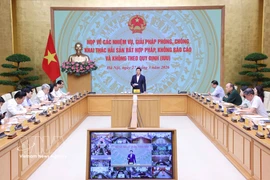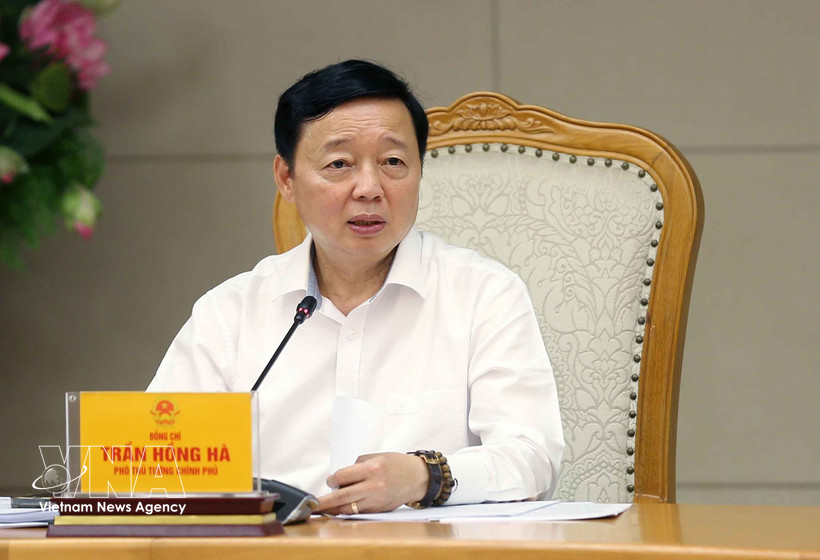
Hanoi (VNA) – The Government Office on March 31 issued a notice conveying the conclusions of Deputy Prime Minister Tran Hong Ha at the 33rd meeting of the Steering Committee for Combating Illegal, Unreported and Unregulated (IUU) Fishing, underscoring the need for urgent and comprehensive measures to address shortcomings identified by the European Commission (EC).
At the meeting on March 27, after reviewing reports from the Ministry of Agriculture and Environment and relevant agencies, Ha tasked the ministry with taking full responsibility before the Government and the Prime Minister for the implementation of anti-IUU fishing measures and the EC's recommendations. The ministry was requested to directly oversee and expedite all related tasks, while urgently developing a detailed action plan to carry out the recommendations.
The ministry was asked to prepare a supplementary report explaining Vietnam’s progress and challenges for submission to the EC. The report must clearly address applicable recommendations, distinguish between immediate and long-term shortcomings, and define specific tasks, responsibilities, timelines, and deadlines.
Emphasising transparency and accountability, the Deputy PM called for a candid and substantive approach, avoiding superficial explanations or justification of weaknesses. The report must be submitted to the PM and the Steering Committee by April 6, and forwarded to the EC by April 10, he stressed.
The ministry was also urged to finalise and submit to the Government a draft decree on administrative sanctions in the fisheries sector, and study the use of vessel monitoring system (VMS) data as a legal basis for sanctioning violations, ensuring no delays in progress.
In parallel, the ministry must issue guidelines on controlling the traceability of imported materials to close existing regulatory loopholes, Ha said, requiring this task to be completed before April 5.
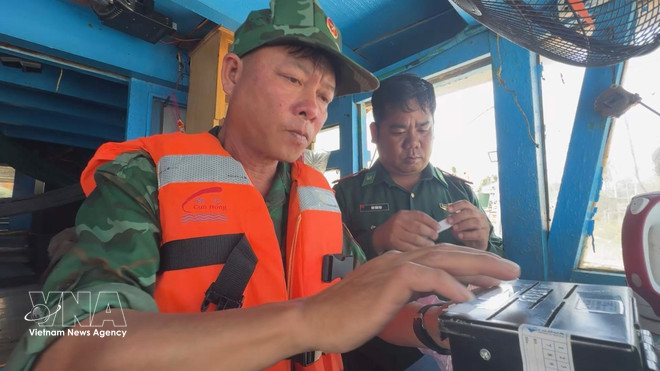
Further efforts will focus on strengthening the management of the fishing vessel fleet. Accordingly, the ministry was requested to review and refine regulations, including the possible extension of mandatory VMS installation to vessels measuring between 12 and under 15 metres; and establish strict rules governing the installation, management, and operation of VMS devices, including cases where vessels are equipped with multiple devices, and ensure proper handling of signal loss or irregularities to prevent misuse.
In addition, the ministry must review and supplement criteria for designated fishing ports, ensuring appropriate allocation of vessels for effective monitoring and compliance with port entry procedures. Mechanisms for managing vessels that are no longer eligible for operation will also be completed in April.
At the local level, Ha assigned the Chairperson of the Tay Ninh provincial People’s Committee to urgently review cases related to traceability, clarify the causes of discrepancies, and determine the responsibilities of relevant parties. Any signs of fraud or the legalisation of improper documents must be handled strictly in accordance with the law.
Meanwhile, authorities in Dak Lak province were instructed to conduct a thorough review and clarify the accountability of organisations and individuals, particularly officials at sub-departments and fishing ports, in relation to lax enforcement of violations. The Deputy PM stressed that under no circumstances should vessels found in violation be allowed to dock, or be granted confirmation or certification of legal compliance.
According to Deputy Minister of Agriculture and Environment Phung Duc Tien, following an inspection mission to Vietnam from March 10 - 19, the EC delegation issued preliminary assessments and recommendations across four key areas: legal framework improvements, fisheries monitoring and control, traceability, and law enforcement.
Among its key recommendations, the EC called for stricter penalties for serious violations, including licence revocation and vessel confiscation, enhanced monitoring of fishing vessel activities, tighter control over traceability, especially containerised exports, and accelerated handling of violations to ensure the effectiveness and credibility of enforcement efforts./.