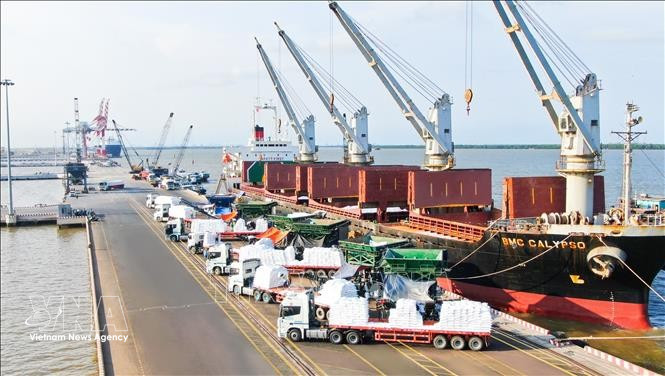
Tay Ninh (VNA) – The southern province of Tay Ninh is emerging as a promising investment destination, underpinned by a long-term, well-structured strategy to develop industrial parks in tandem with logistics infrastructure.
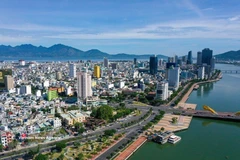
Beyond serving as production hubs, the province’s industrial zones are evolving into a broader development platform integrating industry, logistics, urban areas and services, helping reposition Tay Ninh in the southern key economic region amid shifting global investment flows.
Capturing new capital inflows
A key advantage for Tay Ninh lies in its abundant industrial land, especially as land banks in traditional industrial centres are becoming increasingly scarce.
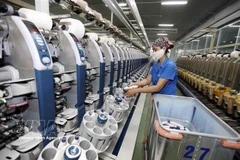
Truong Thanh Liem, head of the Tay Ninh Economic Zone Authority, said that the province plans to develop around 100 industrial parks by 2030, covering more than 31,300 ha. To date, 48 industrial parks have been established with a combined area of nearly 15,000 ha, of which 34 are ready to receive investment, offering over 10,000 ha with an occupancy rate of 68.67%.
Notably, about 1,360 ha of cleared land remain available for lease, giving Tay Ninh a significant competitive edge in attracting manufacturing relocation in the medium and long term.
Meanwhile, high occupancy rates at existing industrial parks in the region and some of them nearing full capacity underscore the growing appeal of the investment environment. This reflects not only favourable geography but also improvements in infrastructure and local governance.
In parallel with expanding land supply, Tay Ninh is accelerating the development of strategic transport infrastructure to enhance regional connectivity. Expressways, ring roads and key corridors linking Ho Chi Minh City with Moc Bai International Border Gate and the Mekong Delta are gradually taking shape. Once completed, these routes are expected to reduce transport time, lower logistics costs and boost the competitiveness of businesses operating in industrial parks.
Thanks to these improvements, investment inflows have continued to rise. Industrial parks in the province have so far attracted around 2,600 projects, including nearly 1,500 foreign-invested projects and over 1,100 domestic ones, with total registered capital of about 18.5 billion USD and more than 23 trillion VND (872.85 million USD). These investments are not only injecting resources into the local economy but also accelerating the shift towards industrialisation.
Huynh Van Son, Vice Chairman of the provincial People’s Committee, said Tay Ninh will further improve the business climate by streamlining administrative procedures with a service-oriented approach centred on enterprises. The province is also steering industrial park development towards green, smart and high-tech models closely linked with logistics, rather than focusing solely on expansion in scale.
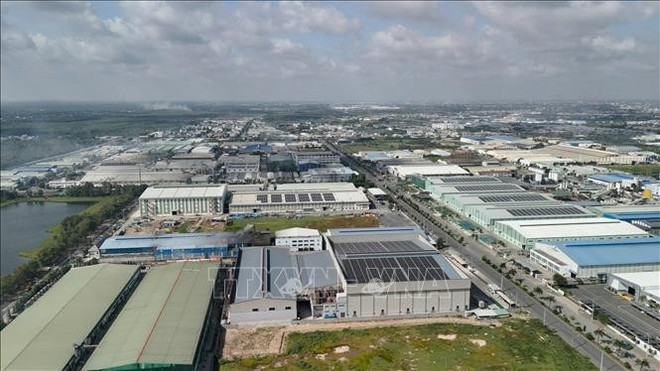
This marks a clear shift from competing on low costs to competing on infrastructure quality and service standards—an inevitable trend as investors increasingly prioritise stability, transparency and long-term operational efficiency.
Towards new economic ecosystem
Experience shows that where industrial parks thrive, urban areas, residential zones, commercial centres and logistics services quickly follow, forming an integrated development ecosystem rather than isolated production sites.
To enhance the quality of industrial park development, Tay Ninh is stepping up administrative reforms aimed at shortening processing times and improving transparency and consistency in investment, construction and land management.
Greater coordination among departments and localities is also being promoted to promptly resolve bottlenecks and avoid overlapping procedures – one of the common challenges facing investors.
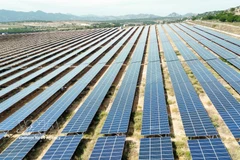
The province is also shifting towards selective investment attraction, prioritising high-tech, supporting industry and environmentally friendly projects. Models such as eco-industrial parks and smart industrial parks aligned with ESG (Environmental, Social and Governance) standards are gradually taking shape, in line with global sustainable development trends.
Vo Quoc Thang, Chairman of Dong Tam Group, noted that Tay Ninh holds a strategic location on the corridor connecting Ho Chi Minh City with the Mekong Delta and neighbouring countries. With the completion of transport infrastructure and cargo logistics systems, the province could become a key transit hub in the region.
In addition, its ample land reserves, reasonable costs and improving investment climate are factors that help Tay Ninh attract major industrial infrastructure investors.
Nguyen Minh Hung, Chairman of Green i-Park JSC, said that Tay Ninh possesses favourable conditions for developing next-generation industrial parks. Beyond land availability, the province offers a relatively complete development ecosystem, including transport connectivity, human resources, transparent policies and long-term expansion potential. With experience in green and smart industrial park development meeting ESG standards, the company is seeking investment opportunities aligned with the province’s orientation.
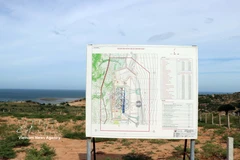
Under the provincial master plan, alongside existing industrial parks, 14 projects covering nearly 4,800 ha have received investment approval and are undergoing site clearance and infrastructure development. In addition, 52 more industrial parks spanning over 16,500 ha are in the pipeline, undergoing planning and investment procedures.
This demonstrates that Tay Ninh’s industrial land supply is not only ample at present but also strategically prepared for the future, creating significant room to attract large-scale, high-quality projects./.