Deputy PM’s visit to US sparks strong interest in Vietnam int’l financial centre

The Vietnamese Government will continue to accompany and support investors, particularly in emerging financial sectors still in the experimental stage, Deputy Prime Minister Nguyen Hoa Binh stated, showing the hope that US partners will accompany Vietnam throughout the development and operation of the centre, helping position the Southeast Asian country as a vital link in the global financial network.

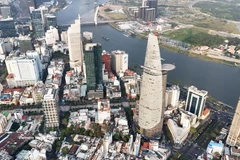
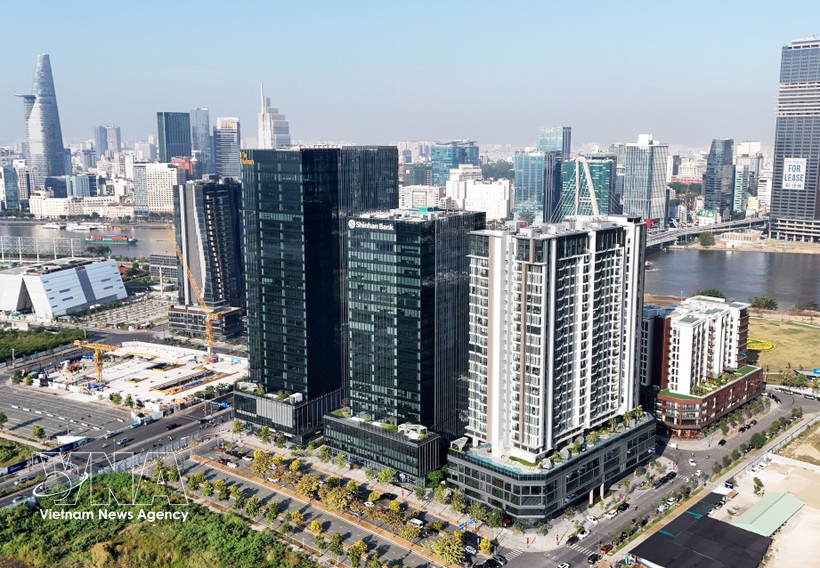
The VIFC-HCMC attracts more than 9 billion USD in committed capital in just over two months of operation. (Photo: VNA)

Hanoi (VNA) – Vietnam is seeking to draw greater high-quality capital from the US into its Vietnam International Financial Centre (VIFC), as Deputy Prime Minister Nguyen Hoa Binh’s working visit to the US has generated strong attention from major American corporations and investment funds.

During his March 21–30 trip to the US, Deputy PM Binh held a series of engagements aimed at promoting cooperation and mobilising capital for the VIFC, a strategic initiative designed to elevate Vietnam’s position in the global financial system.

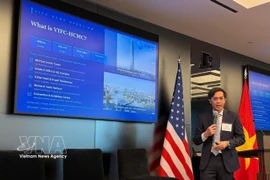
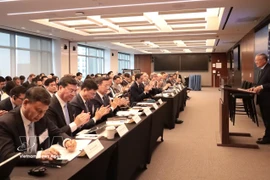
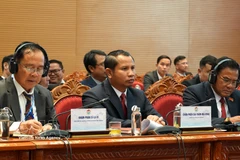
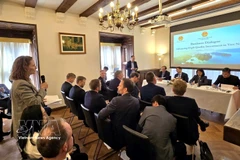
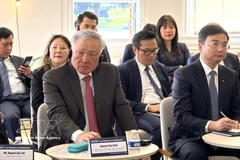
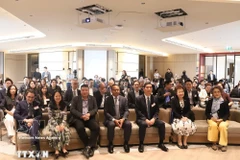
A key highlight was an investment promotion roundtable on March 23, co-organised by Warburg Pincus, the VIFC in Ho Chi Minh City (VIFC-HCMC), and the Permanent Mission of Vietnam to the United Nations (UN). The event brought together over 100 major US enterprises, corporations and investment funds.

In his remarks, Binh described the VIFC as a strategic breakthrough to boost productivity, transform the growth model and support the country’s development goals in the new era. He called on US investors to play a pioneering role in connecting large capital flows to VIFC, particularly in emerging financial services, niche products and areas of comparative advantage.

The Vietnamese Government will continue to accompany and support investors, particularly in emerging financial sectors still in the experimental stage, he stated, showing the hope that US partners will accompany Vietnam throughout the development and operation of the centre, helping position the Southeast Asian country as a vital link in the global financial network.

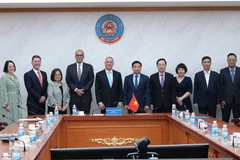
In a meeting with the Vietnamese official, Managing Director at Warburg Pincus Christopher Turner highlighted Vietnam’s great growth potential, especially its dynamic startup ecosystem and expanding technology sector. He affirmed that with decades of experience, the fund signalled readiness to support the development of Vietnam’s capital market and wish to participate in the VIFC.

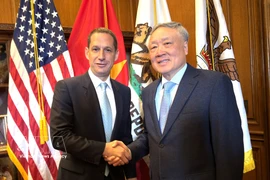
On March 27, Deputy PM Binh attended the Vietnam–US Finance and Technology Dialogue, themed “Technology and the future of global finance,” met with a delegation from Oregon state, and held working sessions with California’s State Treasurer, and companies exploring investment opportunities in Vietnam.

Binh outlined Vietnam’s strategy to build a modern, transparent international financial centre integrated with global markets. The proposed “one centre – two destinations” model will position Ho Chi Minh City as a traditional capital market hub, and Da Nang as a hub of intech, digital assets and innovation.

He reaffirmed Vietnam’s commitment to a pro-investment environment, with exceptional incentives, breakthrough institutional reforms, transparency, and stronger protections for foreign investors.

US businesses described Vietnam as a priority destination in ASEAN, recognising the Vietnamese Government’s reform efforts and expressing a desire for deeper consultation in policymaking. They proposed upgrading financial market infrastructure to international standards, easing foreign ownership rules, refining IPO mechanisms for technology firms, and developing new investment products.

Notably, many highlighted opportunities in fintech, blockchain and digital assets, while recommending forward-looking regulatory frameworks, including the recognition of AI Agents and the implementation of sandbox mechanisms.

Developing an innovation ecosystem, attracting high-quality global talent and piloting new concepts such as “Pop-up cities” were also seen as promising orientations to draw capital and technology.

During a meeting with the Vietnamese official in San Francisco, Hong Fang, President of OKX - a digital financial technology platform operating across major economies— described Vietnam as a dynamic market with strong advantages in tech talent and a spirit of innovation.

OKX wishes to become part of Vietnam’s tech–finance ecosystem, she said, proposing deeper policy exchanges and sharing global experience in building sandbox frameworks for digital assets, and sustainable digital asset infrastructure.

Hong also expressed OKX's intention to expand cooperation, leverage Vietnam’s high-quality tech workforce, and commit to applying international compliance standards to help position the VIFC as a safe and transparent destination for capital flows.

David Ripley, CEO of Kraken, also voiced readiness to engage in policy dialogue, recommending that Vietnam maintain open communication mechanisms between regulators and businesses to ensure clear and consistent legal frameworks.

Assoc. Prof. Dr. Nguyen Huu Huan, vice chairman of the executive board of VIFC-HCMC, noted that the National Assembly's Resolution 222/2025/QH15 provides an important legal foundation for the VIFC, but its real effectiveness will depend on designing supporting institutions. Key elements include the establishment of specialised courts and a common-law-based international arbitration mechanism, competitive tax incentives, an internationally aligned operational framework, and a regulatory sandbox to foster fintech innovation.

The VIFC-HCMC has attracted more than 9 billion USD in committed capital in just over two months of operation, a clear signal of the model’s strong appeal./.

VNA
See more

The “Reunification Express” SE4 arrives in Da Nang on the occasion of the Reunification Day. (Photo: VNA)

Vietnam Railways Corporation to become Vietnam National Railways Group

Under the plan, the operating model of parent–subsidiary companies of the Vietnam Railways Corporation will be transformed into a model of parent–subsidiary companies of the Vietnam National Railways Group. The move is intended to strengthen its capacity to undertake and implement assigned tasks.

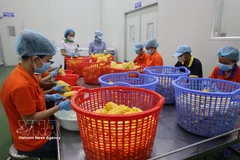
Pre-processing fruits for juice production at Wana Beverage JSC, Chau Duc Industrial Park, Ho Chi Minh City. (Photo: VNA)

Vietnam’s food sector urged to move up global value chains

Within Vietnam’s food industry, only a handful of firms, including Vinamilk and Masan Group, have achieved large-scale operations, while most businesses remain small. As a result, the highest value-added gains largely belong to companies that dominate branding and downstream markets.

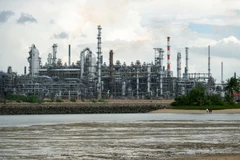
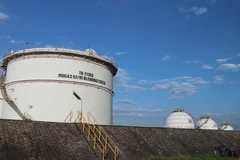
The Dung Quat refinery operates at 123.5% of its capacity, boosting domestic fuel supply. (Photo: VNA)

Dung Quat refinery operates above capacity in first quarter

The refinery produced 2.03 million tonnes of petrol products, achieving 105% of its management plan, while sales volume reached 2.02 million tonnes, equivalent to 113% of the target. As a result, key financial indicators, including revenue, profits and contributions to the state budget, all exceeded planned levels.

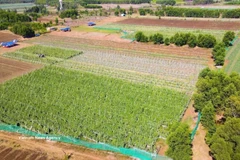
A VietGAP-oriented vegetable farming model adopted by farmers in An Phu commune, Quang Ngai province, has proven effective. (Photo: VNA)

Data, digitalisation key to unlocking sustainable growth in Vietnam’s agriculture

Close coordination among the State, businesses and farmers is also crucial. While the State provides regulatory frameworks, enterprises drive the market, and farmers supply data, effective incentives are needed to encourage farmers’ participation. When tangible benefits are clear, farmers will be more willing to adopt technology and engage in the digital ecosystem

Lao delegates attend the conference. (Photo: VNA)

Gia Lai, Lao provinces sign cooperation agreement

Gia Lai province signed a cooperation agreement for the 2026–2030 period with the four southern Lao provinces of Attapeu, Champasak, Salavan and Sekong at a conference held in the Vietnamese locality on March 29.

Finance Minister Nguyen Van Thang holds a working session with an HSBC delegation led by Group CEO Georges Elhedery on March 29, 2026. (Photo: Ministry of Finance)

Vietnam, HSBC accelerate push for credit upgrade and global capital inflows

At a recent meeting with an HSBC delegation led by Group CEO Georges Elhedery, Finance Minister Nguyen Van Thang highlighted the importance of an early credit upgrade to reinforce macroeconomic stability, reduce borrowing costs and strengthen investor confidence, while calling for continued technical support from the bank.

A representative of Denmark businesses speaks at the dialogue. (Photo published by VNA)

Vietnam, Denmark promote investment cooperation

Addressing the dialogue, Vietnamese Ambassador to Denmark Nguyen Le Thanh emphasised that Vietnam is intensifying comprehensive reforms to improve institutions and policies, enhance transparency and governance, and create a more stable and favourable business environment.

Permanent Deputy Prime Minister Nguyen Hoa Binh addresses the Vietnam–US Finance and Technology Dialogue. (Photo: VNA)

US firms eye expanding fintech investment in Vietnam

Addressing the Vietnam–US Finance and Technology Dialogue, themed “Technology and the future of global finance,” Permanent Deputy Prime Minister Nguyen Hoa Binh reaffirmed Vietnam’s commitment to a pro-investment environment, with breakthrough policies and stronger protections for foreign investors.

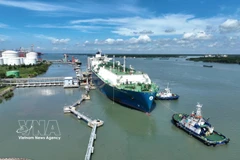
An LNG tanker docks at the Thi Vai LNG terminal in Ho Chi Minh City (Photo: VNA)

Solutions proposed to support firms amid Middle East conflict impacts

Top priority should be given to stabilising energy prices to ease input cost pressures and ensure supply stability – the most widely supported recommendation, chosen by 61.9% of surveyed firms. Businesses urged close monitoring of global fuel prices and supply risks, along with flexible measures to curb abnormal domestic price fluctuations and secure supplies of fuel and essential materials.

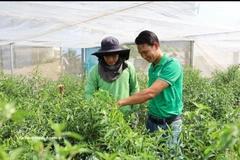
Nguyen Viet Tu (right) and a cooperative technician inspect a bird’s eye chilli field ready for harvest for export to European countries. (Photo: VNA)

Vietnamese herbs gain ground in European market

The Chau Pha Agricultural Production and Services Cooperative model is widely seen as an illustration of a new direction for Vietnam’s agriculture sector, one that combines clean production practices, modern management and proactive engagement with global markets.

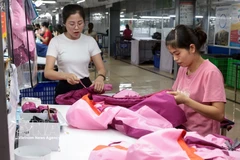
Garment production for export to the EU at the TNG company in Thai Nguyen province (Photo: VNA)

Businesses pivot strategies to sustain export growth momentum

Enterprises are shifting toward reasonably priced, easy-to-consume products such as tra fish, tilapia, canned items and surimi, instead of focusing mainly on high-end products like large-sized shrimp, which are facing weaker demand in some markets.