Culture forms driving force for capital’s development in new era

From community art spaces to large-scale international events, and from policy direction to concrete action, the capital is shaping a vibrant cultural industries ecosystem. This effort is helping to define the image of a creative, globally integrated, and sustainable city in the new era.

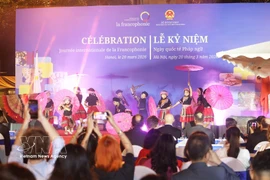
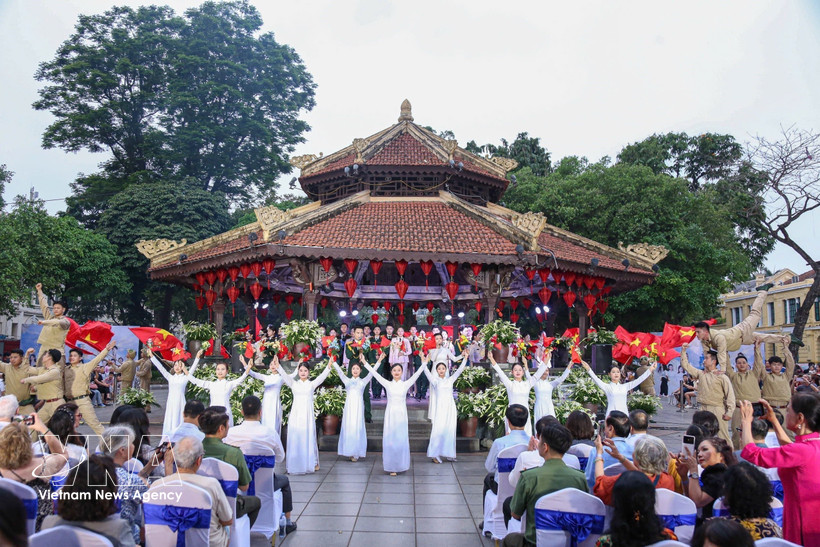
At a live concert at the octagonal pavilion, within the pedestrian zone around Hanoi's Hoan Kiem Lake, bringing together renowned performers and more than 100 artists. (Photo: VNA)

Hanoi (VNA) – As Hanoi continues its trajectory of growth, culture is steadily asserting its role as a spiritual foundation, an intrinsic resource, and a key driver of economic development.

From community art spaces to large-scale international events, and from policy direction to concrete action, the capital is shaping a vibrant cultural industries ecosystem. This effort is helping to define the image of a creative, globally integrated, and sustainable city in the new era.

Creative spaces usher in new cultural life

Guided by the Politburo’s Resolution No. 80-NQ/TW issued on January 7 by on the development of Vietnamese culture, alongside an action programme serving the resolution implementation introduced by the Standing Board of the municipal Party Committee on March 17, culture has been placed at the heart of both the capital’s and the nation’s development strategy.

No longer confined to preservation, it is increasingly being mobilised as an intrinsic resource, gradually transformed into tangible products, services, and economic value.

A clear illustration of this shift is the expansion of art into public spaces. A weekend music programme at the octagonal pavilion, within the pedestrian zone around Hoan Kiem Lake, has become a regular cultural fixture. Featuring high-quality performances every Sunday afternoon, it is attracting both residents and visitors alike.

According to Tan Minh, Director of the Thang Long Song and Dance Theatre, the programme was launched under the city’s directive to develop cultural and artistic activities in the lake area. Maintaining weekly performances helps embed art into everyday life while creating a cultural highlight in the capital’s central space.

Building on this momentum, Hanoi has also recently hosted a live concert at the same venue, bringing together renowned performers and more than 100 artists.

Beyond community events, the city is expanding into a broader creative ecosystem. The Hanoi Creative Design Festival 2026, themed “creative economy”, marks a significant step in shaping the cultural industries sector. By connecting fields such as design, technology, education, and start-ups, the festival creates a multidimensional interactive space that draws in the creative community and young people.

UNESCO Representative to Vietnam Jonathan Baker praised Hanoi’s proactive approach in launching the festival early and sustaining activities throughout the year. He described this as evidence of its strong commitment as a creative city, helping to unlock creative resources and gradually convert them into economic value, thereby laying the groundwork for sustainable development.

At the same time, Hanoi is increasingly reinforcing its position as a destination for international cultural exchange. The Cultures of the World Festival in the capital last October, with participation from 48 countries, created a vibrant and diverse tapestry of cultural interaction.

Cultural industries – a spearhead for economic growth


In the current context, cultural industries are viewed as a strategic pathway for culture to make a more visible contribution to economic growth.

Associate Professor Dr Bui Hoai Son, a standing member of the National Assembly’s Committee for Cultural and Social Affairs and a Hanoi deputy, believes the capital holds significant advantages to become a leading force in the development of such industries. However, he cautioned against the dispersion of resources, advocating instead for a focused approach on key sectors with strong spillover potential.
bui-hoai-son.jpg
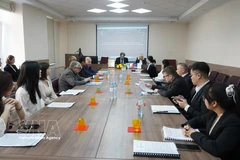
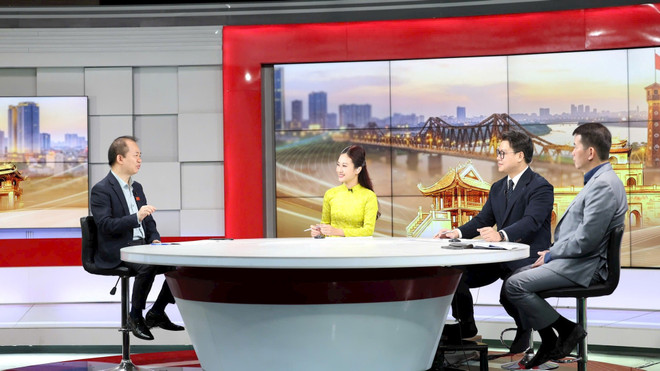
Associate Professor Dr Bui Hoai Son (far left), a standing member of the National Assembly’s Committee for Cultural and Social Affairs, and Pham Tuan Long (far right), Director of the Hanoi Department of Culture and Sports, discuss the potential and future direction of the capital’s cultural development in the new era. (Photo: hanoimoi.vn)

According to Son, every street, heritage site, and symbol of Hanoi carries stories of considerable value. The city’s cuisine is also a notable strength. Events like international film festivals help connect Hanoi with the global creative industry while generating positive spillover effects across other economic sectors. In fashion, the city has already established a foundation through international events and growing design capabilities.

Meanwhile, emerging industries such as software, gaming, and creative products derived from traditional craft villages are opening up new opportunities. When combined with technology and innovative thinking, these sectors can produce high-value cultural products.

He stressed that effectively leveraging these unique advantages would enable Hanoi to maximise its cultural resources. In doing so, cultural industries would not only represent a field of development but also become a key driver of sustainable economic growth.

From a governance perspective, Pham Tuan Long, Director of the municipal Department of Culture and Sports, said the presence of leading management and research institutions offers a further advantage. This facilitates stronger links between research and practice, allowing policies and research outcomes to be swiftly implemented with tangible results.

He underscored that the March 17 action programme represents an important step in clearly defining Hanoi’s role and responsibilities in cultural development, supported by coordinated efforts across the entire political system.

Long added that when cultural values are translated into concrete products within the cultural industries through modern and accessible storytelling, culture can move beyond latent potential to become a genuine and powerful resource for development./.
VNA

See more

From left: Party General Secretary and State President To Lam (3rd) and visiting Slovak Prime Minister Robert Fico (2nd) enjoy the Vietnam–Slovakia friendship concert at the Ho Guom Opera in Hanoi on the evening of April 13. (Photo: VNA)

Vietnamese, Slovak leaders attend friendship concert in Hanoi

In the near future, further artistic exchanges between Vietnam and Slovakia are anticipated, with Slovak orchestras and ensembles expected to perform in Vietnam, while Vietnamese artists will have opportunities to showcase their talents in Slovakia, thereby deepening bilateral cultural cooperation and people-to-people ties.

Party General Secretary and State President To Lam (R) and Slovak Prime Minister Robert Fico (Photo: VNA)

Top leader hosts Slovak Prime Minister

Slovakia always considers Vietnam the most important partner in Southeast Asia and one of its top three partners in Asia. The elevation of bilateral ties to a Strategic Partnership and the signing of multiple cooperation agreements between ministries, agencies and businesses would provide fresh momentum for collaboration.

Party General Secretary and State President To Lam (R) and Viktor Zolotov, Director of the Federal National Guard Service of Russia in Hanoi on April 13. (Photo: VNA)

Top leader receives head of Russia’s Federal National Guard Service

Vietnam attaches great importance to its traditional friendship and comprehensive strategic partnership with Russia, expressing satisfaction at the regular exchanges and contacts maintained between agencies of both countries at various levels, contributing to strengthened bilateral ties.

Head of the Party Central Committee’s Organisation Commission Nguyen Duy Ngoc presents the appointment decision to Sen. Lieut. Gen. Le Duc Thai (Photo: VNA)

Le Duc Thai named Secretary of Thanh Hoa provincial Party Committee

New Secretary of the Thanh Hoa provincial Party Committee Le Duc Thai pledged to lead by example, uphold unity and creativity, seize opportunities and overcome challenges to successfully achieve the goals set out in the resolution of the provincial Party Congress for the 2025–2030 term, contributing to the nationwide rollout of the 14th National Party Congress’s resolution.

At the phone talks between Party General Secretary and State President To Lam and LDP President and Prime Minister of Japan Takaichi Sanae (Photo: VNA)

Top leader holds phone talks with Japanese PM

Japanese Prime Minister Takaichi Sanae spoke highly of Vietnam’s role and position in the regionc, calling it a key partner to advance Japan’s Free and Open Indo-Pacific Vision. Japan greatly values Vietnam’s policy of independence and self-reliance and supports its development goals in a new era.

Party General Secretary and State President To Lam speaks at the conference (Photo; VNA)

Top leader chairs conference announcing personnel appointments

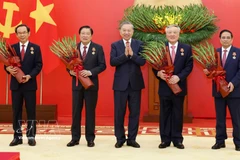
Party General Secretary and State President To Lam demanded the appointed officials' absolute loyalty to the Party’s goals and ideals, firm political mettle, and strict compliance with organisational discipline. He instructed them to lead by example, match words with action, and put the interests of the nation, Party and people above all else.

Vietnamese Deputy Minister of Finance Tran Quoc Phuong (Photo: VNA)

Vietnam takes part in ASEAN Finance Ministers' meeting

Vietnam reaffirmed its development strategy for 2021–2025 and 2026, based on three pillars - institutional reform, infrastructure development, and human resources, with infrastructure as a top priority to drive new growth.

Wei Tao, Deputy Secretary of the Party Committee and Chairman of the Guangxi Zhuang Autonomous Region, talks to Vietnam News Agency correspondent. (Photo: VNA)

Guangxi eyes boundless cooperation with Vietnam

Vietnam has remained Guangxi’s largest trading partner for 27 consecutive years. In 2025, bilateral trade exceeded 300 billion CNY (43.4 billion USD) for the first time, ranking third among China’s provincial-level localities.

Politburo member, Secretary of the Party Central Committee and Chairman of its Commission for Internal Affairs Le Minh Tri speaks at the conference. (Photo: VNA)

Party steps up anti-corruption drive in new phase

Anti-corruption efforts have achieved significant and breakthrough results, contributing to the Party and political system building, political stability, socio-economic development and stronger public trust in the Party, the State and the regime.