Completing institutional framework urgent to preserve, promote ethnic culture: Experts

Politburo Resolution No. 80-NQ/TW dated January 7, 2026 on developing Vietnamese culture affirms that culture stands on par with politics, economy, and society, serving as a foundation, an endogenous resource, and a key driver of national development.

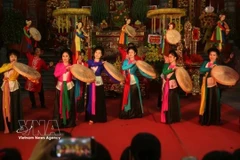
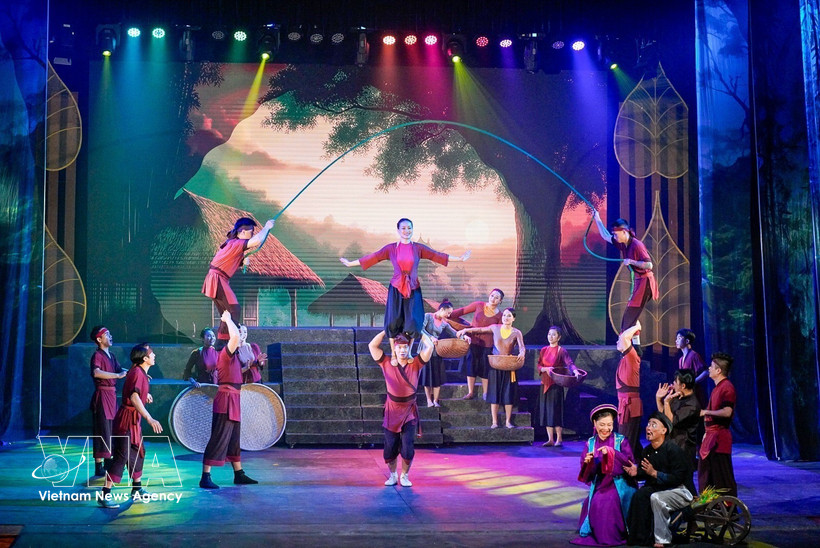
The circus-traditional Vietnamese opera performance "Tran Nhan Tong" combines various art forms (Illustrative image. (Source: VNA)

Hanoi (VNA) - Deepening international integration and rapid advances in science and technology are directly affecting efforts to preserve and promote the traditional cultural values of ethnic minority groups, highlighting the need for a coherent and effective legal framework to improve governance in the ethnic culture sector.

Politburo Resolution No. 80-NQ/TW dated January 7, 2026 on developing Vietnamese culture affirms that culture stands on par with politics, economy, and society, serving as a foundation, an endogenous resource, and a key driver of national development.

The Party and State have consistently identified the preservation and promotion of ethnic cultural values as a strategic task. Despite numerous policies, the sector has yet to be fully institutionalised through specialised laws or decrees. Amid rapid urbanisation and socio-economic development, many traditional values, particularly in ethnic minority areas, face the risk of erosion, making institutional reform an urgent requirement.

Experts note that Vietnam holds advantages as a member of and signatory to major conventions of the United Nations Educational, Scientific and Cultural Organization (UNESCO), including the 1972 Convention concerning the Protection of the World Cultural and Natural Heritage, the 2003 Convention for the Safeguarding of Intangible Cultural Heritage, and the 2005 Convention on the Protection and Promotion of the Diversity of Cultural Expressions.

However, the application of these legal foundations remains uneven and limited in effectiveness. Bui Quang Thanh of the Vietnam National Institute of Culture, Arts, Sports and Tourism observed that from Decree No. 65 issued on November 23, 1945 by the Provisional Government on heritage preservation to subsequent Party and State policies, legal instruments have contributed to safeguarding cultural heritage, though gaps remain.

Viewing culture as both an asset and a source of national strength, Hoang Anh Tuan, Rector of the University of Social Sciences and Humanities under Vietnam National University, Hanoi, said the legal framework supporting ethnic cultural management remains insufficient, affecting the efficiency of preservation and promotion efforts.

Recent years have recorded encouraging results through programmes such as Politburo Resolution No. 08-NQ/TW dated January 16, 2017 on developing tourism into a spearhead economic sector and Project 6 under the National Target Programme for socio-economic development in ethnic minority-inhabited and mountainous areas. These initiatives have helped localities maintain and promote cultural identities.

Nevertheless, in the new development phase, transforming ethnic cultural values into drivers of socio-economic growth and sustainable livelihoods requires specialised and unified mechanisms. The lack of dedicated legal regulations has hindered governance and limited the mobilisation of resources through public–private partnerships, while also affecting the design of tax incentives and financial support policies for cultural preservation.

According to Trinh Ngoc Chung, Director of the Department of Ethnic Cultures under the Ministry of Culture, Sports and Tourism, the ethnic culture sector currently lacks a standalone law. Establishing a specialised legal mechanism is therefore essential not only for improving management but also for preserving traditional values and promoting local development.

Institutional reform must balance preservation with development, linking culture with tourism and economic activities while fostering a healthy cultural environment within communities.

This requirement aligns with the Government’s action programme to implement Resolution No. 80-NQ/TW, which emphasises reviewing and completing legal frameworks in areas still governed by sub-law documents or not yet fully institutionalised, including ethnic culture, grassroots cultural activities, public communication, and cultural management in the digital environment.

In practice, developing a law or decree on ethnic cultural affairs is considered necessary to enhance state management effectiveness and promote culture as an endogenous resource, ensuring sustainable development while preserving Vietnam’s cultural identity amid deeper international integration./.
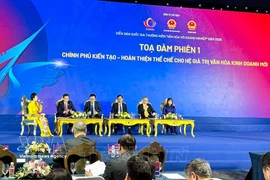
VNA

See more

Vietnamese cultural values preserved, promoted in digital age

Vietnamese cultural values preserved, promoted in digital age

Throughout the development journey of any nation, culture always forms the spiritual bedrock of society. A strong cultural foundation enables not only economic progress but also the preservation of identity, moral standards, and long-term social stability.

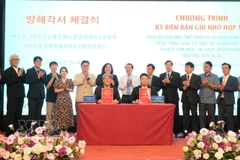
At the signing ceremony (Photo: VNA)

Bac Ninh, RoK’s Jeonbuk boost cultural, tourism cooperation

Both Bac Ninh and Jeonbuk boast rich and distinctive cultural heritage. Jeonbuk is known for Pansori, a traditional Korean vocal art, and Hanji paper, which is being nominated for UNESCO recognition. Meanwhile, Bac Ninh is home to Quan Ho folk singing and the Dong Ho folk painting tradition. These shared strengths provide a solid foundation for the two sides to jointly develop cultural tourism products and promote artistic exchanges, according to Deputy Director of the Department of Culture, Sports and Tourism of Bac Ninh Do Tuan Khoa.

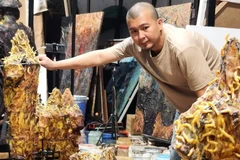
Artist Le Huu Hieu (Photo: https://www.sggp.org.vn/)

Vietnam to make debut at Venice Art Biennale

Vietnam will, for the first time, participate in the Venice Art Biennale in Italy with an independent art project and dedicated exhibition space, marking a significant step forward for the country’s fine arts and its integration into the global art scene.

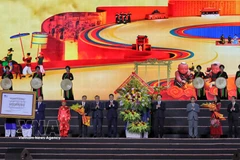
Politburo member, Secretary of the Party Central Committee and Chairman of its Commission for Inspection Tran Sy Thanh; and Deputy Prime Minister Mai Van Chinh congratulate Bac Ninh province. (Photo: VNA)

Ceremony marks UNESCO recognition of Dong Ho prints, Yen Tu complex

Bac Ninh–Kinh Bac is a land rich in historical depth and cultural heritage. Over centuries, it has nurtured a diverse cultural legacy integral to Vietnam’s identity. While Quan ho (love duet) folk singing symbolises the soul of the region, Dong Ho folk folk woodblock printings stands as a unique artistic heritage reflecting Vietnamese creativity and aesthetics.

The Vietnam Sports Economy Summit 2026 (VSES 2026) opens in Hanoi on March 27. (Photo: VNA)

Vietnam Sports Economy Summit 2026 explores pathways to new sector

For years, sports in Vietnam has been viewed mainly through the lens of elite performance and mass participation. However, global trends show that sports has evolved into a large-scale economic sector linked with media, tourism, sponsorship, event organisation, technology and consumer markets.

Young participants from India, Indonesia and Russia learn about the traditional pot-breaking game. (Photo: VNA)

Vietnamese culture showcased in colourful festival in Russia

Although the Vietnamese student community in Tomsk numbers only about 60 members, the event offered a rich and comprehensive cultural experience, demonstrating strong unity and pride in national identity. Beyond celebrating heritage, the festival served as a cultural bridge connecting Vietnam with international friends in Western Siberia.

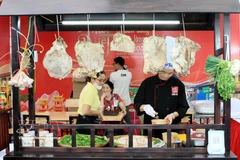
The Con Dao delicacies booth draws strong interest from visitors. (Photo: VNA)

Vietnamese cuisine takes centre stage in global culinary showcase

Running from March 26 to 29, the event also highlights a series of key activities, including the honouring of 10 chefs behind signature regional dishes, recognition of 10 standout mixologists, and a Top 10 contest for the most dynamic and creatively designed booths.

Hue to offer immersive night tour of imperial heritage

Hue to offer immersive night tour of imperial heritage

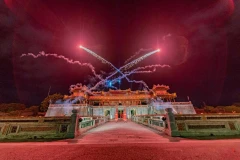
Elaborately staged, the programme vividly recreates the royal court at night through a series of artistic performances and immersive experiences. It opens with a guard-changing ceremony at Ngo Mon (Noon Gate), combined with cannon-fire effects to mark the opening of the palace.

The dribble and clinical finish by Hai Long to score. (Photo: VNA)

Vietnam beat Bangladesh 3-0 in international friendly match

The hosts came out on the front foot, pressing high and pinning Bangladesh deep in their own half from the opening whistle. The breakthrough arrived in the eighth minute when Tien Anh whipped in a corner and Tuan Hai finished from a close range to open the scoring.

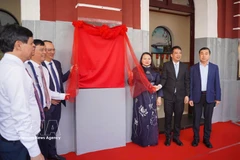
Delegates perform the ceremony to officially declare Hue Railway Station a tourist destination (Photo: VNA)

Heritage values maximised on central train journey

The Hue–Da Nang route is positioned not merely as transportation but as a cultural journey along one of central Vietnam’s most scenic corridors. With comprehensive upgrades, the “Central Heritage Connection Journey” is expected to become a must-experience tourism product in 2026.

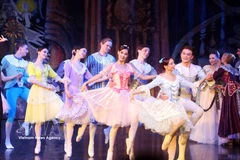
The artists perform the ballet "The Nutcracker" at Ho Guom Opera House on March 25 (Photo: VNA)

Russian classic ballet enchants Hanoi audiences

From the opening scenes, the auditorium was transformed into a fairytale world, enhanced by elaborate staging and the timeless music of Pyotr Ilyich Tchaikovsky, including “Dance of the Sugar Plum Fairy” and “Waltz of the Flowers”. Technically demanding sequences such as leaps and pas de deux captivated the audience with their precision, harmony and expressive coordination.