Pho’s journey from Van Cu village toward global cultural recognition

The story of Pho Co traces back to Van Cu village in Nam Dong commune, Ninh Binh province, considered the cradle of Vietnam’s pho-making craft.

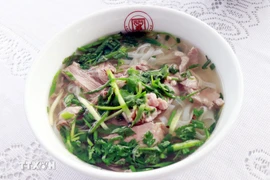
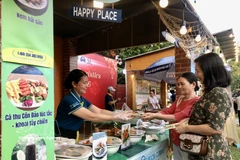
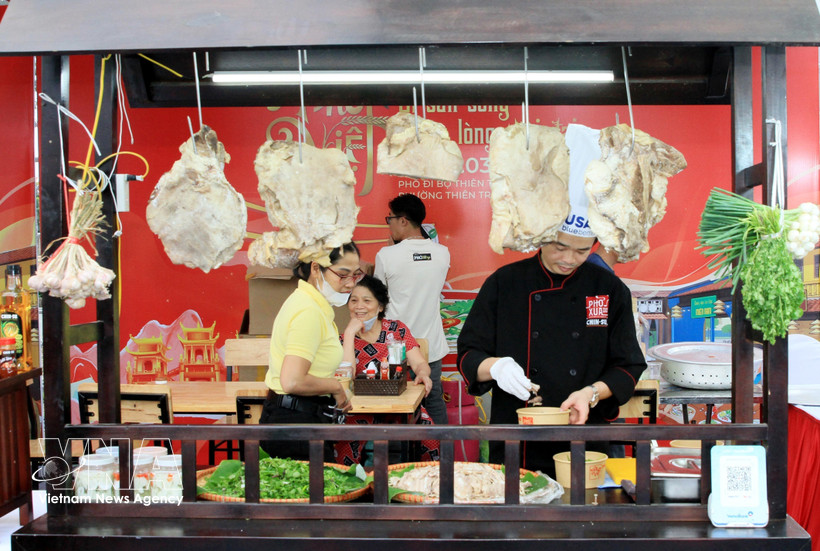
The Pho Xua booth (Nam Dinh ward – Ninh Binh) at the Pho Festival 2026. (Photo: VNA)

Ninh Binh (VNA) – Recognised as a national intangible cultural heritage, the folk knowledge surrounding Nam Dinh Pho (Vietnamese rice noodle soup) is being preserved not only to safeguard a traditional culinary practice but also to protect a living cultural legacy with pho as a cultural driver of sustainable economic and tourism development.

Van Cu – birthplace of the pho tradition

The story of Pho Co traces back to Van Cu village in Nam Dong commune, Ninh Binh province, considered the cradle of Vietnam’s pho-making craft. For generations, villagers have dedicated themselves to preserving and passing down the culinary techniques that shaped the country’s most iconic dish.

Historically renowned for producing traditional rice vermicelli and noodle sheets, Van Cu adapted its craft during rainy seasons when noodles could not be sun-dried. Fresh sheets were sliced into thin strands, forming an early version of pho, initially served with crab-based broth before evolving into the bone-broth soup recognised today.

In the early 20th century, alongside the construction of French-era industrial works in Nam Dinh and Hanoi, street vendors refined the dish further by introducing beef broth. Diners later coined the name Pho Co, referring to pho prepared by cooks from the Co family.

Co Huu Kien, a veteran artisan in his nineties and the village’s most experienced pho noodle maker, recalled that traditional pho noodles were crafted from rice soaked in clean water, ground with stone mills, hand-steamed and manually cut, creating the distinctive softness, elasticity and chewiness associated with Van Cu Pho.

Equally important are the village’s closely guarded broth-making techniques, refined over generations. Using beef and pork bones, cooks developed methods to remove unwanted odours while enhancing the broth’s natural sweetness, complemented by herbs and vegetables to achieve a clear yet rich flavour.

According to Co Van, a septuagenarian who has cooked pho since the age of 17, seasoned diners can easily recognise Van Cu pho because its preparation relies on accumulated experience rather than fixed formulas. Careful ingredient selection and inherited family secrets produce a taste deeply rooted in the cultural identity of the former Nam Dinh region, now part of Ninh Binh province.

Since the 1980s, the pho trade has expanded significantly, with families preserving the craft as both a livelihood and a shared cultural heritage. Villagers have carried the profession across Vietnam and abroad.

Today, Van Cu natives operate more than 130 pho restaurants and 30 noodle production facilities nationwide. Two artisans, Vu Ngoc Vuong and Co Nhu Doi, have been honoured by the Vietnam Culinary Culture Association for their contributions to preserving the craft.

A living heritage in modern times

Established in 2022, the Van Cu Pho Association serves as a common platform connecting practitioners and safeguarding traditional values. Bringing together around 50 members nationwide, the association facilitates professional exchanges, promotes authentic flavours, participates in culinary events, and encourages younger generations to continue the trade.

To connect cultural preservation with tourism growth, Nam Dong commune has backed efforts to celebrate the pho craft, boosting brand identity, building tourism links, and raising awareness about food safety.

Nguyen Van Sinh, Chairman of the Nam Dong commune People’s Committee, said local authorities have worked closely with experts, artisans and the pho-making community to compile documentation supporting Vietnam’s nomination of pho for UNESCO recognition. The commune is also studying plans for an 8.6-hectare development area near Van Cu communal house, combining craft preservation with experiential tourism to enhance the value and visibility of both Van Cu pho and Vietnamese pho as a whole.

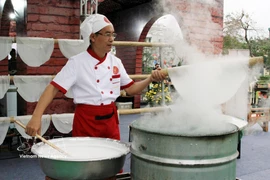
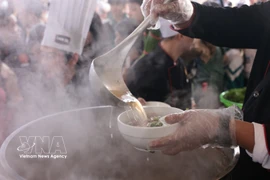
From March 19–22, the Pho Festival 2026 was held at Thien Truong pedestrian street in Thien Truong ward, Ninh Binh province, gathering around 50 booths representing leading pho brands nationwide and recreating the evolution of Vietnamese pho. The event offered visitors an opportunity to experience regional variations while promoting research and standardisation efforts aimed at completing a future UNESCO nomination dossier./.
VNA

See more

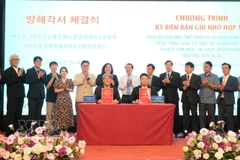
At the signing ceremony (Photo: VNA)

Bac Ninh, RoK’s Jeonbuk boost cultural, tourism cooperation

Both Bac Ninh and Jeonbuk boast rich and distinctive cultural heritage. Jeonbuk is known for Pansori, a traditional Korean vocal art, and Hanji paper, which is being nominated for UNESCO recognition. Meanwhile, Bac Ninh is home to Quan Ho folk singing and the Dong Ho folk painting tradition. These shared strengths provide a solid foundation for the two sides to jointly develop cultural tourism products and promote artistic exchanges, according to Deputy Director of the Department of Culture, Sports and Tourism of Bac Ninh Do Tuan Khoa.

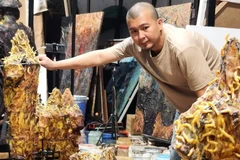
Artist Le Huu Hieu (Photo: https://www.sggp.org.vn/)

Vietnam to make debut at Venice Art Biennale

Vietnam will, for the first time, participate in the Venice Art Biennale in Italy with an independent art project and dedicated exhibition space, marking a significant step forward for the country’s fine arts and its integration into the global art scene.

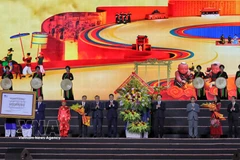
Politburo member, Secretary of the Party Central Committee and Chairman of its Commission for Inspection Tran Sy Thanh; and Deputy Prime Minister Mai Van Chinh congratulate Bac Ninh province. (Photo: VNA)

Ceremony marks UNESCO recognition of Dong Ho prints, Yen Tu complex

Bac Ninh–Kinh Bac is a land rich in historical depth and cultural heritage. Over centuries, it has nurtured a diverse cultural legacy integral to Vietnam’s identity. While Quan ho (love duet) folk singing symbolises the soul of the region, Dong Ho folk folk woodblock printings stands as a unique artistic heritage reflecting Vietnamese creativity and aesthetics.

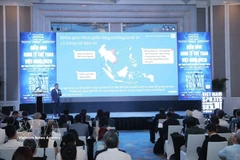
The Vietnam Sports Economy Summit 2026 (VSES 2026) opens in Hanoi on March 27. (Photo: VNA)

Vietnam Sports Economy Summit 2026 explores pathways to new sector

For years, sports in Vietnam has been viewed mainly through the lens of elite performance and mass participation. However, global trends show that sports has evolved into a large-scale economic sector linked with media, tourism, sponsorship, event organisation, technology and consumer markets.

Young participants from India, Indonesia and Russia learn about the traditional pot-breaking game. (Photo: VNA)

Vietnamese culture showcased in colourful festival in Russia

Although the Vietnamese student community in Tomsk numbers only about 60 members, the event offered a rich and comprehensive cultural experience, demonstrating strong unity and pride in national identity. Beyond celebrating heritage, the festival served as a cultural bridge connecting Vietnam with international friends in Western Siberia.

The Con Dao delicacies booth draws strong interest from visitors. (Photo: VNA)

Vietnamese cuisine takes centre stage in global culinary showcase

Running from March 26 to 29, the event also highlights a series of key activities, including the honouring of 10 chefs behind signature regional dishes, recognition of 10 standout mixologists, and a Top 10 contest for the most dynamic and creatively designed booths.

Hue to offer immersive night tour of imperial heritage

Hue to offer immersive night tour of imperial heritage

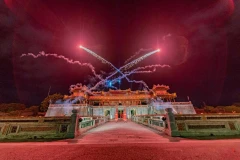
Elaborately staged, the programme vividly recreates the royal court at night through a series of artistic performances and immersive experiences. It opens with a guard-changing ceremony at Ngo Mon (Noon Gate), combined with cannon-fire effects to mark the opening of the palace.

The dribble and clinical finish by Hai Long to score. (Photo: VNA)

Vietnam beat Bangladesh 3-0 in international friendly match

The hosts came out on the front foot, pressing high and pinning Bangladesh deep in their own half from the opening whistle. The breakthrough arrived in the eighth minute when Tien Anh whipped in a corner and Tuan Hai finished from a close range to open the scoring.

Delegates perform the ceremony to officially declare Hue Railway Station a tourist destination (Photo: VNA)

Heritage values maximised on central train journey

The Hue–Da Nang route is positioned not merely as transportation but as a cultural journey along one of central Vietnam’s most scenic corridors. With comprehensive upgrades, the “Central Heritage Connection Journey” is expected to become a must-experience tourism product in 2026.

The artists perform the ballet "The Nutcracker" at Ho Guom Opera House on March 25 (Photo: VNA)

Russian classic ballet enchants Hanoi audiences

From the opening scenes, the auditorium was transformed into a fairytale world, enhanced by elaborate staging and the timeless music of Pyotr Ilyich Tchaikovsky, including “Dance of the Sugar Plum Fairy” and “Waltz of the Flowers”. Technically demanding sequences such as leaps and pas de deux captivated the audience with their precision, harmony and expressive coordination.