Breakthroughs in Resolution 57 implementation need to be measured by results

With synchronised direction and unified implementation, ministries, sectors and localities are translating the Resolution into concrete institutions, mobilised resources and measurable outcomes.

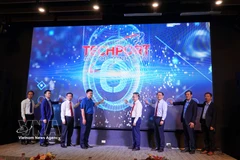
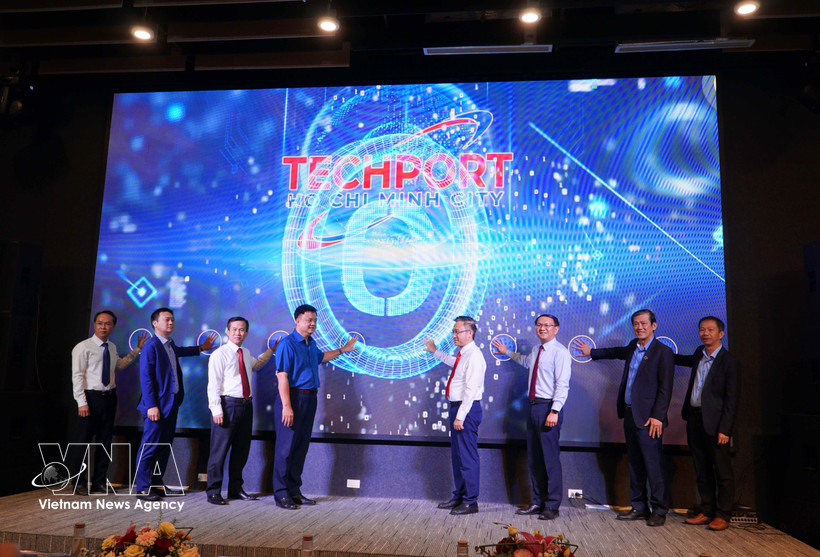
Ho Chi Minh City’s Technology Exchange (Techport) launched (Photo: VNA)

Hanoi (VNA) - More than a year after its rollout, the Politburo’s Resolution No. 57-NQ/TW on breakthroughs in science and technology development, innovation and national digital transformation has emerged as a strategic declaration charting a new development pathway for Vietnam.

With synchronised direction and unified implementation, ministries, sectors and localities are translating the Resolution into concrete institutions, mobilised resources and measurable outcomes.

Tailored groundbreaking mechanisms

As science, technology and innovation become key drivers of economic growth, building effective linkages between technology supply and enterprise demand has become imperative. Many localities have introduced context-specific mechanisms to accelerate technology transfer and application in production and business.

Ho Chi Minh City’s Technology Exchange in a new phase has been redesigned to bring technologies closer to production. The platform has shifted from information provision to transaction facilitation, from broad connections to targeted matching, and from general support to full-cycle support. Each enterprise’s technology demand is tracked, advised and supported until tangible results are achieved.

This transformation marks a significant step in strengthening intermediary infrastructure for the city’s science and technology market, promoting commercialisation of research outcomes and fostering an innovation ecosystem.

Aiming to turn Ho Chi Minh City into a hub for science, technology and innovation in Southeast Asia, the municipal People’s Committee has approved a scheme to develop internationally accredited Centres of Excellence (CoE). The Institute of Nano Materials and Molecular Structure (INOMAR) under Vietnam National University - Ho Chi Minh City was the first to join the scheme in June 2025, with funding of 85 billion VND (3.2 million USD). It has since merged with the Institute of Nanotechnology to form the Advanced Materials Technology Institute, operating under a university–research linkage model to support advanced research in new materials and nanotechnology.

Last October, the Research and Development Centre at the Saigon Hi-Tech Park was also approved to join the scheme, receiving nearly 96 billion VND to develop into a CoE in green transition and digital transformation. The centre focuses on highly applicable research serving enterprises and the market, including semiconductors, biotechnology, materials science and precision engineering–automation.

Meanwhile, Ca Mau province is promoting its strengths in the marine economy, agriculture, aquaculture and eco-tourism by fostering a robust startup ecosystem. Vice Chairman of the provincial People’s Committee Nguyen Minh Luan pledged to improve a transparent, enabling policy environment, reduce administrative barriers and encourage innovation with controlled risks.

The province is investing in a comprehensive startup support system, with its Innovation and Startup Centre acting as a hub to connect entrepreneurs with experts and investors, supporting projects from ideation to incubation, acceleration and commercialisation.

Promoting facilitating administration

An Giang province is advancing digital governance by encouraging public officials to propose initiatives, improve procedures and enhance service delivery. Its “One agency, one initiative” campaign for 2026 requires each department and local authorities to register at least one initiative with clear objectives, measurable outputs and compliance with legal regulations. Each solution must include at least two measurable indicators and before-and-after data to ensure substantive impact.

Similarly, Can Tho city has launched a comprehensive plan for implementing breakthroughs in science and technology development, innovation and digital transformation in 2026. The plan emphasises full digital transformation across three pillars—digital administration, digital economy and digital society with citizens and businesses at the centre. The city aims for 100% of business-related administrative procedures to be fully conducted online, over 80% of administrative transactions to be contactless, and complete digitisation of administrative records.

Can Tho targets digital economy to account for at least 14.5% of its GRDP, while promoting e-commerce, e-contracts and cashless payments to reach 80%. In the field of digital society, it aims for 95% of adults to have bank accounts and electronic health records, and for all general education schools to adopt digital management platforms and electronic transcripts.

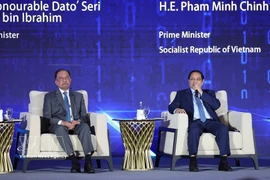
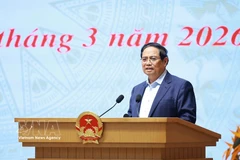
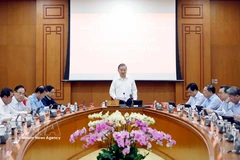
Chairing the Government’s second meeting in 2026 on science, technology, innovation and digital transformation, Prime Minister Pham Minh Chinh stressed the need to identify the right tasks, assign the right people, ensure regular supervision, measure accurately, promptly address bottlenecks, and deliver tangible, effective results. With the Government's strong direction and coordinated implementation, these sectors are set to remain key breakthroughs, forming a pillar for Vietnam’s advancement in the digital era./.

VNA

See more

By 2030, Vietnam targets ranking among the world’s top 15 countries in the Global Cybersecurity Index (Source: baochinhphu.vn)

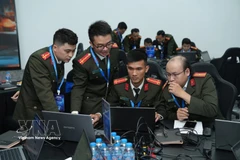
Project aims to enhance capacity of national cybersecurity protection force

The project aims to strengthen overall capabilities and develop an elite and modern cybersecurity force able to proactively prevent and effectively respond to all cyber risks and threats, safeguarding national security, social order and safety, and the rights and lawful interests of organisations and individuals in cyberspace.

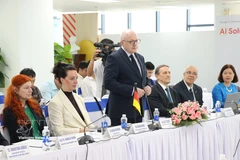
Delegates at the meeting (Photo: VNA)

Da Nang boosts hi-tech partnership with Germany’s Chemnitz City

Authorities in Da Nang hope Chemnitz and German partners will continue to accompany and support the city in accessing advanced technologies, connecting experts, integrating into innovation ecosystems, and attracting high-tech enterprises and supporting industries to explore investment and long-term cooperation opportunities.

Prime Minister Pham Minh Chinh speaks at the meeting of the Government’s Steering Committee for science and technology, innovation, digital transformation, and Project 06 (Photo: VNA)

Strategic tech must address practical challenges: PM

Prime Minister Pham Minh Chinh called for the rollout of a strategic technology development programme, alongside the completion of incentive policies to attract tech giants and develop key tech products, particularly in semiconductors and AI.

Experience virtual reality technology at Nha Trang Center shopping mall (Khanh Hoa). (Photo: VNA)

Experts give ideas to build AI economy from data

Vietnam’s economic growth over past decades has largely relied on labour expansion, capital accumulation, export promotion and deep global trade integration, but as the country enters a higher development stage, this model is showing limitations.

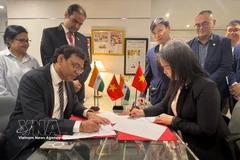
VINASA Vice Chairwoman and Secretary General Nguyen Thi Thu Giang (right) and SEPC General Director Abhay Sinha sign the MoU on cooperation in New Delhi on March 25. (Photo: VNA)

Vietnam, India ink deal to step up IT cooperation

Under the terms of the MoU, the two sides will jointly push trade and investment in IT and services, arrange business delegations and business-to-business meetings, share market and policy information, and help companies access partnership opportunities and expand into new markets.

The Ninh Thuan 1 Nuclear Power Plant project is planned to be built in Khanh Hoa province (Photo: VNA)

Vietnam approves atomic energy development strategy, targeting civil applications

Tran Chi Thanh, Director of the Vietnam Atomic Energy Institute under the Ministry of Science and Technology, underscored that in the coming period, the institute and its affiliated units will continue promoting their strengths to promote the safe and secure application of atomic energy, contributing effectively to socio-economic development goals.

Students at FPT Ha Nam Inter-level High School practice their lessons directly by applying digital technology software (Photo: VNA)

FPT joins top 35 global AI application development service providers

The recognition reflects FPT’s end-to-end AI capabilities, spanning strategic consulting, solution design, application development, and the integration and deployment of AI systems in real-world operations. Notably, the company has developed IvyHub, an integrated agentic AI platform that enables enterprises to design, deploy and manage AI agents at scale.

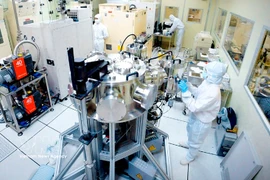
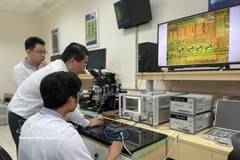
The High-Frequency Systems and Microchip Laboratory at Ho Chi Minh City University of Technology, Vietnam National University, Ho Chi Minh City. (Photo: VNA)

Ho Chi Minh City sets sights on becoming semiconductor hub

A central component of the plan is expanding cooperation with global technology leaders such as AMD, NVIDIA and Qualcomm. These partnerships are expected to support technology transfer, strengthen chip design capabilities and help the city move further up global semiconductor value chains.

Delegates at the launch of the new version of Ho Chi Minh City technology exchange platform. (Photo: VNA)

Ho Chi Minh City launches upgraded technology exchange platform

The upgraded platform represents a comprehensive shift from a simple information-sharing model to a managed online technology trading system, enabling monitoring and measurement of real transaction outcomes. It is built on three pillars, namely new tradable technology products, a modern digital platform, and an improved operational model.

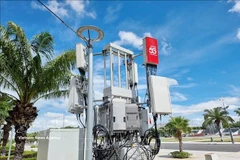
A Viettel 5G base station provides coverage at the April 16 Square area in Dong Hai ward, Khanh Hoa province. (Photo: VNA)

Conquering 6G networks helps Vietnamese businesses master strategic technologies

The global 6G alliance marks not only a technological milestone but also an opportunity for Vietnamese enterprises to strengthen their position on the global technology landscape. With the involvement of FPT, Viettel and VNG, Vietnam is gradually emerging as an early mover in the development and application of 6G technology.

At the Online Product Safety Summit in Hanoi on March 18. (Photo: dms.gov.vn)

Hanoi summit advances operation of ASEAN product safety portal

The Online Product Safety Summit in Hanoi on March 18 focused on practical enforcement solutions for identifying and removing non-compliant goods from online marketplaces, thereby strengthening consumer protection amid the rapid growth of e-commerce.

Illustrative image (Photo: VNA)

Resolution 57 charts directions for Vietnam’s technology ecosystem

Vietnam's sci-tech sector must evolve from a manufacturing base toward mastering technologies and ultimately developing original products independently, which requires shifting away from outsourcing and assembly models to one where domestic scientists lead in design, development and ownership of core technologies.