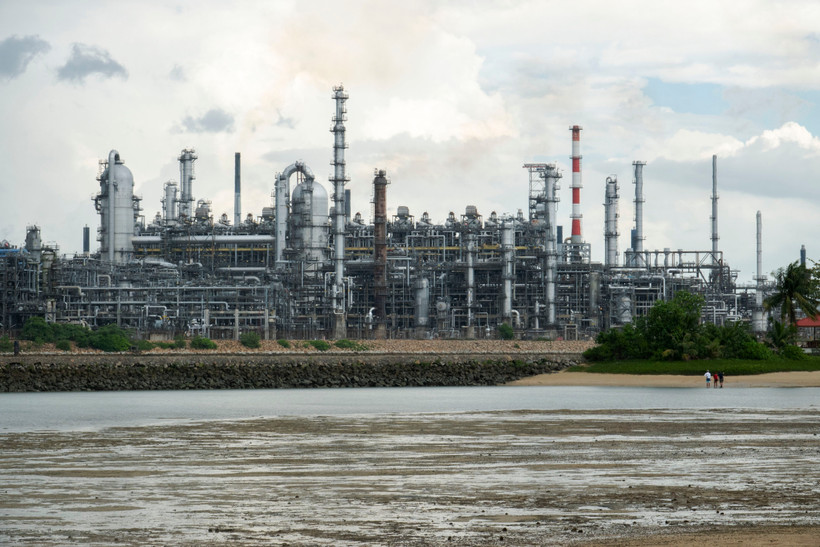
Singapore (VNA) – A Singapore-based Vietnamese expert has advised Vietnam to learn from Singapore’s approach to ensure energy security amid supply chain shortages.
According to Professor Vu Minh Khuong of the Lee Kuan Yew School of Public Policy, despite lacking natural energy resources, Singapore has built a proactive, adaptive and sustainable energy security strategy, proving resilient amid global volatility, including the ongoing Middle East tensions.
He further explained that Singapore’s governance mindset is rooted in preparedness for extreme disruptions. This enables the country to swiftly activate pre-designed policy responses. Over the past month, as energy prices surged and supplies tightened, Singapore has focused on three short- and medium-term priorities: providing targeted subsidies for vulnerable groups without distorting market prices; easing living costs for low-income households; and leveraging the crisis to accelerate green policies and energy efficiency.
Concrete measures include subsidies for energy-efficient household appliances, such as air conditioners and refrigerators, reducing electricity consumption by 10–15% through shared efforts by the government, businesses and consumers. Small and medium-sized enterprises are also supported with grants of up to 70,000 SGD (about 54,000 USD) per firm to implement energy-saving solutions.
On long-term strategy, Khuong underscored that Singapore’s resilience stems from diversifying both energy sources and suppliers, including imports from the US, Australia and ASEAN. In an increasingly uncertain global landscape, he stressed the importance of broadening the energy mix beyond fossil fuels to include renewables. He cited China as another example, as the nation has invested early in renewable energy and grid integration. Beyond infrastructure, he noted the need for mechanisms that encourage enterprises to build reserves, alongside enhanced energy governance through digitalisation of strategic resources.
Khuong summarised Singapore’s governance philosophy into the “3S” principle: Survival, Strategy and Synergy. The “Survival” mindset reflects constant awareness of external shocks; “Strategy” ensures long-term preparedness; and “Synergy” highlights coordination among stakeholders to turn challenges into opportunities.
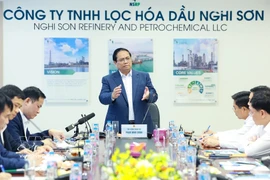
For Vietnam, he suggested adopting similar approaches, including attracting major global energy investors to key hubs such as Nghi Son, Vung Tau and Hai Phong. Such investments, he noted, will not only drive growth but also strengthen national energy security and competitiveness.
At the same time, Vietnam should maximise its renewable energy potential to align with its net-zero emissions target by 2050. Preferential policies for renewable projects, coupled with stronger energy efficiency standards and audits, will help optimise resource use, phase out inefficient investments and foster innovation from the grassroots level, he added./.
See more
Vietnam Railways Corporation to become Vietnam National Railways Group
Under the plan, the operating model of parent–subsidiary companies of the Vietnam Railways Corporation will be transformed into a model of parent–subsidiary companies of the Vietnam National Railways Group. The move is intended to strengthen its capacity to undertake and implement assigned tasks.
Da Nang aims to become attractive destination on global maritime map
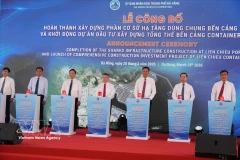
Once fully operational, the Lien Chieu port complex is expected to expand cargo handling capacity in central Vietnam, support export growth and reinforce the country’s ambition to become a key logistics node in regional maritime networks.
Vietnam’s food sector urged to move up global value chains
Within Vietnam’s food industry, only a handful of firms, including Vinamilk and Masan Group, have achieved large-scale operations, while most businesses remain small. As a result, the highest value-added gains largely belong to companies that dominate branding and downstream markets.
Dung Quat refinery operates above capacity in first quarter
The refinery produced 2.03 million tonnes of petrol products, achieving 105% of its management plan, while sales volume reached 2.02 million tonnes, equivalent to 113% of the target. As a result, key financial indicators, including revenue, profits and contributions to the state budget, all exceeded planned levels.
Data, digitalisation key to unlocking sustainable growth in Vietnam’s agriculture
Close coordination among the State, businesses and farmers is also crucial. While the State provides regulatory frameworks, enterprises drive the market, and farmers supply data, effective incentives are needed to encourage farmers’ participation. When tangible benefits are clear, farmers will be more willing to adopt technology and engage in the digital ecosystem
Vietnamese start-up in France pioneers women’s and girls’ healthcare
Operating under the name Hexa, the company goes beyond commercial ambitions, placing women’s and girls’ health at the centre of its long-term development strategy.
Reference exchange rate remains stable on March 30
The State Bank of Vietnam set the daily reference exchange rate at 25,100 VND/USD on March 30, remained unchanged from the last working day of the previous week.
Gia Lai, Lao provinces sign cooperation agreement
Gia Lai province signed a cooperation agreement for the 2026–2030 period with the four southern Lao provinces of Attapeu, Champasak, Salavan and Sekong at a conference held in the Vietnamese locality on March 29.
Vietnam, HSBC accelerate push for credit upgrade and global capital inflows
At a recent meeting with an HSBC delegation led by Group CEO Georges Elhedery, Finance Minister Nguyen Van Thang highlighted the importance of an early credit upgrade to reinforce macroeconomic stability, reduce borrowing costs and strengthen investor confidence, while calling for continued technical support from the bank.
Vietnam, Denmark promote investment cooperation
Addressing the dialogue, Vietnamese Ambassador to Denmark Nguyen Le Thanh emphasised that Vietnam is intensifying comprehensive reforms to improve institutions and policies, enhance transparency and governance, and create a more stable and favourable business environment.
Vietnam–Russia trade corridors poised for expansion: Russian expert
Dr. Anton Bredikhin of the Russian Academy of Sciences highlighted potential rail links connecting Russia to Vietnam via Mongolia or Kazakhstan, transiting through China.
US firms eye expanding fintech investment in Vietnam
Addressing the Vietnam–US Finance and Technology Dialogue, themed “Technology and the future of global finance,” Permanent Deputy Prime Minister Nguyen Hoa Binh reaffirmed Vietnam’s commitment to a pro-investment environment, with breakthrough policies and stronger protections for foreign investors.
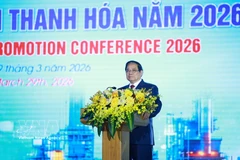
PM calls on businesses to unlock Thanh Hoa’s potential, share in development
Prime Minister Pham Minh Chinh thanked investors for attending the Thanh Hoa investment promotion conference, showing their interest, support and sharing with the province’s determination to become a “model province,” as envisioned by President Ho Chi Minh.
Solutions proposed to support firms amid Middle East conflict impacts
Top priority should be given to stabilising energy prices to ease input cost pressures and ensure supply stability – the most widely supported recommendation, chosen by 61.9% of surveyed firms. Businesses urged close monitoring of global fuel prices and supply risks, along with flexible measures to curb abnormal domestic price fluctuations and secure supplies of fuel and essential materials.
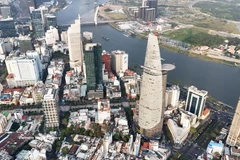
Ho Chi Minh City among 15 centres likely to become more significant: GFCI
Ho Chi Minh City was placed in the list of "The 15 Centres Likely To Become More Significant" of the Global Financial Centres Index 2026, receiving 21 mentions in the past 24 months from industry experts.
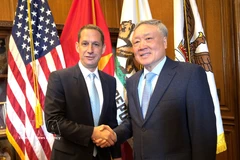
Vietnam seeks San Francisco support for international financial centre
Mayor Daniel Lurie affirmed that San Francisco, with its strengths in high technology and finance, stands ready to promote investment cooperation and connectivity for the development of the Vietnam International Financial Centre.
Council set up to review revisions to Ninh Thuan nuclear project
Deputy Prime Minister Bui Thanh Son on March 27 signed a decision on the formation of the body, which is mandated to review adjustments linked to the project, one of two nuclear plants originally planned in the south-central province.
Vietnamese herbs gain ground in European market
The Chau Pha Agricultural Production and Services Cooperative model is widely seen as an illustration of a new direction for Vietnam’s agriculture sector, one that combines clean production practices, modern management and proactive engagement with global markets.
Businesses pivot strategies to sustain export growth momentum
Enterprises are shifting toward reasonably priced, easy-to-consume products such as tra fish, tilapia, canned items and surimi, instead of focusing mainly on high-end products like large-sized shrimp, which are facing weaker demand in some markets.
Hue accelerates tech upgrades, strengthens vessel monitoring to combat IUU fishing
During the first quarter, the Department of Agriculture and Environment worked closely with city police and the Border Guard Command to inspect and supervise so-called “three-no” fishing vessels — those lacking registration, licences, or inspection certification — along with boats deemed ineligible for operation in Thuan An, Quang Dien, Vinh Loc, and Chan May–Lang Co.